
Stopping Your SIP? Here’s Why It Could Cost You More Than You Think
Volatility in the market always tends to put discipline to test. The increasing number of SIP red portfolios is making people wonder if it is wise to go ahead with their investments. Statistics proving that there are more SIP accounts getting closed down compared to fresh ones being registered is just the proof. It is normal for anyone to get worried when there are negative returns, but rushing into decisions might prove to be counterproductive at times.
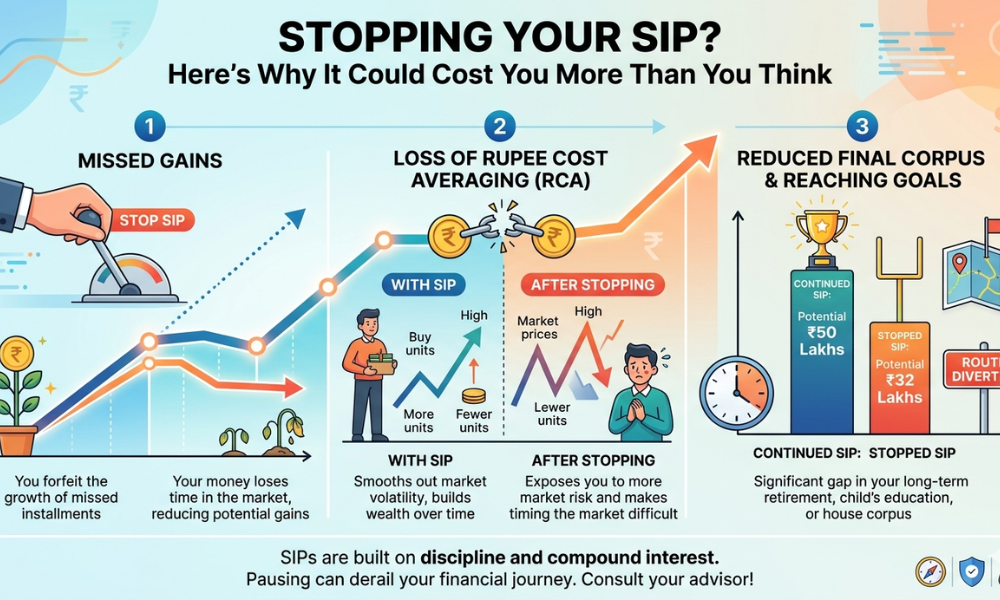
The Sudden Increase in the Number of SIP Withdrawals: What Is Causing the Panic?
A recent trend among investors has been observed to indicate their state of mind at the moment. There is an increase in the number of SIP closures compared to new ones opened. Volatility and reduced returns can lead to investors’ doubts. Since they have experienced nothing but success up till now, the first real corrections can be quite scary. Getting to know that you’ve got some negative returns might sound alarming even though the market corrects itself all the time. Besides, there is always some talk about global tensions, high rates of inflation, and unclear economic signals. Instead of looking at volatility from an investing point of view, people are afraid of it. This way, investors have started withdrawing or stopping their SIPs in order not to lose anything.
Red Portfolio Blues – Why losses seem worse than they really are
Watching your investments go down in value can make you nervous even if you know the downturn is part of the inevitable ups and downs of being an investor. This inherent reaction has to do with who we are as humans. Psychologically, losses tend to be more painful than gains have the potential to be; this phenomenon is called Loss Aversion. Therefore, a relatively small decline in your SIP portfolio can feel much larger than what it really is. A lot of investors start to doubt their decisions and wonder if they made a poor choice or should exit before things get worse, and typically make these decisions based on emotions rather than logic. Timing of short-term market movements is not generally an indicator of long-term potential, but when investors tend to check the value of their portfolio often, it can become hard for them to remember that timing can be hard. Newer investors especially can lack experience from going through an entire market cycle, and therefore, because of at such point in their investing timeline cannot rationalize that these dips are only temporary and that nothing has gone wrong, it will help them keep calm & avoid making decisions in haste (e.g., exiting).
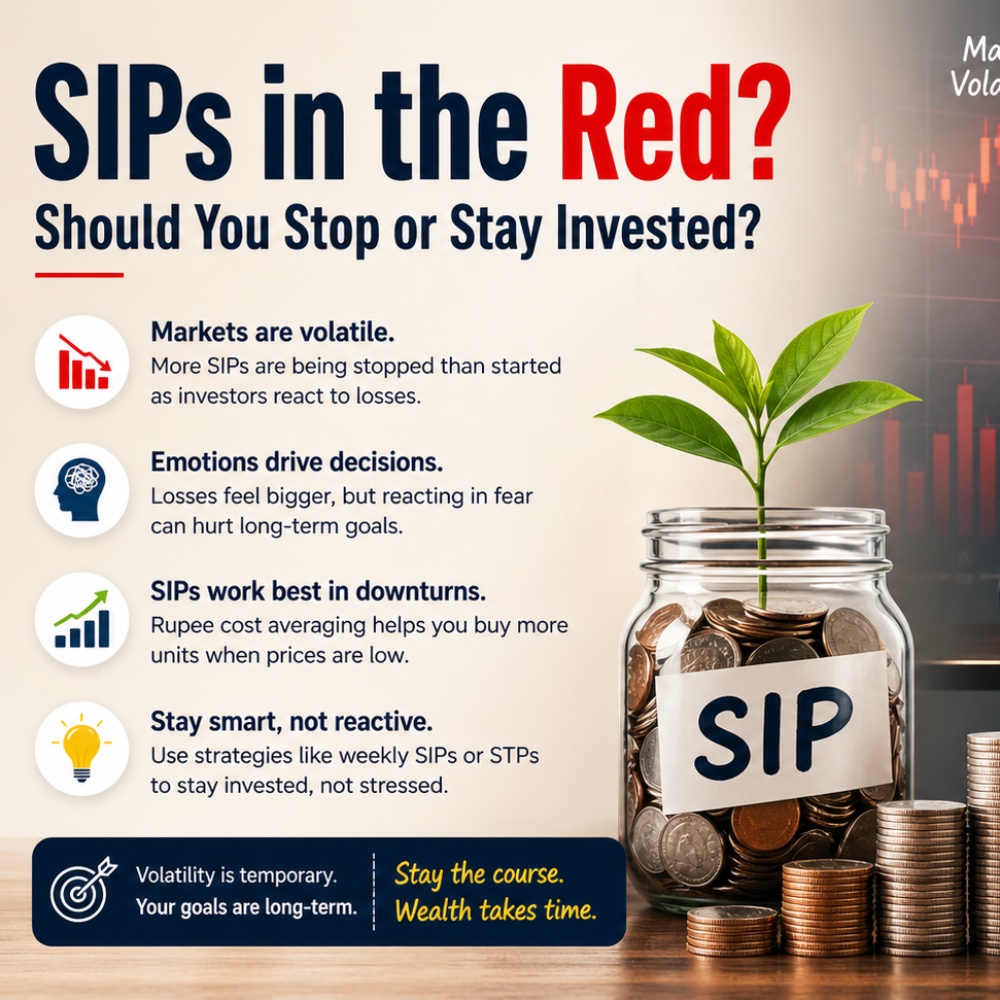
The Value of Remaining Invested in SIPs: Why SIPs Are Designed to Perform Well in Down Markets
When compared to other investment strategies, SIPs offer a unique way to deal with the kinds of volatility that cause investors the most concern. In other words, if you are worried about having a large amount of money invested in the stock market, SIPs will provide you with a much-needed cushion. SIPs provide investors with an additional benefit called rupee cost averaging which occurs automatically without an investor even realizing it. When stock prices are high, the same amount of investment will buy fewer shares than when stock prices are low. While it may not be very exciting to put money into SIPs when stock prices are low, in fact, this is when SIPs become their most powerful. The more units you accumulate during an investment cycle will ultimately reduce your average cost per unit and generate greater returns in the event the stock market subsequently goes back up. You must remain committed to investing regularly through all market cycles: up, down, and stabilizing. Historically, investors who continue to hold their SIPs through all cycles tend to garner the largest profits from their investments. By stopping your SIP due to market volatility means that you are losing the opportunity to add large amounts of units to your portfolio at a discounted price, thereby reducing your long-term rate of return.
Trust Yourself During Periods of Difficult Volatility
If you are feeling anxious because of fluctuations within the markets due to recent events, stopping your SIP (Systematic Investment Plan) during these uncertain market periods may not provide you with any benefit. For example, you may choose to adjust the frequency of your monthly investment to either weekly investments, which will provide you with more entry points into the market and a much better way to average your cost basis; and/or you can use a STP (Systematic Transfer Plan), where you invest a lump sum of money into a low-risk fund and gradually transfer this investment according to your goals into equities, thereby reducing the risk of placing all your funds at risk during a volatile time.
Determine whether your investment portfolio is appropriate for your overall goals and determine whether or not you need to rebalance your assets according to your existing investment strategy (based upon your long-term goals and aggressiveness/risk tolerance.
The goal of this exercise is for you to not be reactionary, but to think about how you want to adjust your current investment strategy going forward. Volatility is temporary; however, your long-term financial goals are not and therefore should be considered when determining how to create a balance between caution and consistency.
Conclusion
Volatility in the market may seem scary, but it is a natural element of the investment cycle. SIPs have been created to work irrespective of whether the going is smooth or turbulent. Any kind of emotional behavior at the wrong juncture and withdrawal in between may do more harm than the actual losses incurred to you. It is better to be consistent rather than being driven by volatility.