





Sabarmati River Gets a New Lifeline: Vasna Barrage’s ₹10 Crore Upgrade Completed Before Monsoon
Sabarmati River, the most famous landmark in Ahmedabad, is soon going to get rejuvenated with the successful renovation of the Vasna Barrage. As part of an important infrastructural development, the installation of 19 new gates and fixing of 10 existing gates has been done in a massive expenditure of ₹10.15 crore. This innovative renovation process, which was accomplished in merely 35 days, has become the means for resuming water filling in the river. Along with the mechanized renovation, there has been the civil reinforcement work as well, ensuring that the Vasna Barrage becomes safe and effective to perform its function for a long period of time.
Modernization Project on a Massive Scale for the Vasna Barrage
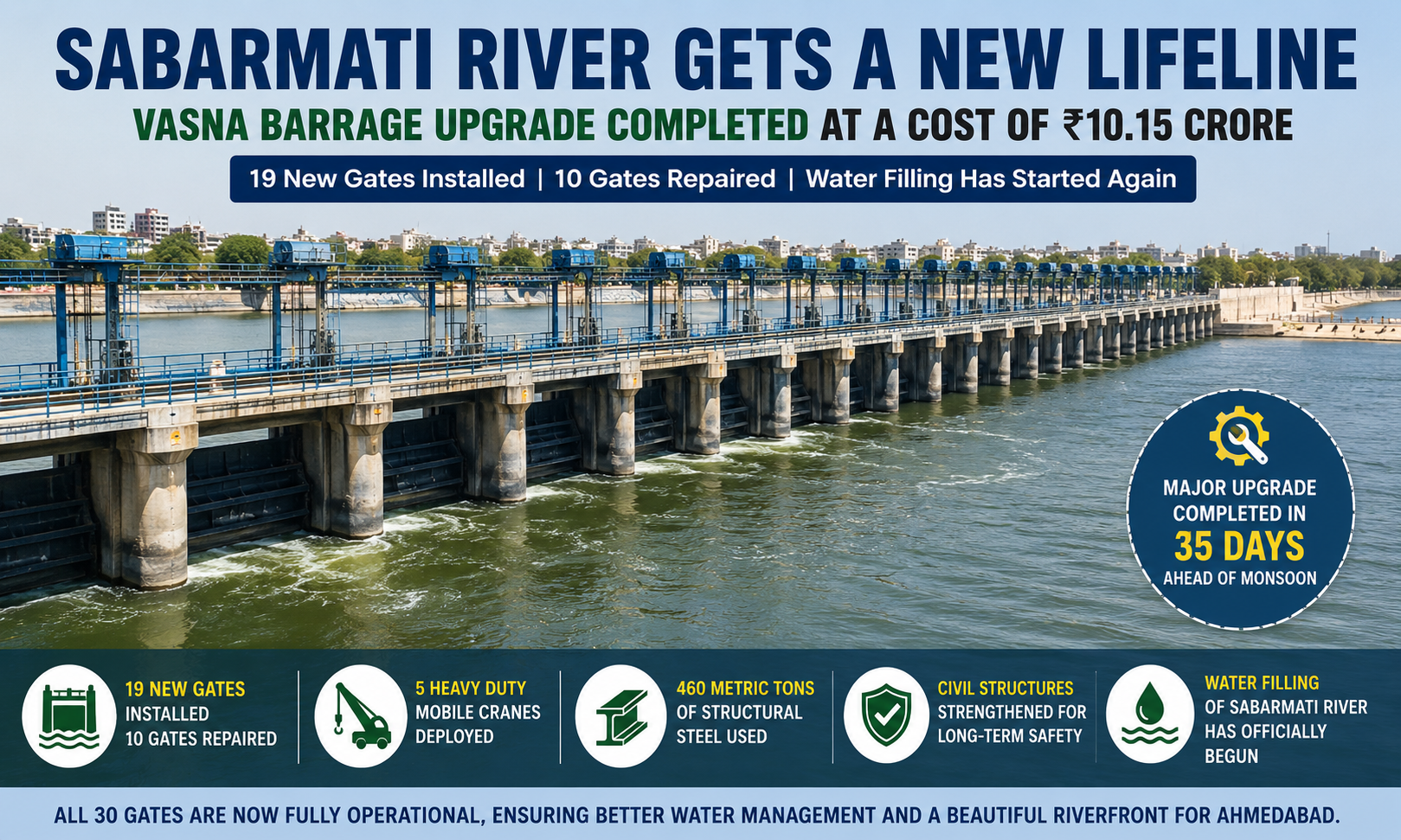
A vital structure known as the Vasna Barrage, which is used to maintain the water level in Ahmedabad’s Sabarmati River as well as the Riverfront, has been modernized through a project costing ₹10.15 crore. This comprehensive project involved the installation of 19 new gates and the maintenance of 10 more old gates, thereby making sure that the barrage can effectively control water storage and discharge over time. The project was conducted because the barrage infrastructure was quite aged, and thus needed an upgrade. As the Sabarmati Riverfront is one of the top landmarks of Ahmedabad, it was necessary to keep its water level stable from an environmental as well as recreational perspective. Authorities gave priority to the task before the start of the monsoon season to make sure that the structure becomes operational before the arrival of heavy rainfall. This project has become a notable event in Ahmedabad’s infrastructure development.
Record Speed of Only 35 Days
One of the most striking things about the upgrading of the Vasna Barrage was how quickly it was accomplished. Although the preparation of the gate components took almost four months, the actual process of upgrading and repairing only took 35 days. In order to complete this process, it was initially necessary to drain the barrage, creating the conditions necessary for engineering work. Work was conducted in a wartime manner; in particular, five heavy-duty mobile cranes were used to work with the massive gates and other equipment. About 460 metric tons of structural steel were used during the upgrading. All engineers and constructors worked effectively, making sure everything was done in time. Such an extensive upgrade in such a short amount of time helped to prevent any disruption to the system of water regulation in the river, as well as the further preparation for the monsoon season.
Improving Structures for Continuing Long-Term Safety
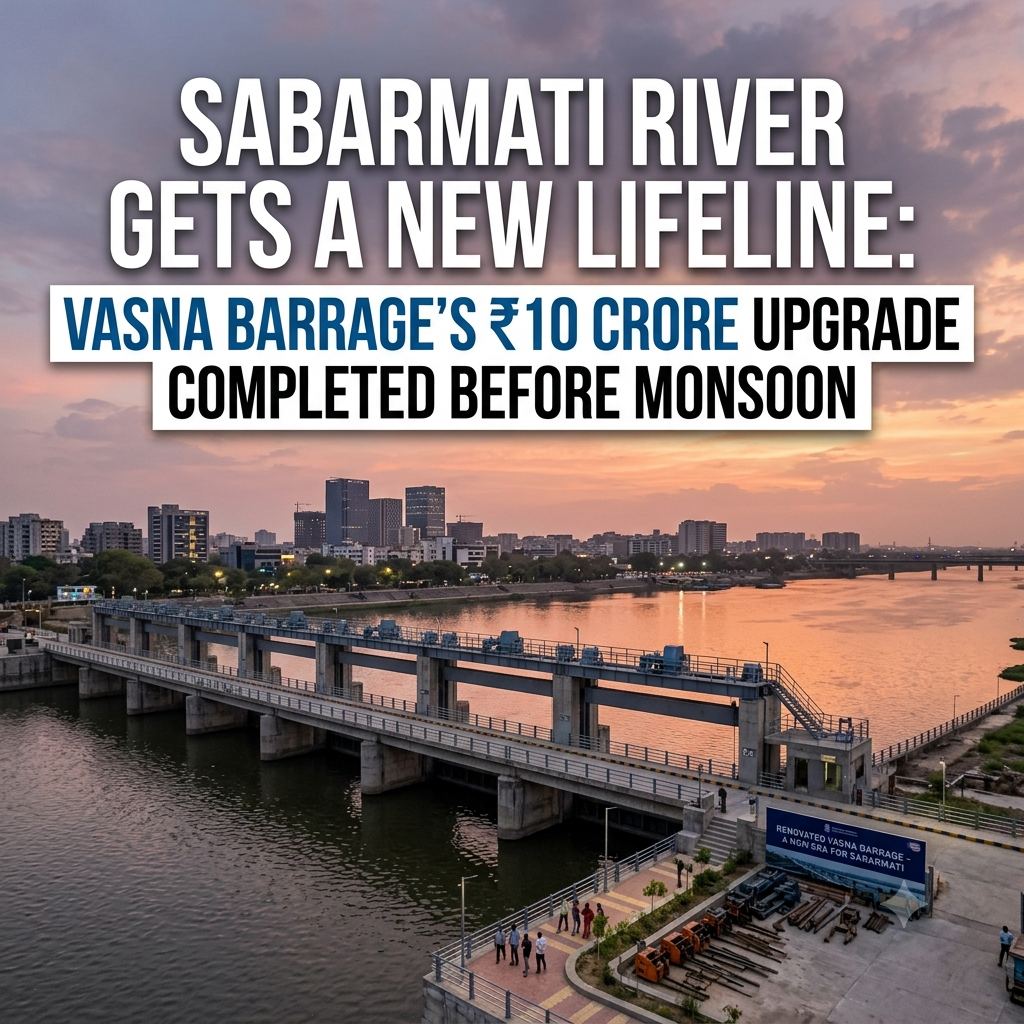
Engineers had the ability to replace multiple mechanical items with new gates and make mechanical repairs and at the same time create significant improvements to the civil infrastructure supporting the barrage. Engineers understood that mechanical replacement would not result in the long-term safety of the barrage; therefore, the civil department performed a parallel effort to strengthen existing structures and to increase the barrage’s ability to resist hydraulic pressures that will be generated from future water flows and extreme river flow rates. This is especially critical during monsoon season when the amount of water in the river can greatly increase and therefore, place additional loads on the barrage. Strengthening the structural masonry and concrete of the barrage will result in decreased maintenance costs, extended structural life, and increased operational reliability. The combination of civil engineering improvements along with mechanical upgrades constitutes a comprehensive effort in modernizing the functionality of the barrage. Collectively, these improvements ensure the continued effective operation of the barrage for many years to come for the benefit of the city of Ahmedabad. Properly planned and operated infrastructure projects of this scope are required for efficient management of water and protection of public safety. The new reinforced structural capacity provides increased assurance that the barrage will be able to successfully manage water in the future.
Water Refilling Process in Progress: Implications for Ahmedabad
Having completed all upgrades and repairs on the infrastructure, the water refilling process of the Sabarmati River has officially started. For Ahmedabad, the presence of the river is a huge asset since it is essential for its identity, ecological balance, and tourist appeal. With restored gates in Vasna Barrage, water levels will be kept at optimal level. Thus, the Sabarmati Riverfront will continue to be visited by both locals and tourists. The total number of gates in the Vasna Barrage is 30 of different sizes, all of which can now operate safely throughout the monsoon season. Proper water regulation will ensure that storage and discharge processes will proceed safely in case of heavy rains. Completion of the project brings confidence to the city officials and people that the water management system is ready to face the weather challenges. Apart from practical advantages, the presence of water in the river makes the riverfront even more attractive.
Conclusion
The accomplishment of the upgrade work at the Vasna Barrage is a huge milestone in the infrastructural development of Ahmedabad for water management purposes. This work is important for improving the efficiency and safety before monsoon since 19 new gates have been put into place, while 10 gates have been repaired and the river filling process is about to start. Apart from improving the functionality of the barrage, this will help protect the beauty of the Sabarmati Riverfront for the future.