





Omori Nebuta Festival 2026: Massive Four-Ton Floats Become the Main Attraction
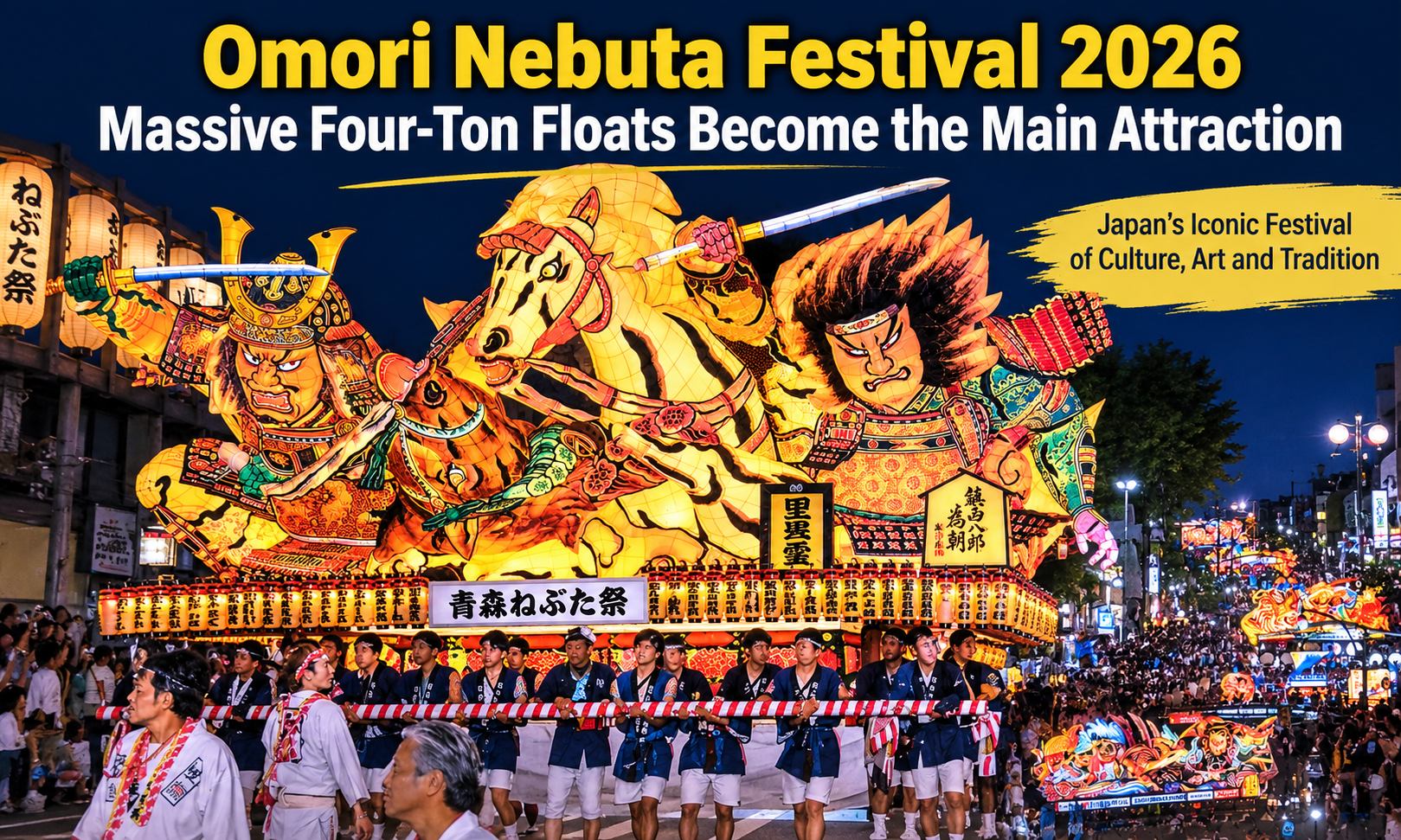
Japan’s summer festival season is known for its spectacular combination of tradition, craftsmanship, music and community celebrations. Among the events that capture this spirit, the Nebuta festivals of Aomori stand out for their enormous illuminated floats and energetic street processions. The image provided highlights a spectacular Nebuta-style celebration featuring a giant warrior float, traditional performers and a busy festival street.
The massive floats are the visual centerpiece of the celebration. Built with detailed frameworks, paper, paint and lighting, these creations transform into enormous moving works of art when they are illuminated and taken through the streets. Some of the largest Aomori Nebuta floats can reach around 5 metres in height, 9 metres in width and weigh about four tons, making them an extraordinary combination of art, engineering and traditional festival culture.
Giant Floats Become the Main Attraction
The most eye-catching feature shown in the image is the huge float depicting traditional warrior figures and horses. Its dramatic expressions, elaborate costumes and strong colors demonstrate the artistic style associated with Nebuta floats.
These giant creations are designed to be viewed from a distance while also offering intricate details up close. Historical warriors, legendary characters, mythical figures and scenes inspired by Japanese cultural stories are commonly represented. The official Aomori Nebuta Festival describes the floats as large, colorful, human-shaped works, many of which portray historical figures, warlords and Kabuki characters.
When the floats move through the streets, their scale makes them impossible to miss. The combination of towering figures, bright colors and festival lighting creates a dramatic spectacle for spectators.
Four-Ton Engineering Marvels
The size and weight of the floats make their construction a remarkable achievement. A large Nebuta can weigh approximately four tons, while reaching about five metres high and nine metres wide.
Despite their enormous dimensions, these floats are designed to travel through city streets during the procession. Their construction requires careful planning so that the finished structure is strong enough to withstand movement while remaining suitable for display and transportation.
The floats are not simply oversized decorations. They are carefully engineered mobile artworks that combine structural frameworks, paper, paint, electrical lighting and a wheeled base.
From Wire Framework to Giant Artwork
One of the fascinating aspects of Nebuta is the process used to create the floats. According to the official Aomori tourism guide, construction begins with a preliminary sketch and the development of the overall structure and colors. Artists then build a wire framework and cover it with traditional Japanese washi paper before painting and finishing the artwork. A single float can take around three months for a team of artists to complete.
The image gives a glimpse of the result of this painstaking work. Every part of the giant warrior figures—from their facial expressions and clothing to weapons and horses—is designed to create a powerful visual impression.
The detailed painting is particularly important because the floats need to remain visually striking during nighttime parades when their internal lights illuminate the artwork.
Traditional Japanese Characters Take Center Stage
The float shown in the image features warrior-like characters riding horses, reflecting the historical and dramatic themes often associated with Nebuta.
Nebuta designs frequently draw inspiration from Japanese history, mythology, traditional stories and theatrical characters. The official festival website notes that many large floats depict ancient warriors, historical characters and Kabuki figures.
These themes give each float its own identity. Rather than simply repeating the same design every year, artists and participating groups create new concepts and artistic interpretations.
As a result, visitors can experience a constantly changing collection of giant artworks while the festival maintains its traditional character.
A Festival Filled with Music and Movement
The floats are only one part of the Nebuta experience. The procession also features musicians and dancers who bring energy to the streets.
Traditional Nebuta bayashi music accompanies the procession, with taiko drums, flutes and cymbals creating the powerful soundscape associated with the festival. Dancers known as haneto move alongside the floats, adding another layer of excitement to the event.
The combination of giant illuminated floats, rhythmic music and dancing creates an atmosphere that is much more dynamic than a conventional parade.
For spectators, the experience is not limited to watching from the roadside. Festival participation and dancing are also encouraged, allowing visitors to become part of the celebration.
Aomori’s Famous Summer Tradition
The major Aomori Nebuta Festival is held annually from August 2 to August 7 in Aomori City. It is regarded as one of Japan’s most famous summer festivals and attracts visitors from across Japan and around the world.
The six-day celebration turns the city into a major cultural destination. Streets become gathering points for residents, artists, performers and tourists who come to experience the giant floats and traditional festivities.
The event’s popularity also demonstrates the continued appeal of traditional Japanese festivals in a modern setting. While the floats use sophisticated construction and lighting techniques, their artistic themes remain connected to centuries of Japanese cultural storytelling.
Thousands of Visitors Experience the Spectacle
The scale of the festival helps explain its popularity. Aomori tourism sources report that the festival welcomes more than three million visitors every year.
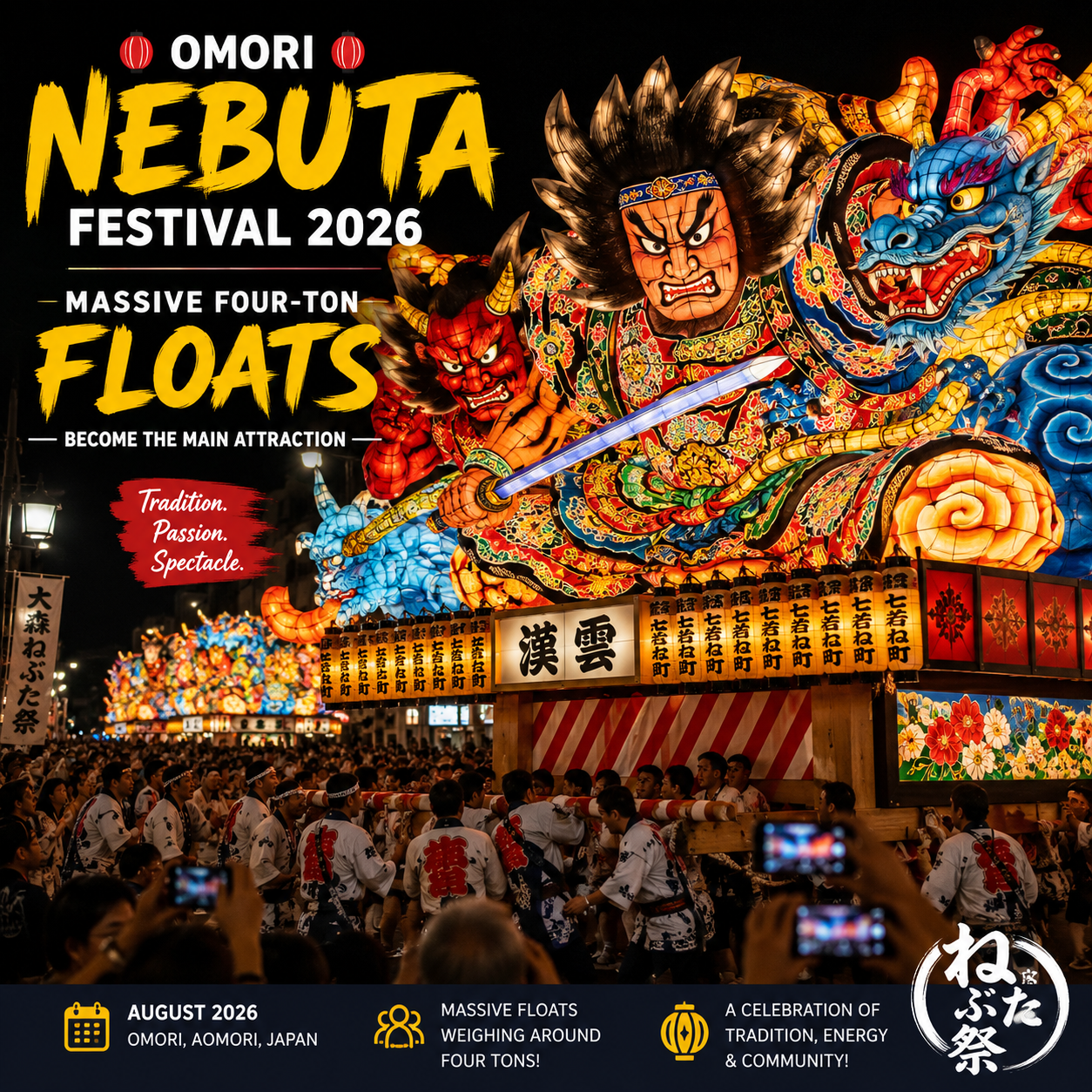
For tourists, seeing a four-ton float move through the streets can be an unforgettable experience. The floats appear especially dramatic when illuminated, with their colors and painted details becoming more prominent against the evening sky.
The image also captures the crowded streets surrounding the float, showing how the festival becomes a major public celebration rather than a small local event.
Cultural Heritage Meets Modern Festival Presentation
Although Nebuta is deeply rooted in traditional culture, the festival demonstrates how heritage can be presented in a visually spectacular modern format.
The enormous size of the floats attracts attention from younger audiences, international visitors and photography enthusiasts. At the same time, the traditional music, costumes, craftsmanship and historical themes keep the cultural identity of the event intact.
In 1980, the Aomori Nebuta Festival was designated as one of Japan’s Important Intangible Folk Cultural Properties, recognizing its cultural significance.
This recognition reflects the importance of preserving the knowledge and skills involved in creating and presenting Nebuta.
Skilled Artists Behind the Spectacle
Behind every giant float is a team of skilled creators. The official Aomori tourism guide explains that a Nebuta float master develops the preliminary concept, determines the structure and colors, and works with artists through the construction process.
The work requires artistic ability as well as technical knowledge. Artists must consider how the figures will look from different angles, how the lighting will affect the colors and how the structure will function while moving through crowded streets.
This combination of creativity and craftsmanship makes the floats valuable examples of Japanese festival art.
More Than Just a Parade
The Nebuta Festival is more than a procession of giant floats. It is a celebration of local identity, creativity, teamwork and Japanese cultural heritage.
Communities, artists, musicians, dancers and organizers all contribute to the event. The construction of the floats itself requires collaboration over several months, while the final procession brings thousands of people together.
The result is a festival in which traditional craftsmanship becomes a living public spectacle.
Why the Giant Floats Continue to Fascinate ?
The enormous Nebuta floats remain the biggest attraction because they combine several elements that immediately capture attention: size, color, movement, storytelling and light.
A four-ton structure moving through a city street is impressive on its own. When that structure is transformed into a brightly painted warrior, mythical figure or historical character, the experience becomes even more remarkable.
The image’s dramatic warrior-and-horse float demonstrates exactly why Nebuta has become internationally recognized. It is simultaneously a sculpture, a lantern, a moving stage and a piece of cultural storytelling.
Conclusion
The Omori Nebuta Festival 2026 title highlights the spectacular appeal of Japan’s giant Nebuta tradition, where massive four-ton floats become the center of attention. The image showcases the scale and artistic detail that make these traditional celebrations so distinctive.
From the initial wire framework to the final painted and illuminated masterpiece, each float represents months of creative and technical work. Once placed on the streets, the enormous figures combine with drums, traditional music and haneto dancers to create an unforgettable festival atmosphere.
The Aomori Nebuta tradition demonstrates how traditional Japanese craftsmanship can continue to thrive in the modern era. Its giant floats do more than entertain crowds—they preserve stories, artistic skills and cultural traditions for future generations.
As Japan continues to welcome visitors from around the world, festivals featuring spectacular creations like Nebuta offer an opportunity to experience the country’s heritage in a uniquely vibrant way. The towering four-ton floats remain the undeniable stars, turning ordinary streets into a grand stage of Japanese art, history and celebration.