





NASA’s IMAP Mission Sets Out to Map the Sun’s Protective Bubble
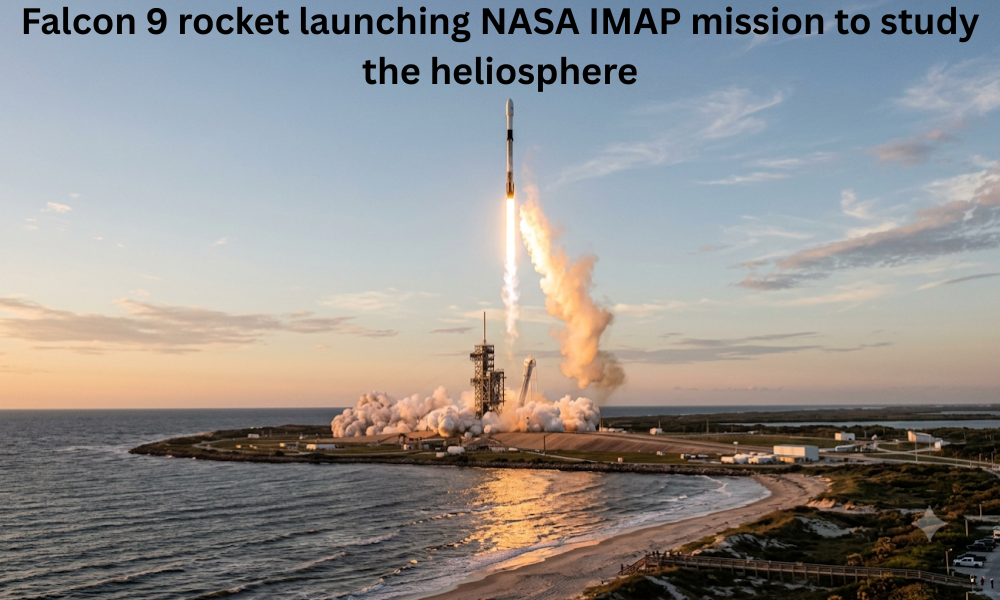
On the morning of 24 September 2025, the Falcon 9 rocket soared into the sky from Florida’s Kennedy Space Centre. This particular mission sought to uncover the mysteries of the solar wind. The Interstellar Mapping and Acceleration Probe (IMAP) will spend the next few years studying the solar system’s boundary layer, known as the heliosphere, which is formed by the solar wind.
The mission was years in the making for scientists at Princeton University. The spacecraft was built and tested in the halls of the Johns Hopkins Applied Physics Laboratory in Maryland before being launched into space from the Kennedy Space Center.
This mission came at a special time for NASA. Along with the IMAP spacecraft, the Carruthers Geocorona Observatory and NOAA’s Space Weather Follow-On L1 mission at the Lagrange Point 1 will follow similar orbits, allowing them to achieve their respective goals.
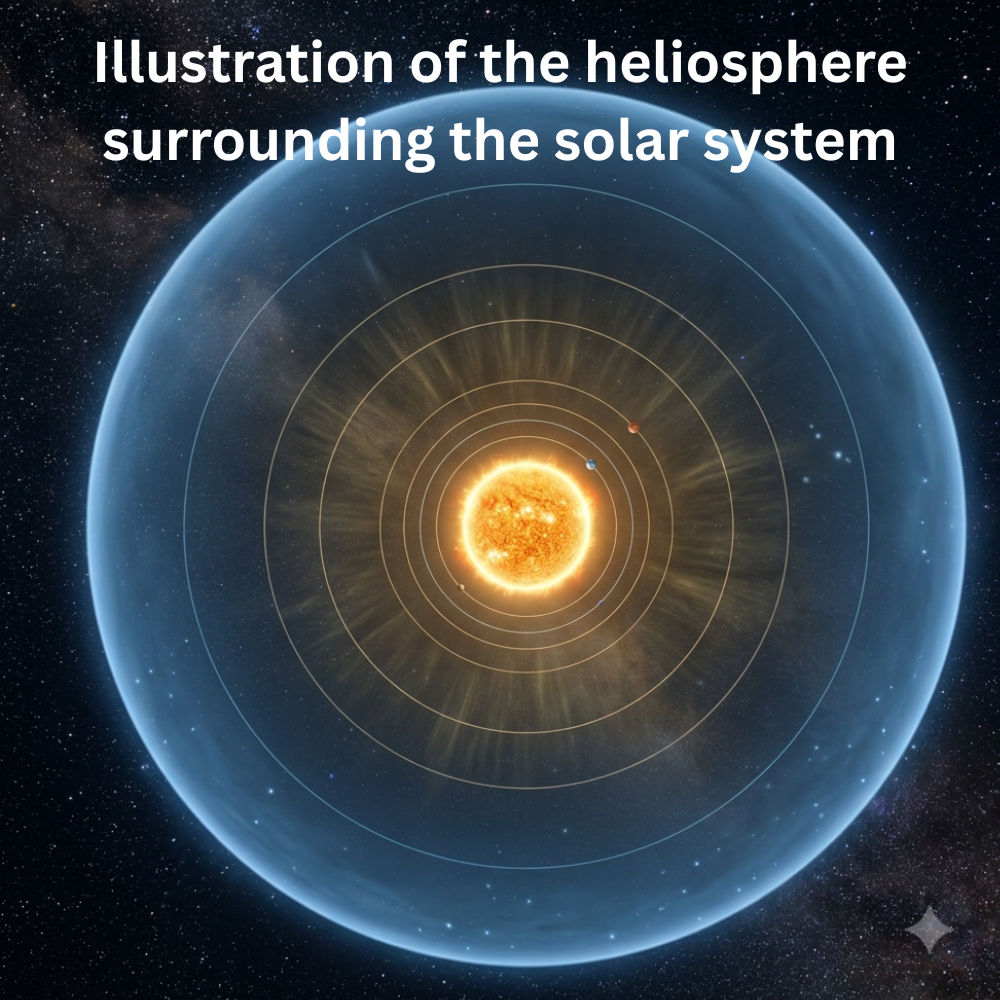
What is this heliosphere?
The heliosphere can be thought of as a bubble, but one doesn’t have a rigid surface. Instead, the solar wind – a stream of charged particles released by the sun – defines the region. This wind extends outward from the sun in all directions until it meets an opposing force from the interstellar medium – the rarefied gas and dust that exist in the space between stars.
The heliosphere is relevant to life on Earth because it acts as a shield, blocking many galactic cosmic rays from entering the solar system, deflecting some of them, and greatly reducing their impact on the solar system. Scientists are interested in understanding how the heliosphere behaves because it makes Earth a habitable planet – and they suspect similar phenomena might contribute to the habitability of other worlds.
Ten instruments are on board the spacecraft, allowing researchers to analyse the solar wind, measure cosmic rays, examine interstellar dust, and learn how these phenomena interact.
Three of these ten devices are imagers that can detect energetic neutral atoms – particles formed when solar wind ions collide with neutral atoms in the interstellar medium. These collision create a unique signature that can be picked up by these instruments. With these unique signatures scientists can watch the creation of the helium sphere from a single spacecraft instead of having to make multiple missions to see the phenomenon.
Other devices will observe the solar wind directly, measure cosmic rays, and analyse interstellar dust and neutral gas also making their way into the solar system. Together, these devices allow for a greater understanding of the processes taking place at the edges of the solar system – and at the limits of the heliosphere.
Eric Christian, a senior research scientist at NASA who works on the IMAP mission, explained that the spacecraft is designed “to study the bubble around our solar system.” He added that studying it can provide insight into why Earth is capable of supporting life, despite the challenges presented by existing on a planet. This mission could help humans learn more about our solar system.
Besides being an incredible scientific opportunity, there is also the bonus of it being a special moment for the rocket company.
This is not unusual for SpaceX, and each such landing saves NASA money.
As explained by Eric Christian, “the launch window was instantaneous” – meaning that the launch could only happen at 7:30 a.m. Eastern Time, with no room for delays on Sunday.
Why did it take so long to launch?
The long wait for the launch was the result of years spent preparing for the mission. The National Aeronautics and Space Administration (NASA) chose the IMAP for consideration back in 2018 – meaning it waited around for nearly seven years before taking off. Furthermore, the mission has been delayed multiple times, with the most recent launch window opening in September 2025 as a result of the need to allow additional time for the mission’s systems to be tested and prepared.
Bobby Braun, the director of the Space Exploration Sector of APL, noted that the team working on the IMAP deserves special recognition for this particular mission. They managed to build a complete, functioning spacecraft while preparing to operate ten different devices made by a variety of organisations. Their combined efforts allowed for the creation of an orbital structure that can serve its scientific purposes.
Conclusion
What happens next?
Having launched the spacecraft, scientists and engineers can shift their attention to watching it reach Lagrange Point 1 and studying how its onboard devices function. Princeton marked the beginning of the mission’s scientific discovery phase with a number of events that recognised the contributions made by those involved in the years-long endeavour.
Researchers can now begin examining the solar wind and the ever-expanding boundaries of the solar system. As noted by the senior research scientist at NASA, these endeavours will take years to yield useful information. However, the data gathered by the IMAP will be valuable well beyond the mission’s end, providing insight for decades. Furthermore, it will benefit society directly by aiding in the prediction of space weather, as the spacecraft’s data can be used to better understand the behaviour of the solar wind.