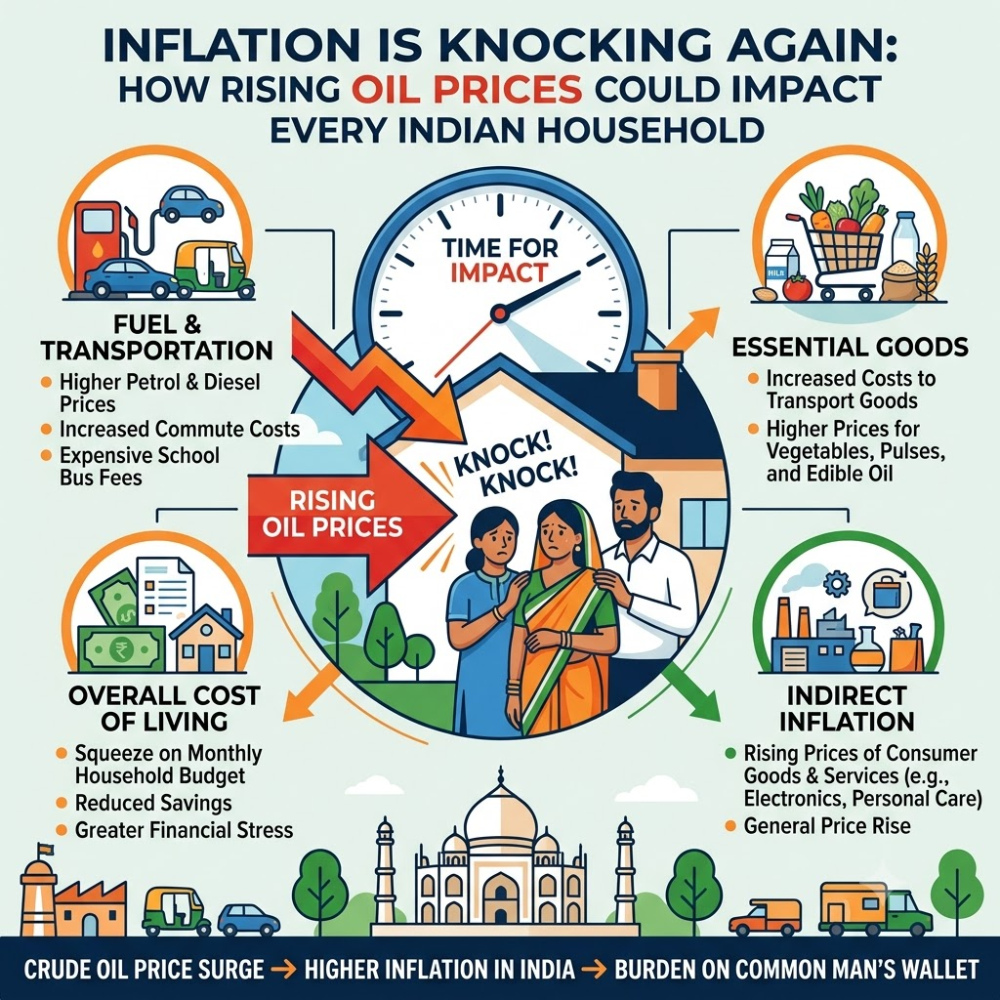
Inflation Is Knocking Again: How Rising Oil Prices Could Impact Every Indian Household
With inflation under control and steady family budgets, worries have started creeping up about rising costs of living in India. Higher prices of oil in the international market, geopolitical concerns in West Asia, and the higher-than-anticipated inflation in America have raised doubts that prices of day-to-day necessities may go up. Although there is a belief that India is not going through any immediate inflation crisis, the heavy reliance on crude oil imports by the country makes any rise in fuel prices have an adverse impact on transport, food items, and FMCG products. With FMCG companies hinting at price rises and the RBI warning about rising inflationary pressures, Indians will soon have to prepare themselves for tough times ahead.
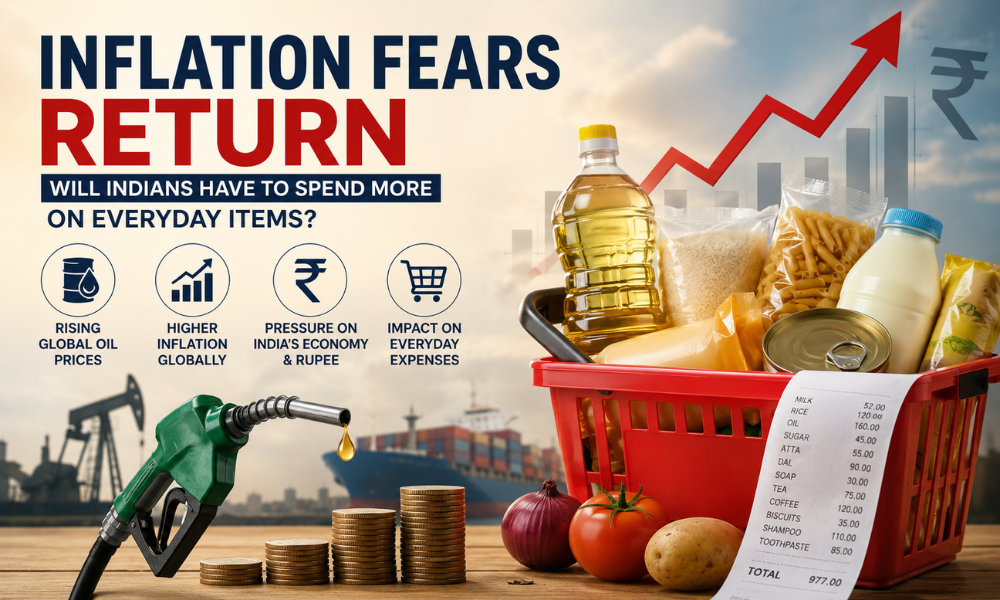
Why Global Inflation and Crude Oil Prices Are Important for India
The issue of inflation and high crude oil prices usually seems like an alien concept, but there is always the possibility that it could end up affecting us. The recent report released by US Bureau of Labor Statistics about the state of their current inflation has shown significant growth in consumer prices in the region, mainly due to the rising energy prices in wake of growing geopolitical tensions in West Asia. This poses an additional risk for India because India is almost wholly dependent on external sources to satisfy its crude oil demands.
India imports close to 85% of its crude oil demands. As a result, high global crude oil prices tend to increase import expenses, thereby burdening businesses and consumers. High import costs can increase India’s trade deficit and exert pressure on the value of the Indian rupee, thus pushing inflation up further. Although some short-term measures, including changes in tax policy, can help to reduce the effect, sustained increase in crude oil prices will eventually start affecting the economy.
From Fuel Tanks to Food Bills: Consumers Will Feel Higher Energy Prices in Many Ways.
The impact of increasing crude oil prices affects much more than just petrol pumps. Energy is a major input in nearly every area of the economy, and rising fuel prices eventually increase the prices of many products and services. With increased transportation and logistics costs, businesses incur higher costs to transport raw materials and finished goods across the country. Generally, these costs will then be passed onto consumers in the form of higher priced goods.
Of all the types of products, food items are perhaps the most affected by increased transportation costs, as distribution of agricultural products and packaged goods relies on transportation systems. Similarly, numerous industries are under cost pressure when fuel prices increase, including: airlines, chemicals, plastics, and fertilizers as well as manufacturing. In addition to the increased costs experienced by the transportation industries, packaging materials also tend to increase in cost, many of which are petroleum based. Over time, the rise in petroleum costs could adversely affect the price of everything from grocery staples to household necessities, such as travel costs and utility costs.
Economists regularly cite the amount of indirect costs associated with rising oil prices, as outweighing the direct cost of oil. Even if petroleum and diesel fuel prices remain fairly stable due to government price controls, the direct increase in energy prices can indirectly propagate up the supply chain, thereby leading to a rise in the overall cost of living for Indians.
Price Increases by FMCGs and Warnings from the RBI – Early Signals of Inflation?
It is well known that one of the key signs of inflation is the pricing policy of FMCG manufacturers. Numerous big players have had to deal with increased expenses when buying edible oils, packaging materials, transportation, and other vital ingredients. While companies usually bear some initial costs to retain competitiveness, high costs inevitably force them to increase their prices for end consumers.
The Reserve Bank of India has also drawn attention to an increasing number of inflation-related risks. As per its latest report, the RBI has updated its inflation forecast, considering higher costs in the global energy market, geopolitical tensions, and high costs of raw materials. According to the estimates, inflation will likely strengthen in the second half of the fiscal year.
While inflation still remains low compared to pre-pandemic numbers, the RBI appears quite cautious regarding the issue. At present, the central bank keeps interest rates stable, and its monetary policy approach remains neutral. Overall, FMCG price hikes combined with warnings from the RBI can be seen as early signals of inflation for ordinary consumers.
Are Indian families expected to worry? What will happen in the coming months?
Experts say that no reason exists for panic right now, but families need to know what issues can lead to increased inflation going forward in the future. High oil prices pose the largest threat, considering that geopolitical issues in countries responsible for oil exports can adversely affect the situation in international energy markets. Adverse weather conditions can decrease agricultural output, raising the price of food items and placing additional financial strain on families.
Also, the Indian rupee’s strength needs monitoring since a weak currency will raise the price of goods imported into the country, including fuels, fertilizers, and raw materials for industry. Any disruptions to global supply chains can raise the cost of production in various sectors. However, the above-mentioned factors are unlikely to trigger a crisis in the near future, meaning that the period of falling prices is coming to an end.
Therefore, families may expect rising prices in relation to various expenses, such as gas for cars, food, utilities, and consumer products. Sticking to a budget, controlling spending, and preparing for possible price hikes will enable households to handle inflation risks associated with current global economic pressures.
Conclusion
Even though there is no urgent inflation situation in the country, there is a danger of increased costs to households due to rising international oil prices and the continued presence of many geopolitical issues. There can be an impact on everything from transport, food, and utilities to all other daily needs in the economy, since energy prices could put pressure on consumers in the coming months.