
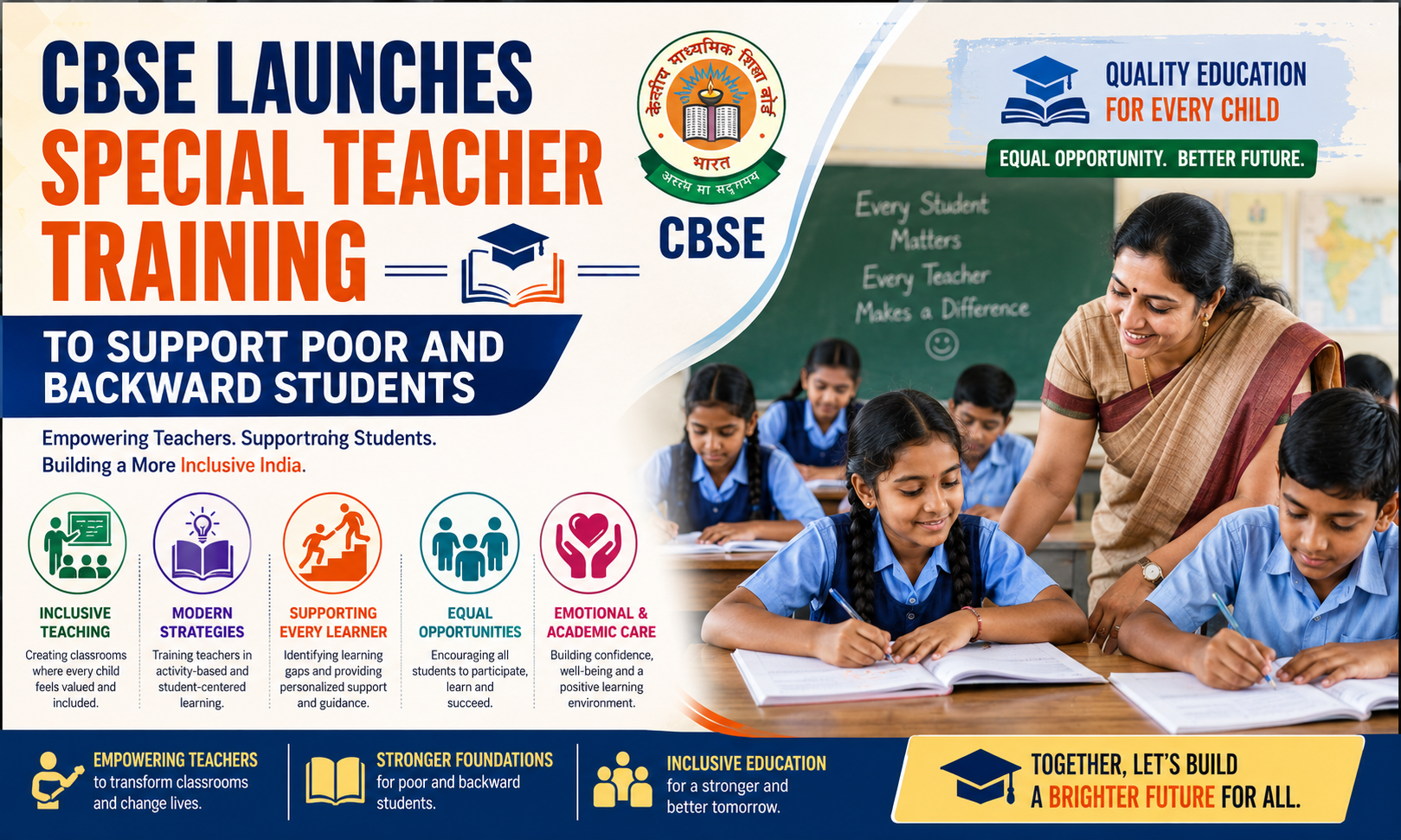
CBSE Launches Special Teacher Training to Support Poor and Backward Students
The Central Board of Secondary Education (CBSE) has taken another significant step toward strengthening inclusive education by introducing a special teacher training initiative aimed at supporting students from economically weaker sections and socially disadvantaged backgrounds. This initiative reflects CBSE’s commitment to ensuring that every child, regardless of financial or social circumstances, receives quality education and equal learning opportunities.
Teachers play the most important role in shaping the future of students. Through this specialized training program, CBSE aims to equip educators with modern teaching strategies, inclusive classroom practices, and student-centered approaches that can help bridge educational gaps among underprivileged learners. The initiative is expected to improve learning outcomes, reduce dropout rates, and create a more equitable education system across India.
Why This Initiative Is Important ?
India is home to millions of students from diverse economic and social backgrounds. Many children studying in government and affordable private schools face challenges such as limited access to educational resources, financial hardship, inadequate learning support, and language barriers. These factors often affect academic performance and confidence.
Recognizing these challenges, CBSE has designed this teacher training program to help educators better understand the needs of disadvantaged students. Rather than treating every classroom the same, teachers will learn methods to identify learning gaps and provide personalized support.
The initiative highlights the belief that quality education begins with well-trained teachers who understand the unique needs of every learner.
Focus on Inclusive Education
Inclusive education is about ensuring that every student has an equal opportunity to learn, participate, and succeed. The CBSE training program promotes classroom practices that encourage participation from all students, regardless of their socio-economic background.
Teachers will receive guidance on creating supportive learning environments where students feel respected, motivated, and encouraged to ask questions without hesitation. Such classrooms help build confidence while improving academic performance.
Inclusive teaching also strengthens social harmony by encouraging empathy, cooperation, and mutual respect among students from different communities.
Building Teacher Capacity
The success of any educational reform depends largely on the capabilities of teachers. The special training program focuses on improving professional skills that directly benefit classroom learning.
Teachers are expected to receive training in areas such as:
- Student-centered teaching methods
- Activity-based learning
- Interactive classroom management
- Inclusive teaching strategies
- Emotional and psychological support
- Identifying slow learners
- Personalized academic guidance
- Effective communication techniques
- Continuous student assessment
- Encouraging critical thinking
These skills will help teachers create more engaging and effective learning experiences.
Supporting Economically Weaker Students
Students from low-income families often face multiple educational challenges. Limited access to books, digital devices, internet connectivity, tuition support, and learning materials can significantly affect their academic progress.
The CBSE initiative encourages teachers to recognize these barriers and adopt practical solutions that ensure no student is left behind. Teachers may provide additional academic support, simplify learning materials, and create opportunities for peer learning.
By understanding each student’s circumstances, educators can offer encouragement that extends beyond academics.
Helping Socially Disadvantaged Communities
The training also focuses on supporting students belonging to socially backward communities who may experience educational disadvantages due to historical, cultural, or social factors.
Teachers will be encouraged to maintain classrooms free from discrimination while promoting equality and respect. Every child deserves an environment where they feel valued regardless of their background.
This approach contributes to building stronger schools and a more inclusive society.
Modern Teaching Techniques
Education is evolving rapidly with the integration of technology and innovative teaching practices. The CBSE training program introduces educators to modern instructional methods that make learning more engaging.
Some important techniques include:
- Digital learning resources
- Project-based learning
- Group discussions
- Interactive presentations
- Experiential learning
- Collaborative classroom activities
- Inquiry-based education
- Continuous feedback systems
These methods improve student participation while helping learners develop practical skills alongside academic knowledge.
Addressing Learning Gaps
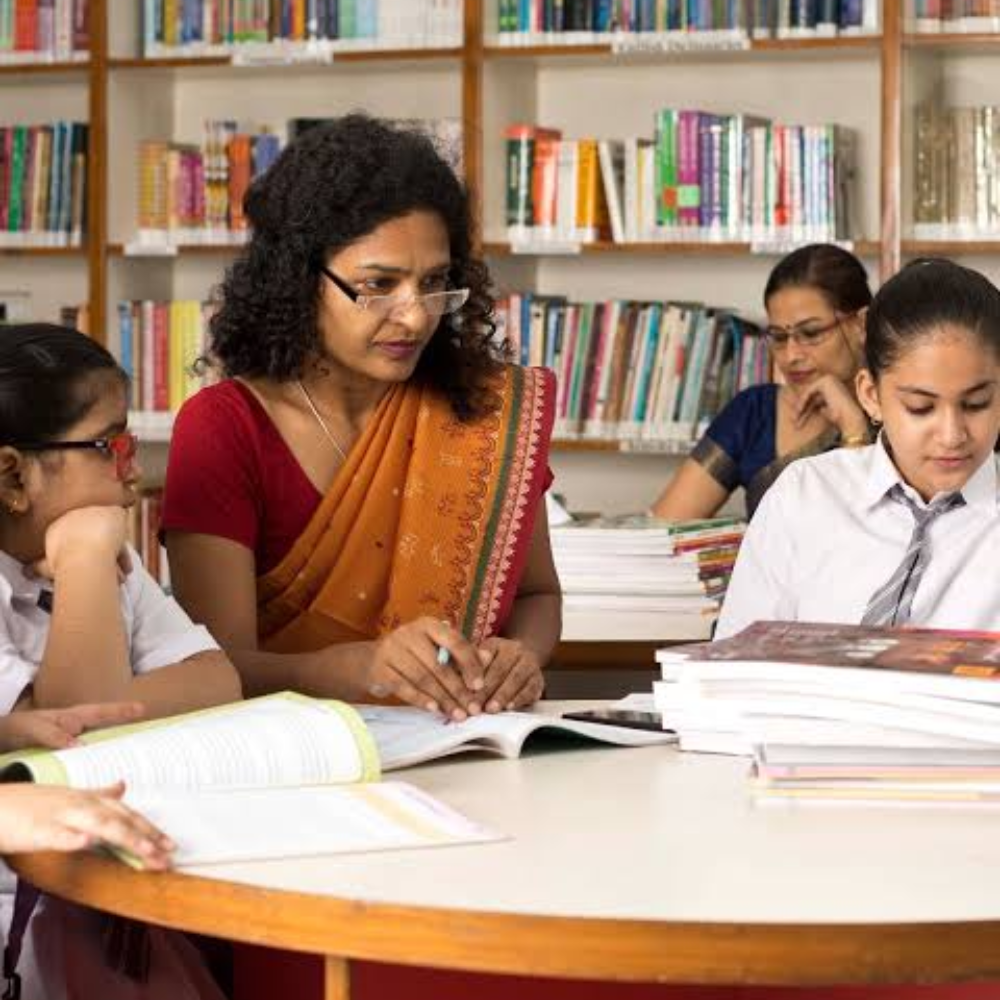
Every classroom includes students with varying levels of understanding. Some students require additional time and support to master concepts.
The teacher training initiative emphasizes early identification of learning gaps. Teachers will learn assessment techniques that help identify struggling students before academic problems become severe.
Timely intervention through extra guidance, remedial classes, and individual mentoring can significantly improve student outcomes.
Strengthening Emotional Well-being
Academic success depends not only on knowledge but also on emotional well-being. Many underprivileged students face stress arising from financial difficulties, family responsibilities, or social pressures.
Teachers participating in the program will receive guidance on recognizing emotional challenges and providing appropriate encouragement. Building trust between teachers and students creates a positive learning environment where children feel safe discussing their concerns.
Emotional support improves attendance, motivation, and overall academic performance.
Encouraging Equal Opportunities
One of the primary objectives of the initiative is ensuring equal educational opportunities for every learner.
Teachers will be encouraged to:
- Give equal attention to every student.
- Promote participation from quieter learners.
- Avoid classroom bias.
- Encourage girls’ education.
- Support students with different learning abilities.
- Build confidence through positive reinforcement.
Equal opportunity helps create a fair educational environment where merit and effort determine success.
Improving Classroom Engagement
Traditional lecture-based teaching may not always meet the needs of every learner. Interactive classrooms encourage greater participation and improve knowledge retention.
The training program focuses on making lessons more engaging through storytelling, demonstrations, practical activities, educational games, and collaborative exercises.
Active participation increases student interest and enhances long-term understanding.
Strengthening Parent-Teacher Collaboration
Parents play an essential role in children’s education. The CBSE initiative encourages teachers to maintain regular communication with families, especially those from disadvantaged backgrounds.
Strong parent-teacher partnerships help identify student needs early while encouraging consistent attendance and better academic performance.
When schools and families work together, students benefit from stronger educational support systems.
Supporting National Education Goals
The teacher training initiative aligns with India’s broader educational reforms that emphasize equitable, inclusive, and quality education for all students.
By strengthening teacher capabilities, CBSE contributes toward:
- Reducing educational inequality
- Improving foundational learning
- Increasing school retention
- Enhancing student confidence
- Promoting inclusive classrooms
- Supporting holistic development
These objectives align with India’s vision of creating a future-ready education system.
Long-Term Benefits
The impact of this training extends far beyond classrooms. Better-trained teachers can influence thousands of students throughout their careers.
Long-term benefits include:
- Improved academic achievement.
- Reduced dropout rates.
- Greater educational inclusion.
- Increased student confidence.
- Better career opportunities.
- Stronger social equality.
- Higher quality teaching standards.
- Enhanced national educational outcomes.
The investment in teacher development ultimately strengthens the country’s human capital.
A Positive Step for Indian Education
Education remains one of the strongest tools for reducing poverty and promoting social mobility. By focusing on teachers who directly influence students’ learning experiences, CBSE is addressing educational challenges at their foundation.
Empowered teachers create empowered students. Through inclusive teaching methods, personalized guidance, and compassionate classroom practices, educators can transform lives and communities.
Conclusion
The CBSE special teacher training initiative to support poor and backward students represents an important milestone in India’s journey toward inclusive and equitable education. By equipping teachers with modern instructional techniques, inclusive classroom practices, and student-focused approaches, CBSE aims to ensure that every learner receives the support needed to succeed.
This initiative recognizes that quality education is not only about curriculum and examinations but also about understanding each student’s unique circumstances and providing equal opportunities to learn. As trained educators implement these practices across schools, millions of students from economically weaker and socially disadvantaged backgrounds are expected to benefit, contributing to a stronger, more inclusive, and more educated India.