




Ganga Expressway: India’s Longest Highway That Cuts Travel Time in Half
The development of infrastructure in India is progressing at an amazing rate, and one such infrastructure project that highlights this change is Ganga Expressway. Extending through the state of Uttar Pradesh, this project links Meerut and Prayagraj, and has greatly decreased the travel time between them. Travelling that used to take up to 11 hours can now be covered in just six hours. Apart from its convenience benefits, the expressway will contribute immensely towards the country’s economy.
Game Changer for Uttar Pradesh Traveller
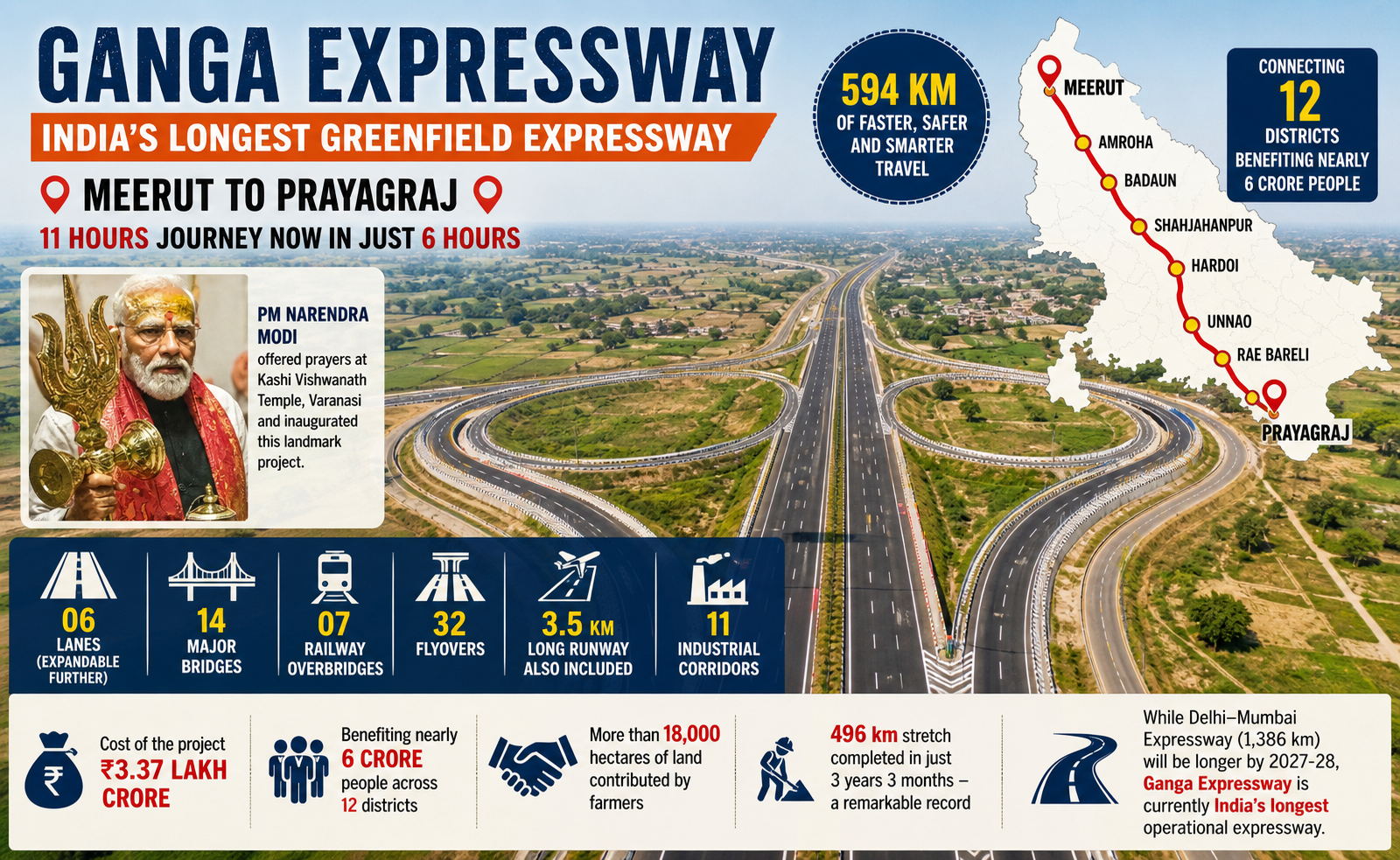
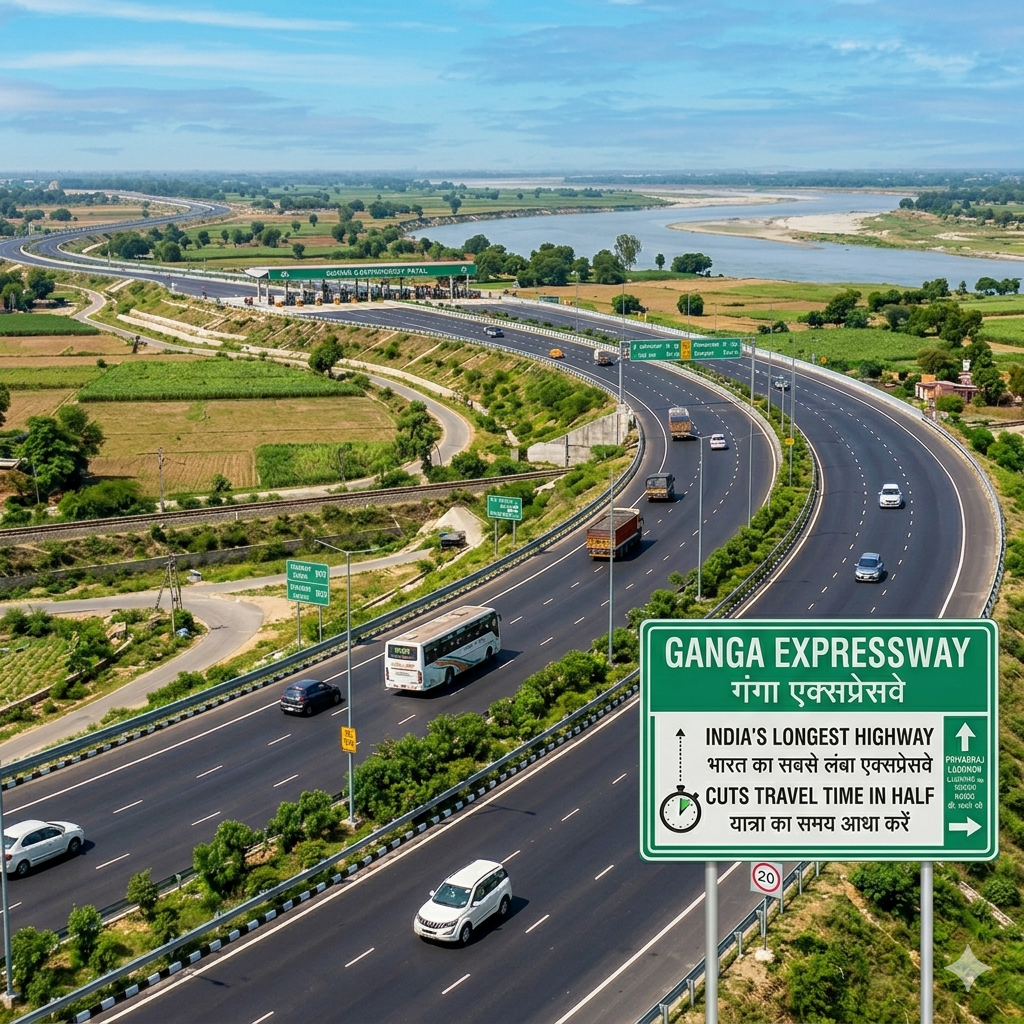
The coming up of the Ganga Expressway promises to revolutionize the connectivity scenario in the state of Uttar Pradesh. Stretching up to a distance of 594km from Meerut to Prayagraj, it has cut down the travel time that used to take around 11 long hours to a relatively shorter period of 6 hours. What makes it a game changer is not only its ability to save precious time but also provide a smooth traveling experience. The Ganga Expressway will be able to connect two opposite ends of the state, that is, its west to the east side and thus providing commuters from smaller towns access to bigger cities.
The Ganga Expressway is the largest single infrastructure project ever undertaken within India. It has a total length of 594 kilometers and was completed at a tremendous cost and with an extensive level of engineering design and construction resources made available. The highway has been designed with six lanes that will also be able to accommodate future expansion in order to provide for increased capacity as traffic grows on the highway.
Inside the Mega Project: Cost, Scale, and Engineering Marvels
Its major engineering components are also what distinguish this infrastructure project from many other highway projects. The expressway features 14 major bridges, 32 flyovers, and 7 overbridges that cross over railways — all of which work toward providing a consistent and seamless travel experience for drivers using the Ganga Expressway.
Should the need arise for any type of emergency landing of fighter aircraft, the expressway has also been provided with a unique feature; a 3.5 kilometer long airstrip has been constructed along the length of the highway.
The combination of civilian and defense functions makes this project even more important. All of the design features of the expressway have been developed in such a way that they promote smooth road surfaces; this includes modern design methodologies and innovative use of technology and materials. Thus, the Ganga Expressway reflects the success of modern engineering in creating world class highways for the citizens of India.
Economic Boost: Jobs, Industrial Corridors, and Growth Opportunities
The Ganga Expressway is anticipated to generate significant economic growth for the region of Uttar Pradesh through its positive impact on travel. It aligns with twelve different districts and is anticipated to create significant benefits to approximately 6 crore residents of these areas. One of the significant benefits of this expressway will be the development of 11 industrial corridors along the expressway route. These 11 corridors will allow businesses to locate in close proximity to each other and increase employment opportunities; as they encourage businesses to locate and invest in areas where they can develop such infrastructure. In addition, improved roadways will increase the efficiency of the transportation of goods, which will lower costs for the business community and provide a more efficient supply chain for businesses. Small towns and rural areas, which tend to be disconnected from major economic centers, will now have improved accessibility to their respective markets. Over time, this improved accessibility to markets will promote balanced economic development throughout Uttar Pradesh. Thus, the Ganga Expressway does not only provide a physical route; it also creates an economic link and new opportunities for millions of residents.
Farmers’ Input and the Prospects for India’s Expressway Network
A significant aspect of the Ganga Expressway is how farmers have contributed to the project, with thousands of hectares of land being given for the successful completion of this large scale development, making it possible for farmers to participate in this project. The support provided by the farmers is critical to turning this vision into reality. This project has been successfully completed in just over three years, showcasing India’s quickly completed modern infrastructure. The way this project built the main portion of the expressway so quickly exemplifies how quickly an infrastructure project can be developed in India.
The Ganga Expressway is a landmark that demonstrates how India is currently building world class highways to accommodate increasing demand for highway construction in the future, due to projects such as the Delhi to Mumbai Expressway. India has been able to grow and develop in a responsible way, primarily due to collective efforts by the citizens with their support, along with the governmental and management entity. By creating this infrastructure blade, it creates a better quality of life for the people living within the area.
Conclusion
The Ganga Expressway is not merely an expressway; rather, it is an example of India’s swift progress towards state-of-the-art infrastructure. The potential benefits that the expressway will have in terms of travel time reduction and increased economic prospects are numerous, and millions will benefit from it within the state of Uttar Pradesh. It serves as an example of what can be achieved with proper planning, engineering expertise, and teamwork. In future, India plans similar massive projects in transport sector.