
World Snake Day: India’s Rich Biodiversity & the Ecological Importance of Native Snake Species
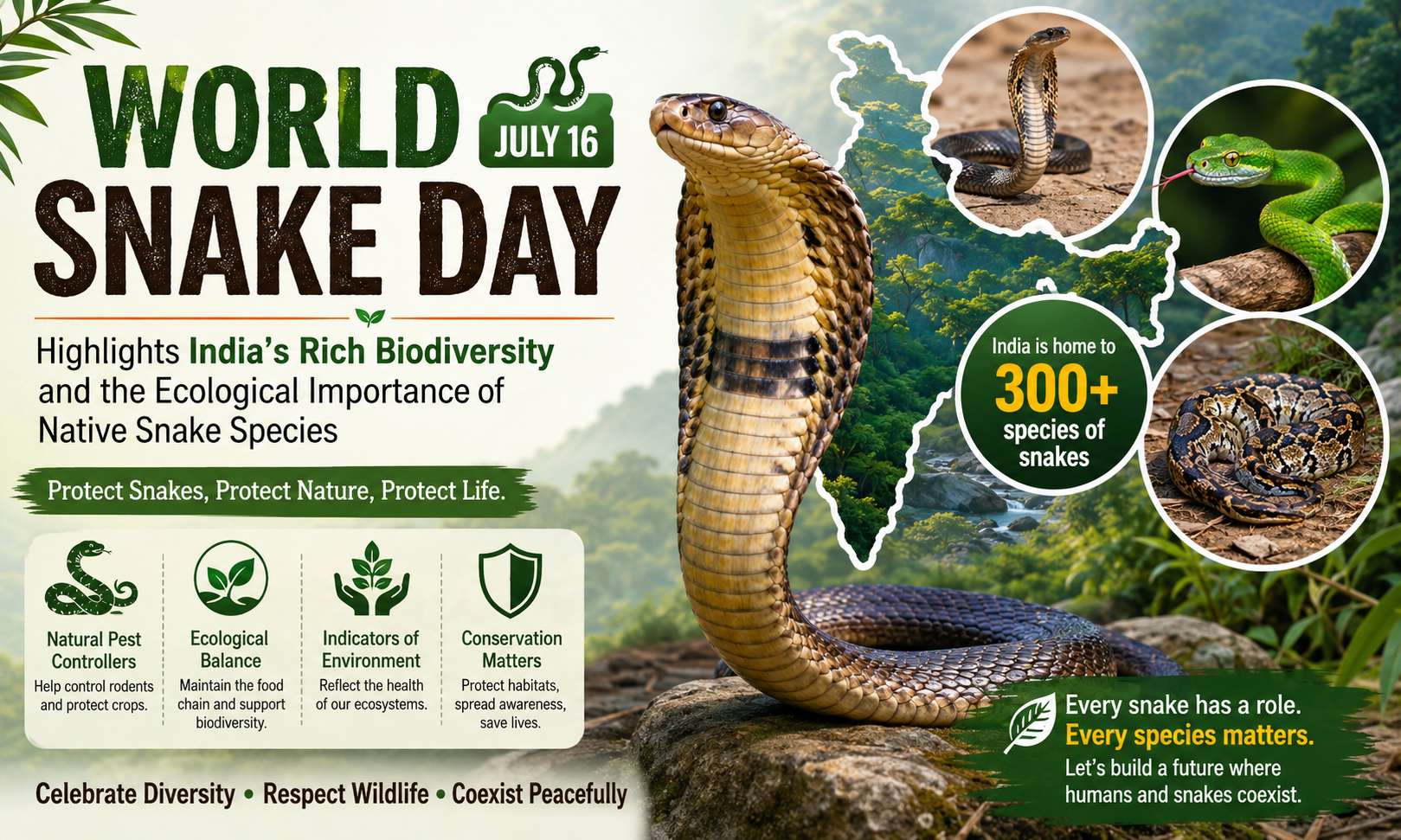
World Snake Day, observed every year on July 16, serves as a global reminder of the important role snakes play in maintaining healthy ecosystems. While snakes are often misunderstood and feared, they are among the most beneficial wildlife species for agriculture, forests, wetlands, and grasslands. India, known for its extraordinary biodiversity, is home to an incredible variety of snake species that contribute significantly to ecological balance.
On this occasion, conservationists, wildlife experts, and environmental organizations are encouraging people to understand snakes beyond myths and misconceptions. Through awareness campaigns, educational programs, rescue initiatives, and habitat conservation efforts, World Snake Day highlights the need to protect these remarkable reptiles and preserve India’s rich natural heritage.
-
India Is Home to an Incredible Diversity of Snakes
India hosts more than 300 species of snakes, making it one of the richest countries in the world for snake diversity. These species inhabit a wide range of ecosystems, including tropical forests, deserts, mountains, agricultural fields, wetlands, coastal regions, and urban landscapes.
Only a small percentage of these snakes are venomous. The vast majority are harmless to humans and play an essential role in controlling pest populations. From tiny burrowing snakes to massive pythons, India’s snake diversity reflects the country’s varied climate and ecosystems.
-
Snakes Play a Crucial Role in Maintaining Ecological Balance
Snakes are natural predators that help regulate populations of rodents, frogs, insects, birds, and other small animals. By controlling rodent numbers, snakes indirectly protect agricultural crops and reduce the spread of diseases carried by rodents.
Without snakes, ecosystems could experience severe imbalances, leading to increased crop damage, food shortages, and disruption of natural food chains. Their presence ensures that prey populations remain under control, supporting healthier environments.
-
Supporting Sustainable Agriculture
Farmers benefit greatly from the presence of non-venomous snakes in agricultural fields. Rodents can destroy large quantities of crops and stored grains every year. Snakes naturally reduce these rodent populations without the need for harmful chemical pesticides.
By acting as biological pest controllers, snakes contribute to sustainable farming practices, reduce economic losses, and promote environmentally friendly agriculture.
-
India Is Home to Both Venomous and Non-Venomous Species
Although many people associate snakes with danger, only a limited number of Indian snake species possess medically significant venom. Most snakes avoid human contact and bite only when threatened or accidentally disturbed.
Well-known venomous snakes include cobras, kraits, vipers, and sea snakes, while many other species are completely harmless. Educating people about the differences between venomous and non-venomous snakes helps reduce unnecessary fear and encourages coexistence.
-
Snakes Are Vital Members of Food Chains
Snakes occupy an important position in the food web. They serve as predators by controlling prey populations and also become prey for larger animals such as eagles, owls, mongooses, crocodiles, and wild mammals.
This dual role helps maintain ecological stability and supports biodiversity across forests, grasslands, wetlands, and agricultural ecosystems.
-
Habitat Loss Remains a Major Threat
Rapid urbanization, deforestation, infrastructure development, pollution, and expanding agriculture continue to reduce natural habitats for snakes across India.
As forests shrink and wetlands disappear, snakes are increasingly forced into human settlements, resulting in more human-snake encounters. Conserving natural habitats remains one of the most effective ways to protect snake populations while reducing conflicts with people.

-
Myths and Misconceptions Continue to Harm Snake Conservation
Many traditional beliefs portray snakes as aggressive or revenge-seeking creatures. Scientific research has repeatedly shown that snakes do not chase humans intentionally or seek revenge. Most snakes prefer to escape rather than confront people.
Misunderstandings often lead to unnecessary killing of harmless snakes. Public education campaigns conducted on World Snake Day aim to replace fear with scientific knowledge and promote respect for wildlife.
-
Wildlife Rescue Teams Are Making a Difference
Across India, trained wildlife rescuers respond to thousands of snake rescue calls every year. When snakes accidentally enter homes, schools, factories, or public spaces, rescue teams safely capture and relocate them to suitable natural habitats.
These efforts not only protect human lives but also prevent unnecessary harm to snakes. Many forest departments and conservation organizations now conduct awareness programs alongside rescue operations.
-
Education Is Essential for Snake Conservation
Schools, colleges, zoos, wildlife organizations, and environmental groups organize educational events on World Snake Day to increase public understanding of snakes.
Activities often include:
- Wildlife awareness sessions
- Snake identification workshops
- Conservation seminars
- Nature walks
- Rescue demonstrations
- Interactive exhibitions
- Community outreach programs
These initiatives encourage responsible behavior and teach people how to respond safely if they encounter a snake.
-
Medical Awareness Saves Lives
India has made significant progress in snakebite awareness and treatment. Medical professionals emphasize that immediate hospital treatment and the use of appropriate anti-venom remain the most effective response to venomous snakebites.
Experts advise against relying on traditional remedies, cutting wounds, or attempting dangerous first-aid methods. Public education about proper medical treatment continues to reduce snakebite-related fatalities.
-
Technology Is Supporting Conservation Efforts
Modern technology has become an important tool in snake conservation. Researchers use GPS tracking, digital mapping, camera traps, and biodiversity databases to study snake behavior, migration, habitat use, and population trends.
Citizen science platforms also allow nature enthusiasts to report snake sightings, helping scientists better understand species distribution and identify important conservation areas.
-
Community Participation Strengthens Conservation
Successful conservation depends on public involvement. Local communities, farmers, schools, forest officials, rescue volunteers, and environmental organizations all contribute to protecting snake habitats and promoting coexistence.
Simple actions such as preserving green spaces, avoiding unnecessary killing of snakes, reporting wildlife sightings responsibly, and supporting conservation initiatives can make a lasting difference.
-
Celebrating India’s Remarkable Natural Heritage
India’s rich biodiversity extends far beyond its famous mammals and birds. Snakes represent an equally valuable component of the country’s wildlife, contributing to ecosystem health, scientific research, and environmental sustainability.
World Snake Day reminds us that every species has an important ecological role. Protecting snakes also means protecting forests, wetlands, farmlands, and the countless other species that share these habitats.
Conclusion
World Snake Day offers an opportunity to replace fear with understanding and appreciation for one of nature’s most fascinating creatures. India’s remarkable diversity of native snake species reflects the country’s extraordinary ecological wealth and highlights the importance of wildlife conservation.
By protecting natural habitats, supporting scientific research, encouraging responsible rescue efforts, and educating communities, India can continue to safeguard its rich snake biodiversity for future generations. As awareness grows, snakes can increasingly be recognized not as creatures to fear, but as essential partners in maintaining healthy ecosystems and preserving the delicate balance of nature.