Why ‘Stable Jobs’ Are No Longer Safe
The concept of a “job for life” has for years represented the pinnacle of achievement; an assurance of safety, security, regular income, and comfort. However, with modernization and the fast-paced changes taking place in the environment, that ideal is slowly being shattered. With layoffs at the drop of a hat, and quick changes due to technology, even the jobs that seemed most stable can fall victim to uncertainty.
Job Cuts in “Safe” Sectors
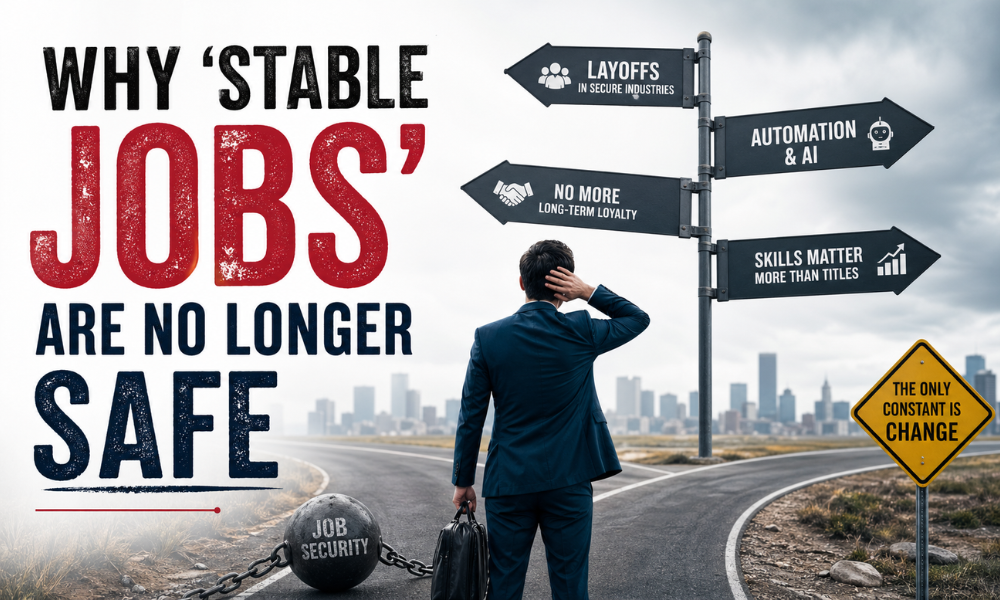
For several decades, certain sectors such as IT, finance, and the public sector were considered safe havens for job security. However, this assumption seems outdated. Today, even the most “secure” industries are witnessing layoffs. In addition, job cuts in some organizations may come as a surprise. Economic recessions worldwide have pushed many firms to lower costs, and cutting back on staffing is one of the fastest ways to achieve that goal. Companies have also started to be more conservative when it comes to hiring employees for prolonged periods. Consequently, employees have understood that they cannot be assured job security simply because they belong to a “safe” industry. The belief that a renowned firm or sector can save an individual from being laid off has started to lose its validity.
Predictable Jobs Are Being Replaced by Automation and AI
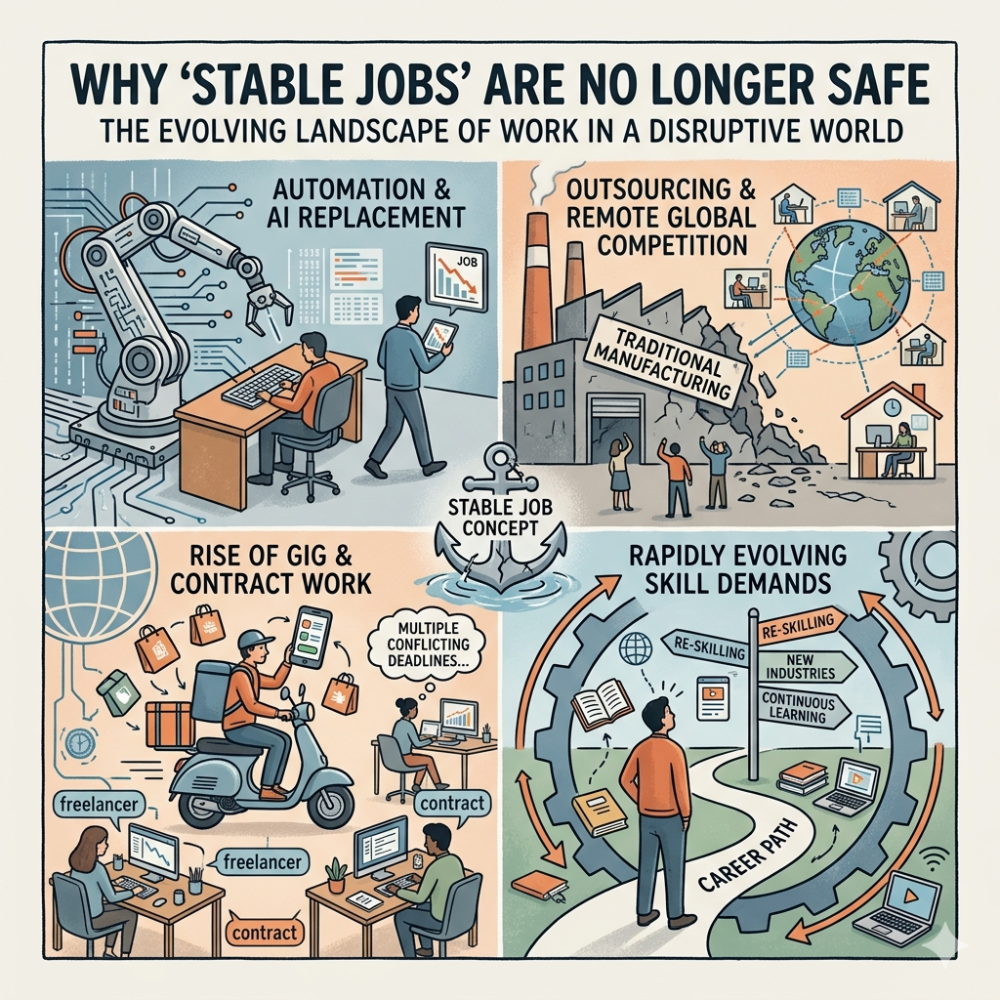
Automation and artificial intelligence (AI) are quickly becoming a factor in the loss of stability and job security for many employees. Jobs that involve repetitive tasks or a set process are at the highest risk of being impacted by these technologies. Occupations that have traditionally provided stability, such as those in customer service, data entry, and certain types of analysis, are rapidly being replaced by smart tools/systems that work more quickly and accurately than humans, and can operate 24 hours per day – making them very appealing to companies that want to improve their efficiency. With that said, many traditional job positions have either been reduced in scope, or have completely changed because of automation and AI. However, this doesn’t mean that jobs will eventually cease to exist; rather, it means that the future of work is changing. Employees who only perform repetitive tasks are going to be much more susceptible to losing their jobs than those who are flexible and can use new technologies to help them remain relevant.
Long-Term Loyalty No Longer Offered by Companies
The old model of employment, where employees could expect to have long-term loyalty from their employers and both sides would benefit mutually by offering stability, being able to grow with a company, and feeling an allegiance, has significantly changed over time in that companies are now tending to focus on more short-term flexibility than on long-term commitment. So, contract jobs, gig workers, and project-based hiring are on the rise because they allow companies to be more fluid in their ability to respond to new requirements; additionally, because of constant re-structuring and changes to organisations, roles within those organisations are disappearing faster than ever; therefore, both sides are now no longer able to rely on previous levels of loyalty. As a result of the changes taking place, employees are starting to have to look at changing jobs more frequently than before, while in turn, companies are starting to value short-term efficiency over retaining employees for long-term. Therefore, relying solely on your employer as a source of job security is no longer a good plan; as an individual, you are going to need to start looking at ways outside of your employer for stability for your future careers.
Why Skills Are More Important Than Job Titles Today
In today’s world, it is no longer enough to have an impressive title or a job with a “good” company; you need to be able to adapt and to grow, as jobs are constantly changing and evolving. Skills are now the best measurement for being able to secure yourself in today’s job market. Professionals who learn continuously, who upgrade their skills, and who are willing to learn new tools or new ways to do their work will be prepared for a world of uncertainty, including examining additional sources of income instead of depending on one source. The emphasis has changed from getting a job to building skill sets that are applicable in many situations. As industries change, so does the demand for certain skills as compared to others. Therefore, if you keep developing yourself, you will be able to maintain value as a professional, regardless of where you happen to be working. Today’s world shows that while having a job that is considered “stable” can be beneficial in some cases, you will find greater stability in your abilities and personal development than you will ever find in your job title.
Conclusion
In the present-day highly dynamic environment, the concept of “stable employment” has lost its viability to a significant degree. In light of layoffs in traditionally stable fields, automation, and changing priorities of employers, security in one’s workplace has acquired an entirely different connotation altogether. Now, more than ever before, people must pay attention to their adaptability and skills rather than depend only on a company name or position. It should be stressed that security is not about where one works, but how ready one is for changes.