
Deepfake Banking Fraud in Ahmedabad: When AI Hacks Your Identity Without OTPs
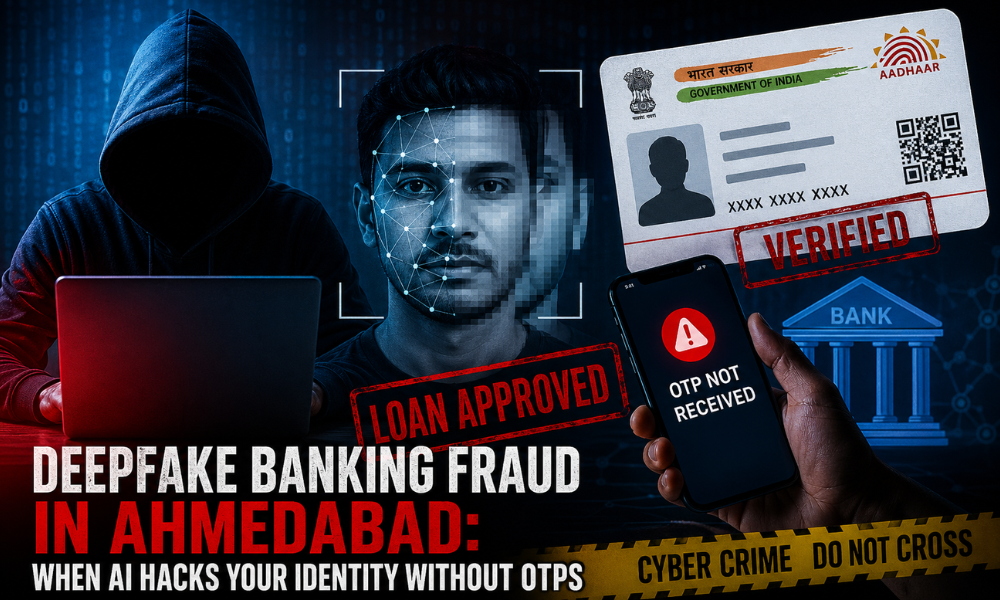
The disturbing case reported from Ahmedabad highlights the power of sophisticated AI technology in cracking the best security mechanisms in place. According to the reports, criminals have leveraged technologies such as Google Gemini to produce deepfake videos along with hacking the information associated with the Aadhaar ID card without setting off the OTP warning system. The most frightening part of the case under discussion lies in the fact that how easy was the manipulation of the identity verification mechanism.
Details of How Ahmedabad Deepfake Frauds Occurred
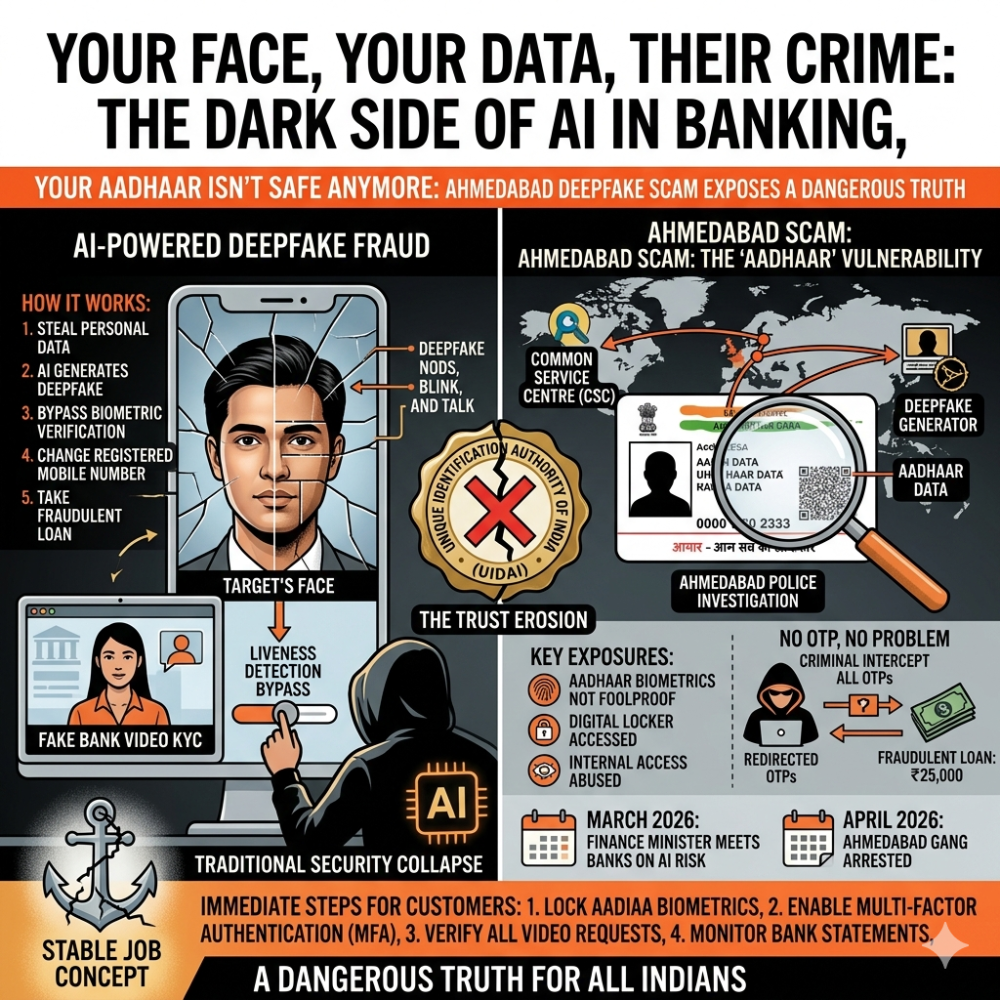
It was not your everyday kind of scam but rather a meticulously crafted scheme that made use of state-of-the-art AI systems to execute their fraudulent schemes. The accused had apparently used Google Gemini to create deepfake videos of the businessman, thereby managing to bypass the Aadhaar biometric verification process. After successfully forging his digital identity, they proceeded to change his Aadhaar-linked mobile number, thus circumventing all possible OTP notifications in this regard. This was crucial because from then on, all his OTPs would go to a new mobile number that was in their control. Armed with the information about his Aadhaar details and other pertinent personal information, they tried to create bank accounts via e-KYC with various banks. They managed to create one such account with Jio Payments Bank and had even availed of a loan of Rs 25,000.
The Revelations of Weakness in Aadhaar, e-KYC and Digital Systems
This case has highlighted a significant number of gaps within the digital identification and verification ecosystem. Under UIDAI, the digital identification verification system utilizes biometric data and mobile telephony as a primary method for authentication; however, those committing fraud changed the registered phone numbers without OTP authorisation, exposing a major point of weakness. Access to Aadhaar systems and equipment by individuals who were employees of CSCs provided the dishonest individuals with much greater opportunities to alter sensitive data compared to those who were not authorised users. As soon as the mobile phone number was changed, the security chain failed, as no OTPs were sent to the legitimate users. The criminals who committed this crime were also able to access the victim’s documents by way of Digi Locker, highlighting the interconnectedness of digital systems and therefore the vulnerabilities they create when one of those elements fails.
The Emergence of AI as A Growing Risk In Financial Fraud
The sophistication of this example is what makes it so disturbing. The development of AI-enabled deepfake technology for bypassing biometric systems has developed so quickly; technology has moved on rapidly, and there are now clear examples of misuse. Even the investigators were amazed at how advanced the technique was. This is not a single incident but part of the increasing concern about the use of AI in the commission of cybercrime. Policy makers are starting to take notice. Recently, Nirmala Sitharaman held discussions about the potential risks posed by rapidly advancing technology to the financial sectors, and Members of Congress have expressed concerns about the future impact of powerful AI models (e.g., Claude Mythos) and their ability to be misused. With continuing access to new developments in AI, fraudsters are coming up with new and innovative ways to commit fraud, leading to traditional ways of securing against fraud becoming increasingly obsolete.
How You Can Safeguard Yourself from Deepfake Identity Fraud?
This situation illustrates how vital it is for people to pay attention to their digital identities. The fraud wasn’t discovered until the individual realized he hadn’t been receiving OTPs (One-time passwords) for 2 days; something most individuals don’t think twice about. By checking bank statements and your mobile connected to your Aadhaar regularly, you could potentially identify these concerns earlier rather than later. The fraudster(s) were able to obtain some information via Digi Locker – therefore, it is imperative that you have good safety practices in place on all digital platforms (social media, email, etc.) and ensure that you have reviewed your account for anomalies (failed logins or changes). It is critical that if you feel something is unusual (missing OTPs or unexpected transactions), then you act and notify them of what occurred. Although the systems are designed with security in mind, this demonstrates that they are far from perfect. One of the best ways to mitigate your risk of becoming a victim of this type of deceit is to remain aware of your digital activity and to take precautions.
Conclusion
The Ahmedabad deepfake fraud case serves as an unmistakable red flag signaling that the security mechanisms of digital platforms are not as infallible as we would like to think. The ability of AI to alter identities, circumvent verification procedures, and reroute OTPs has made cyberattacks more sophisticated and dangerous than ever before. It underscores the absolute necessity of taking protective measures in the face of technological advancements.