
Tata Electronics Signs Deal With ASML to Power Dholera Chip Plant in Gujarat
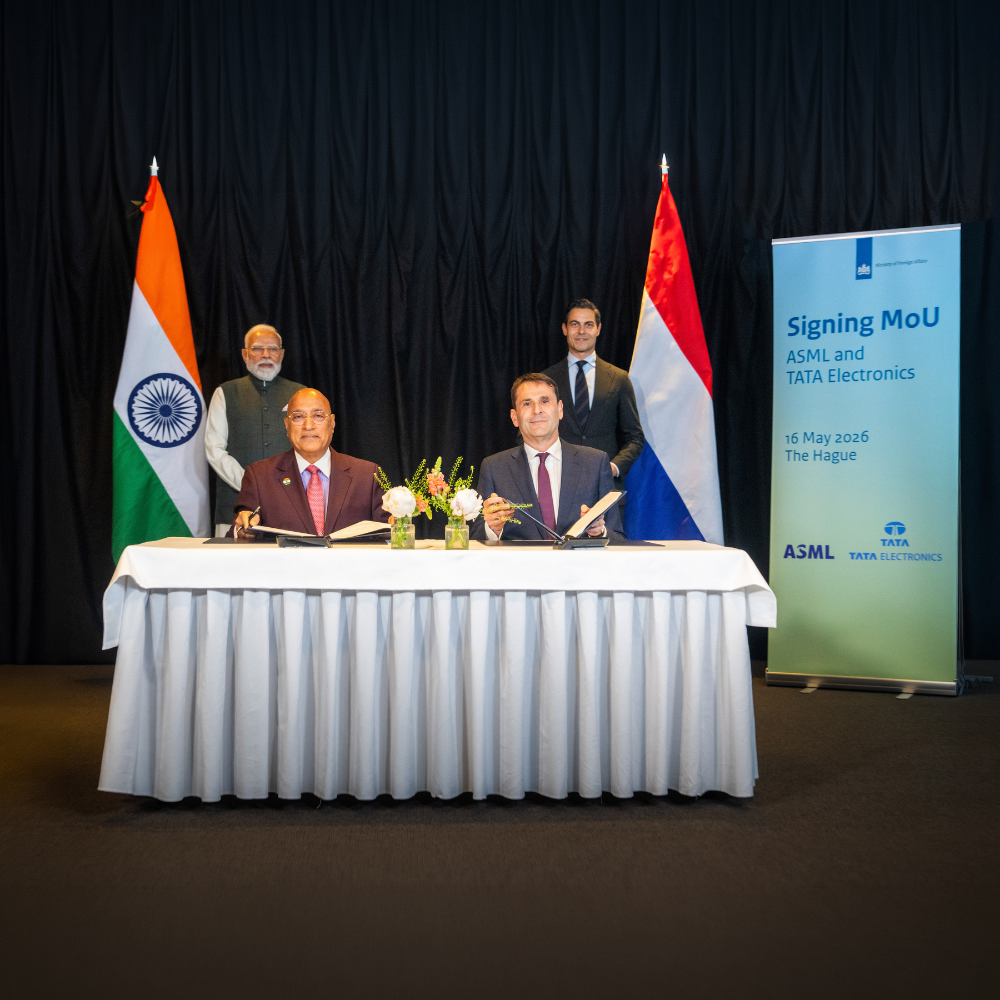
In a moment that may well be remembered as a turning point in India’s technological history, Tata Electronics and Dutch semiconductor equipment giant ASML signed a landmark agreement on May 16, 2026, to jointly power what will become India’s first commercial-scale semiconductor fabrication plant located in Dholera, Gujarat. The signing ceremony took place at The Hague in the Netherlands, witnessed by Indian Prime Minister Narendra Modi and Dutch Prime Minister Rob Jetten, lending the deal the weight of high-level diplomatic endorsement and signaling that this is far more than a routine corporate transaction.
The Deal at a Glance
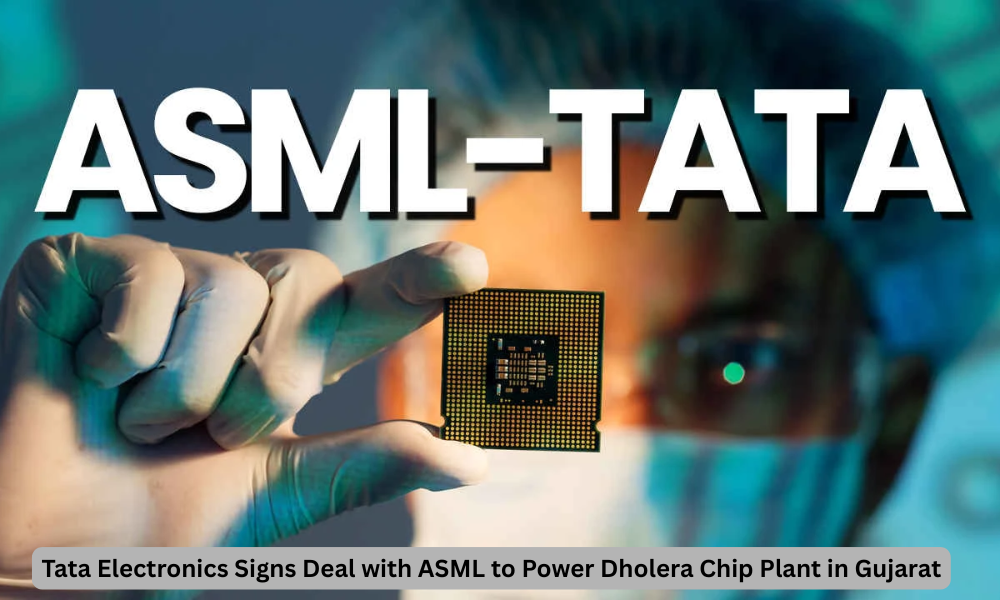
The two companies signed a Memorandum of Understanding (MoU) under which ASML, the world’s dominant supplier of lithography machines, which are indispensable for printing microscopic circuits onto silicon wafers, will supply advanced lithography systems to Tata Electronics for its upcoming semiconductor fab in Dholera. The agreement also extends well beyond hardware. The two companies have committed to collaborating on talent development, supply chain construction, and long-term research and development capabilities at the site.
The Dholera FAB itself is a colossal undertaking. Tata Electronics is developing the facility with an investment of approximately $11 billion, equivalent to around ₹91,000 crore, making it one of the largest industrial investments in Gujarat’s history. The plant will be a 300 mm (12-inch) semiconductor fabrication facility, designed to manufacture chips serving the automotive sector, mobile devices, and artificial intelligence applications on a global scale. The facility’s eventual production target is an ambitious 50,000 wafer starts per month, a scale that would place it firmly in the league of serious global foundries.
Significantly, the Dholera site was formally designated a special economic zone as recently as April 2026, a move that provides the project with crucial regulatory and fiscal advantages as it moves from construction into commercial production.
Who Is ASML — and Why Does It Matter?
To understand the magnitude of this deal, one must appreciate what ASML brings to the table. The Netherlands-based company holds a near monopoly on the world’s most advanced lithography equipment—the machines without which modern chips simply cannot be manufactured. Its Extreme Ultraviolet (EUV) lithography systems are the backbone of the global semiconductor industry, used by leading chipmakers including TSMC, Samsung, and Intel. In essence, if you want to build chips, you need ASML.
For ASML CEO Christophe Fouquet, India’s semiconductor sector presents what he described as “many compelling opportunities,” and the company expressed a clear commitment to establishing long-term partnerships in the country. That language from a company of ASML’s stature is not merely diplomatic politeness—it reflects a genuine strategic pivot toward India as a viable and growing node in the global chip supply chain.
For Tata Electronics CEO and Managing Director Dr. Randhir Thakur, the partnership fills a critical technical gap. He noted that ASML’s “deep expertise in holistic lithography solutions” would ensure the timely ramp-up of the Dholera fab, help create a resilient and trusted supply chain for global customers, drive innovation, and develop local talent. These are not abstract ambitions — they are the concrete deliverables that will determine whether the Dholera plant becomes a genuine global manufacturing hub or remains a well-funded aspiration.
Gujarat at the Centre of India’s Chip Strategy
The choice of Dholera as the home for India’s first front-end semiconductor fab is significant on multiple levels. Dholera Smart City, part of the Delhi-Mumbai Industrial Corridor, has long been positioned as a greenfield industrial zone designed from scratch for 21st-century manufacturing. It offers dedicated industrial land, planned infrastructure, power connectivity, and proximity to key logistics routes. The semiconductor fab is emerging as its most transformative anchor project.
The Dholera plant is also not India’s only semiconductor bet in Gujarat. According to reports, another Tata Electronics semiconductor facility in the state, valued at $14 billion, is also in development, underscoring Gujarat’s emerging status as the nerve center of India’s chip manufacturing ecosystem. Together with Micron’s assembly and test facility already operational in Sanand, the state is rapidly assembling the building blocks of a semiconductor cluster.
India’s Larger Semiconductor Ambition
This deal did not emerge in a vacuum. India has been building the foundations of a domestic semiconductor industry for several years. The government’s India Semiconductor Mission, launched in 2021–22, committed billions of dollars in subsidies and incentives to attract chip fabrication and packaging projects. Currently, eight semiconductor-related projects are underway across India, but until Dholera, the country had no front-end wafer fabrication capacity of its own. India has historically depended heavily on imported chips from Taiwan, South Korea, and China, a dependency that the government has identified as both an economic vulnerability and a national security risk.
The Tata–ASML partnership directly addresses this gap. In October 2025, India had already unveiled its first indigenous semiconductor chip, the Vikram-32, a symbolic milestone demonstrating nascent domestic capability. The Dholera fab is the next leap from symbolic to industrial, from prototype to production. With initial chip production at Dholera expected by December 2026, India may be just months away from becoming, for the first time in its history, a country that manufactures its own commercial-grade semiconductors.
The agreement also aligns with India’s participation in the U.S.-led Pax Silica initiative, a supply chain alliance spanning semiconductors, AI infrastructure, and critical minerals that India joined in February 2026, placing the country within a trusted, allied network of chip producers at a time when geopolitical competition over semiconductor supply chains is intensifying globally.
Conclusion
Despite the momentum, industry observers rightly note that ambition must meet execution. India still needs to develop a deep pool of skilled fab workers, build supplier ecosystems capable of supporting sustained high-volume production, and achieve consistent manufacturing yields—challenges that even experienced chipmaking nations took years to overcome. The Tata-ASML collaboration’s explicit focus on talent development and supply chain building suggests both companies are clear-eyed about these hurdles.
For Gujarat, however, the symbolism and the substance of this deal point in the same direction: Dholera is no longer merely a smart city project on a planning map.