





Boost Concentration and Productivity with the 25-Minute Formula
In today’s fast-paced world, maintaining concentration and productivity has become one of the biggest challenges for students, professionals, and entrepreneurs alike. Constant notifications, social media distractions, multitasking, and mental fatigue often make it difficult for people to stay focused on a single task for long periods. As a result, many individuals struggle to complete work efficiently despite spending several hours at their desks.
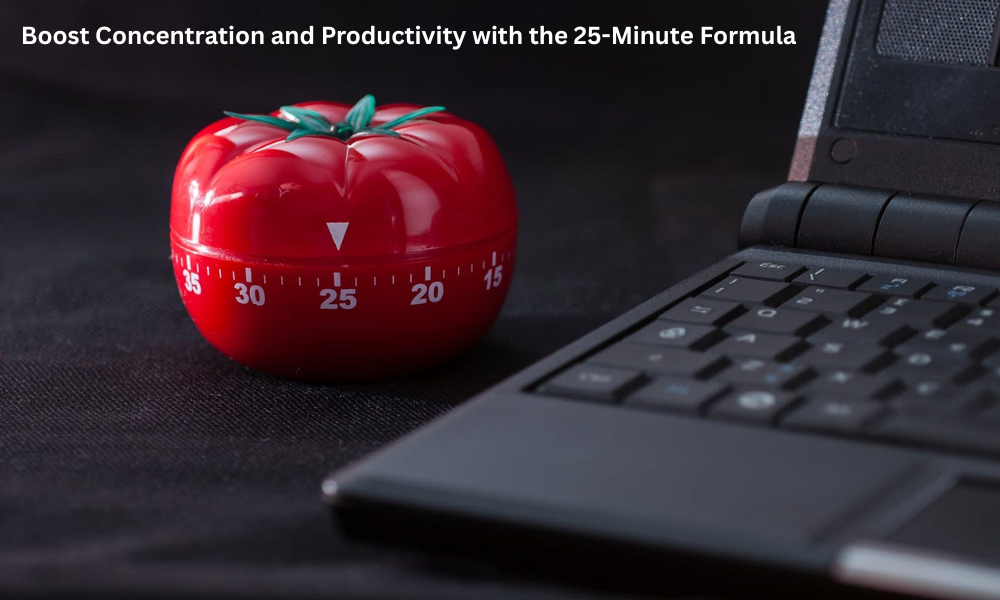
The 25-Minute Technique That Can Boost Productivity
Amid these challenges, a simple yet highly effective productivity method known as the “25-Minute Technique” has gained worldwide popularity. Often associated with the famous Pomodoro Technique, this approach helps people improve concentration, reduce mental exhaustion, and achieve better results through structured work sessions and short breaks.
The idea behind the method is surprisingly simple: work with complete focus for 25 minutes, take a short break, and repeat the cycle. Despite its simplicity, millions of people around the world have found this technique transformative for managing time and improving productivity.
Origin of the Technique
The technique was developed in the late 1980s by Francesco Cirillo, an Italian university student who struggled to focus on his studies. Feeling overwhelmed and distracted, he challenged himself to study for just 10 minutes without interruption using a tomato-shaped kitchen timer.
To his surprise, the short, focused session worked remarkably well. Over time, he refined the system into 25-minute work intervals separated by short breaks. Since the kitchen timer resembled a tomato (pomodoro in Italian), the method became known as the Pomodoro Technique.
Today, this technique is used worldwide by students, writers, programmers, designers, researchers, and business professionals.
How the 25-Minute Technique Works
The method follows a simple step-by-step process:
- Choose a Task
Select one specific task you want to complete. It could be studying, writing, reading, coding, preparing reports, or even household work.
- Set a Timer for 25 Minutes
Set a timer for exactly 25 minutes. During this period, focus only on the chosen task.
- Work Without Distractions
Give full attention to the task until the timer rings. Avoid checking phones, social media, emails, or unrelated conversations.
- Take a Short Break
After 25 minutes, take a 5-minute break. Stretch, walk, drink water, or relax your mind briefly.
- Repeat the Process
After completing four such sessions, take a longer break of 15–30 minutes before starting again.
This structure helps maintain mental freshness while ensuring continuous progress.
Why the Technique Is Effective
The 25-minute method works because it aligns with the brain’s natural ability to focus in short, intense periods rather than for several uninterrupted hours.
Key Reasons Behind Its Success
- Reduces Mental Pressure
Large tasks often feel overwhelming. Breaking work into smaller sessions makes tasks appear manageable and less stressful.
- Improves Focus
Knowing that the session lasts only 25 minutes encourages people to concentrate fully without feeling mentally exhausted.
- Prevents Burnout
Regular short breaks help the brain recover, reducing fatigue and maintaining energy levels throughout the day.
- Encourages Discipline
The technique trains individuals to avoid distractions and develop better work habits over time.
- Creates a Sense of Achievement
Completing each session provides a feeling of progress and motivation, boosting confidence.
Benefits for Students
Students often face difficulty concentrating for long study hours. The 25-minute technique can significantly improve learning efficiency.
Advantages for Students
- Better concentration during study sessions
- Reduced exam stress
- Improved memory retention
- Less procrastination
- Better time management
- Increased consistency in study routines
Many students find that short, focused sessions help them absorb information more effectively than long, tiring study marathons.

Benefits for Working Professionals
The modern workplace is filled with interruptions such as meetings, messages, and emails. The 25-minute technique can help professionals remain productive despite these distractions.
Workplace Benefits
- Increased efficiency
- Better task completion rates
- Improved project management
- Reduced workplace stress
- Enhanced creativity and problem-solving
- Better work-life balance
Professionals in creative fields particularly benefit because uninterrupted focus improves the quality of thinking and innovation.
The Role of Breaks
One of the most important aspects of the technique is the inclusion of short breaks. Many people underestimate how essential breaks are for mental performance.
Scientific studies suggest that the brain’s attention span decreases after prolonged concentration. Short pauses allow the mind to refresh and restore energy.
During breaks, people are encouraged to:
- Stretch their body
- Relax their eyes
- Drink water
- Take deep breaths
- Walk briefly
- Avoid digital distractions
These small actions help improve both physical and mental well-being.
Psychological Impact
The technique not only improves productivity but also positively affects mental health. Many people experience reduced anxiety because tasks feel more organized and achievable.
Short focused sessions also reduce procrastination, which is often linked to stress and fear of failure.
By creating a clear work structure, the method helps people feel more in control of their time and responsibilities.
Conclusion
The 25-minute productivity technique proves that effective work does not always require long hours or constant effort. Sometimes, small periods of deep focus combined with regular breaks can produce better results than endless multitasking and mental exhaustion.
Its simplicity, flexibility, and scientific foundation have made it one of the most widely used productivity methods in the world. Whether for students preparing for exams, professionals managing busy schedules, or individuals trying to build better habits, the technique offers a practical solution to modern distractions.
In an age where attention is constantly divided, the 25-minute method reminds people that focused effort, even for a short time, can lead to meaningful success.