
Mundra Port to Get Direct Connectivity with Saudi Arabia and Djibouti — New Shipping Route to Be a Game-Changer for Gujarat
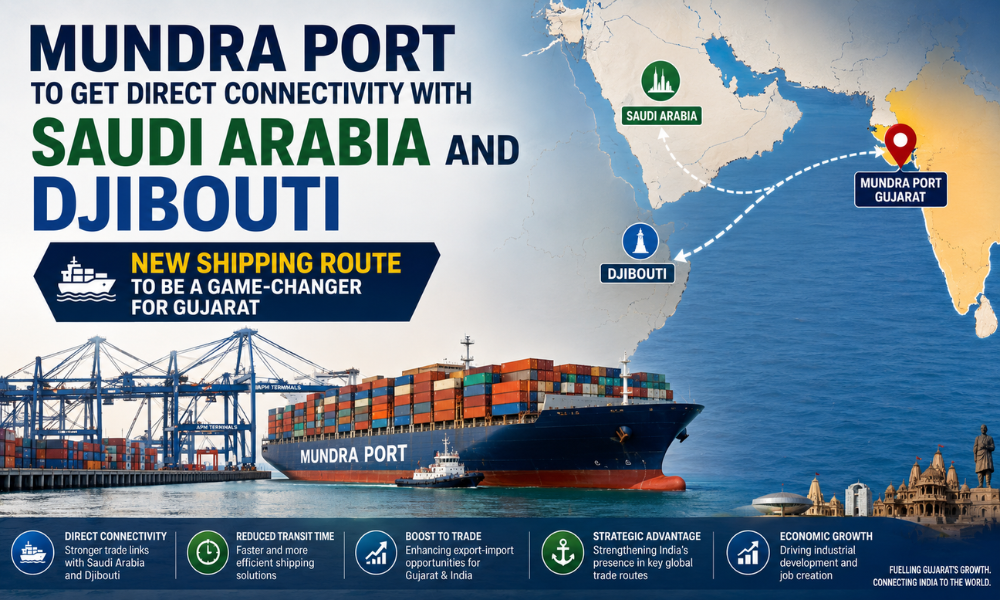
In a major development for Gujarat’s trade and maritime sector, Mundra Port is set to get direct shipping connectivity with Saudi Arabia’s Jeddah Islamic Port and Africa’s Djibouti Port. The Saudi Ports Authority has officially announced the extension of its South Red Sea shipping service to Jeddah, and this new maritime route operated through Amerat Shipping Line will directly link Mundra Port in Gujarat with two of the most strategically important ports in the world. For Gujarat’s industries, exporters, and the broader Indian economy, this is nothing short of a game-changer.
What Is Happening and Why It Matters
The Saudi Ports Authority has extended its newly launched South Red Sea shipping service westward to Jeddah Islamic Port. This new maritime route now connects Gujarat’s Mundra Port directly to Jeddah on the western coast of Saudi Arabia and to Djibouti Port on the Horn of Africa. Until now, cargo from Mundra had to travel through multiple transit points, adding days to delivery schedules and significantly increasing logistics costs.
With this direct connection, the entire picture changes. Transit time is expected to be reduced by 5 to 7 days, and freight and logistics costs are expected to fall by 10 to 15 percent. For Gujarat’s exporters—who are already dealing with rising global shipping costs and geopolitical disruptions—this new route offers both relief and opportunity.
The Global Context: Why This Route Is Needed Now
The timing of this development is significant. Global shipping is currently under severe stress from two directions. On one side, the Strait of Hormuz, a critical waterway between Iran and the Arabian Peninsula, has been under tension due to the Iran-Israel conflict and other regional uncertainties. On the other side, Houthi militant attacks in the southern part of the Red Sea have made that route increasingly dangerous and unreliable for shipping companies.
In this environment, Saudi Arabia’s new “Western Corridor,” the Jeddah route, provides a safer and more strategically sound alternative. Saudi Arabia’s western coastline is considered significantly more secure, and this route is designed to give cargo a reliable path that avoids the most dangerous zones. This corridor is part of Saudi Arabia’s larger master plan to become a global logistics hub, and Mundra’s inclusion in this network places Gujarat at the center of an important new trade artery.
Why Mundra Port?
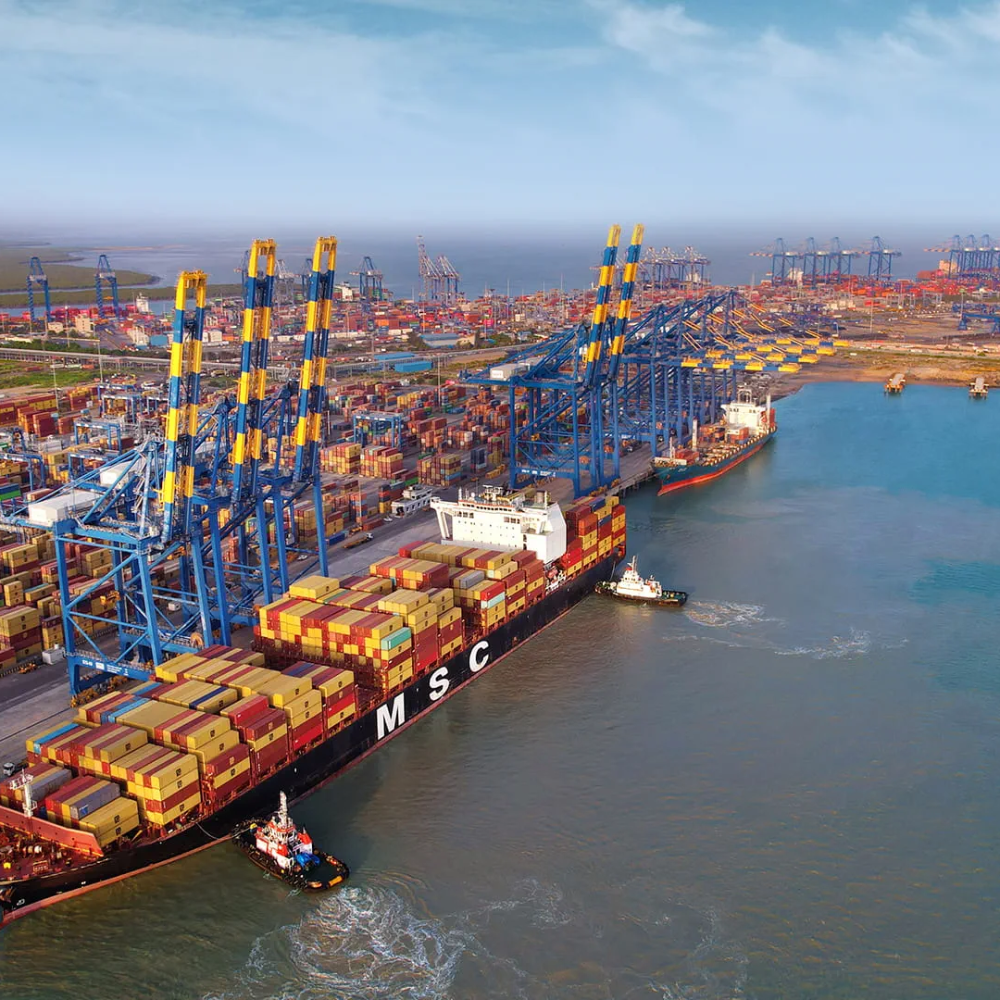
Mundra Port, operated by the Adani Group, is already India’s largest commercial port by cargo volume. Its strategic location on the northwestern coast of India, its deep-water berths, and its excellent rail and road connectivity make it the natural choice for this kind of international shipping expansion.
The port has direct access to the Western Dedicated Freight Corridor (WDFC), a high-speed cargo rail network that connects Mundra to the National Capital Region (NCR) and other major industrial centers in northern India. This means goods exported through Mundra can reach Delhi, Haryana, Uttar Pradesh, and other key markets quickly and cost-effectively.
Additionally, Mundra has international shipping facilities and the capacity to handle large vessel sizes, including ships with a capacity of 2,144 TEUs (Twenty-foot Equivalent Units), a standard measure of container shipping capacity. The port’s first vessel on this new route is named “An Hai,” which will serve as the inaugural ship connecting Mundra to Jeddah and Djibouti.
Which Gujarat Industries Will Benefit the Most?
The new shipping route is expected to have its most powerful impact on Gujarat’s MSME (Micro, Small, and Medium Enterprises) sector. Several key industries stand to gain directly.
Morbi and Rajkot: Morbi is India’s ceramic tile capital, producing a massive share of the country’s total tile output. Rajkot is a hub for engineering goods and auto parts. Both cities export heavily to the Middle East, including Saudi Arabia, which is a huge market for these products. With direct shipping from Mundra to Jeddah, these goods will reach Saudi Arabian markets faster and at lower cost, making Gujarat’s manufacturers more competitive against rivals from China, Turkey, and other countries.
Jamnagar and Kutch: Jamnagar is globally known for its brass parts industry, which supplies components to plumbing, electrical, and industrial sectors worldwide. Kutch, on the other hand, produces agricultural commodities including castor oil, cotton, and dates. The new route via Djibouti opens up African interior markets for these products. Djibouti serves as a gateway to the entire East African region, allowing Gujarat’s goods to reach countries like Ethiopia, Kenya, Somalia, and beyond with far greater ease than before.
Saving Time and Money
The most immediate benefit of this new route is the reduction in transit time. Currently, shipping from Mundra to Jeddah or to African ports requires routing through multiple hubs, adding unnecessary time, handling costs, and risk of damage or delay. With direct connectivity, the estimated saving is 5 to 7 full days of transit time.
For exporters, this translates directly into money saved. Freight costs, port handling charges, and the cost of carrying inventory during a longer transit all reduce. The estimated drop in logistics and freight expenses is between 10 and 15 percent — a substantial saving that improves profit margins and makes Indian goods more price-competitive in international markets.
Conclusion
This development fits perfectly into India’s and Gujarat’s broader ambitions. The state has been steadily positioning itself as a global trade and logistics hub, and developments like this — where international shipping authorities specifically choose Gujarat’s ports for new route expansions — are proof that this strategy is working.
For Gujarat’s businesses, for India’s export community, and for the thousands of workers employed in the MSME sector, the new Mundra–Jeddah–Djibouti shipping route is far more than a logistical update. It is a new door opening to global markets—faster, cheaper, and more reliably than ever before.