





Millionaires at 19, Game Changers at 35: How Gen Z Is Redefining Success in India
The meaning of success is evolving rapidly and constantly. In India, a large proportion of Gen Z entrepreneurs, creators, and professionals are making progress at an unprecedented pace; they are establishing startups, receiving huge paychecks, and managing teams at the age of 19 years. In view of technological innovation, artificial intelligence, and the creator economy, a new generation of achievers is reshaping traditional careers. If success is now measured from the age of 19 years and not from 35 years, then where will the road take us? Let us find out how Gen Z is defining success, ambition, wealth, and purpose up to their mid-thirties.

Young Indians’ Success before Age 20
A few years back, it was thought to be a remarkable feat to either become financially successful or hold down a company job at such a tender age as below 30 years. However, this norm has been turned upside down by many young Indians who are now making great strides regardless of their age. With the advent of artificial intelligence, digital entrepreneurship, working from home, and learning through digital platforms, today’s teenagers are able to establish themselves professionally even while still enrolled in college or high schools. Examples include stories of Indian AI startup founder Ayush Singh, cybersecurity genius Nisarga Adhikary, and Rolls-Royce recruit Rithuparna. Unlike generations before them, whose careers were predictable and routine in nature, Gen Z is taking the bold move of experimenting and innovating at an early stage. Availability of global knowledge, cheap technology, and access to markets around the world have made it possible for ambitious young people to compete internationally.
What if Success Arrives Early, What Then at 35?
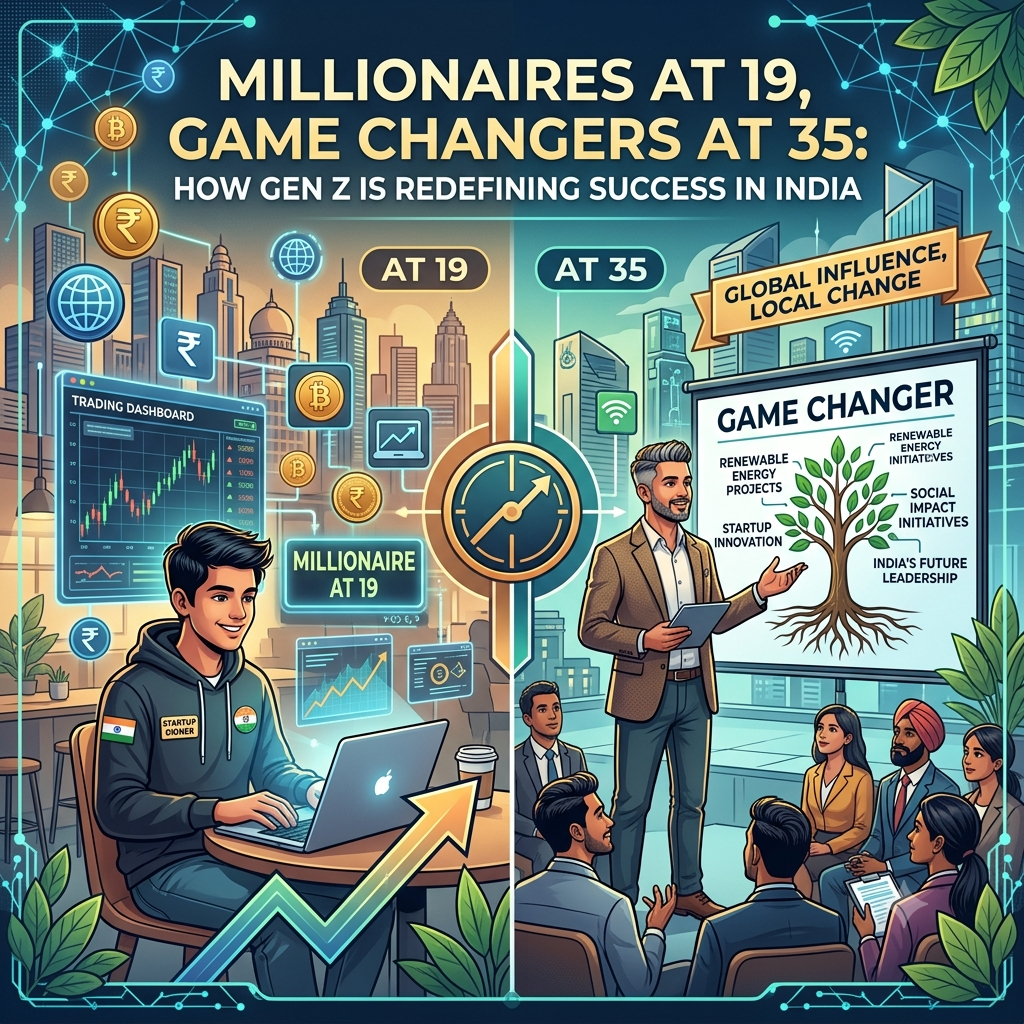
While for earlier generations reaching age 35 used to mean reaching the zenith of career stability (having reached a position of leadership, having one’s own house, financial security), for Gen Zers, all those milestones may become realities well before turning 25 years old. This way, the natural question arises: what comes after? Instead of pursuing the same achievements throughout yet another decade, most of the young talents would rather concentrate on rethinking and making impact. The priorities of young people would not be centered anymore on earning money but rather building something sustainable, expanding beyond borders, investing in new sectors of industry, mentoring the upcoming generations of entrepreneurs. Being successful at 35 will no longer mean high salaries or impressive titles but rather being capable of creating something that can exist independently and make positive contribution to the surrounding world. More and more entrepreneurs perceive legacy, innovation, and sustainability as much more valuable goals than personal prosperity. Instead of seeing 35 as a limit, Gen Z sees it as just the beginning of an interesting new chapter.
Money is Not Everything – The Significance of the Sense of Purpose over Financial Success
Financial security in early life gives an opportunity that is much more precious than any luxury. The most successful entrepreneurs from Generation Z consider financial prosperity as just one way to have a full and meaningful life. With less stress about money, these people have the freedom to pursue their passions outside of work. Some may want to become authors, explore the world, engage in charity works, help other entrepreneurs or invest in socially important projects. Achievements of some representatives of Generation Z prove that people prefer to be engaged not only in entrepreneurship but also in research, sport, studies and charity rather than just earn money. This generation measures success not in expensive cars but in fulfillment, creativity and social importance of the work. These people understand that the work and studies give them more pleasure than simple earning. In addition, Gen Z defines success in life as a harmony of work, hobby, good health, family and charitable work.
The Challenges of Early Success – Staying Hungry in a Fast-Paced World
While early success presents many positive possibilities, it has its own challenges. Financially succeeding before one turns 20 years old means having very high expectations imposed on them by their family, financiers, staff, and sometimes society as a whole. Each accomplishment is measured against past successes and makes it hard to be content with what one already achieved. This may cause anxiety, fatigue, or fears of failure. In order to keep success going for a long time, it is necessary to stay open to learning, adjust to technological innovations, and treat every setback as an experience. Just because one becomes financially independent does not mean he or she has gained all the wisdom, leadership skills, or strength of character needed. It is believed by many people that those who manage to stay grounded in early success are the ones who have a higher sense of mission than money goals. Learning, mentorship, taking risks, and maturity become key components of staying successful. As the world of business becomes more and more flexible and fast-paced, Gen Z begins to replace career ladders with lifelong exploration.
Conclusion
Generation Z is already showing the world that success is no longer age-related nor dependent on career routes followed by previous generations. By leveraging technology, being innovative, and constantly learning, young Indians have started to make unprecedented progress at an early age in comparison to earlier generations. Yet, success is not only about being wealthy; it is about having a positive impact, maintaining curiosity, and finding purpose in life. Today’s teenagers will become tomorrow’s successful leaders in India.