





4 Medical Breakthroughs That Could Save Millions of Lives in the Coming Decade
There has never been such rapid progress made in the field of medicine as there has been in recent years, turning things that were once considered impossible into realities. With developments ranging from personalized treatment methods to groundbreaking gene editing techniques, scientists have created ways to cut down fatalities caused by some of the most deadly diseases.
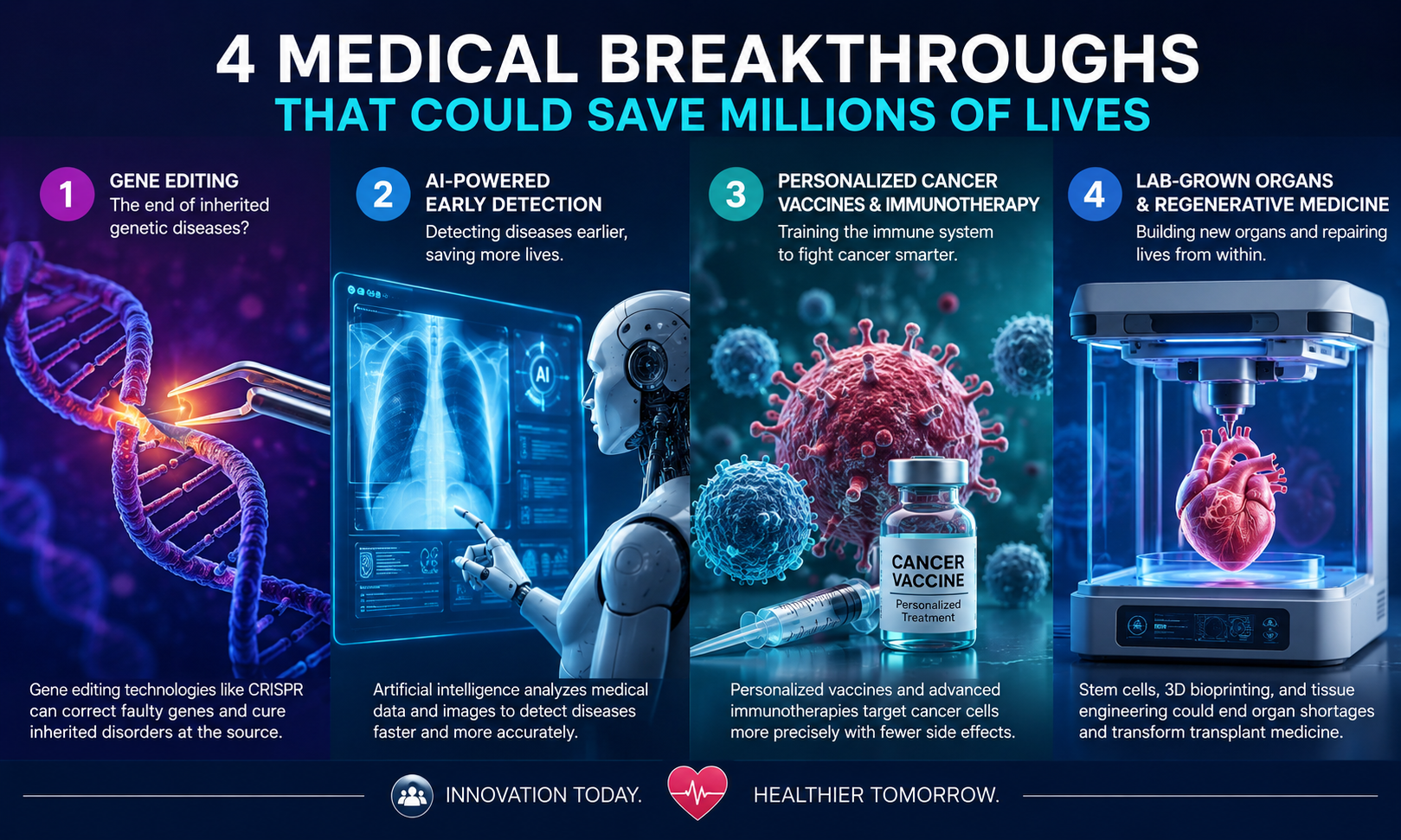
Gene Editing: Is the Cure for Inherited Genetic Disorders Coming Soon?
Gene editing technology has proved to be one of the most radical discoveries in medicine during the 21st century. Thanks to such advanced technology as CRISPR, physicians can change harmful genes that cause inherited illnesses and treat people accordingly. Such serious inherited problems as sickle cell disease, beta-thalassemia, cystic fibrosis, and some types of inherited blindness, which used to be lifelong disorders, may now be cured at the molecular level. Rather than just managing patients’ symptoms, gene editing can help to correct genetic mutations and thus give people a chance for recovery. So far, scientists have already managed to produce remarkable results through gene editing in some clinical experiments; some patients have shown dramatic improvements after only one procedure. Moreover, besides genetic problems, researchers also consider using gene editing to cure cancers, rare diseases, and viral disorders. Nevertheless, some ethical concerns, high prices of treatments, and issues with safety still exist. However, as further research and regulation continue, gene editing technology has great potential for the future of medicine.
Early Disease Detection with the Help of Artificial Intelligence
AI is revolutionizing healthcare because of its ability to help doctors detect diseases at an earlier stage than ever before. AI systems can evaluate hundreds of pictures taken through various procedures, lab reports, and other medical data provided by patients almost instantaneously to spot patterns which may go unnoticed by people. These systems are already used in the diagnosis of such conditions as cancer, heart problems, eye diseases caused by diabetes, Alzheimer’s disease, and diseases affecting lungs. Early detection means that there are better chances for treating the disease successfully, and it will cost less money than late detection and also cause no complications. At hospitals, such tools are useful for prioritizing emergency cases. In remote locations where it is hard to reach specialists, AI can come to the rescue and help healthcare professionals make an accurate and rapid diagnosis. Even though artificial intelligence cannot replace doctors, it provides them with a very helpful tool for medical decision-making. If algorithms continue getting better and if healthcare institutions start using digital technologies more often, AI-based diagnostics can help save many lives.
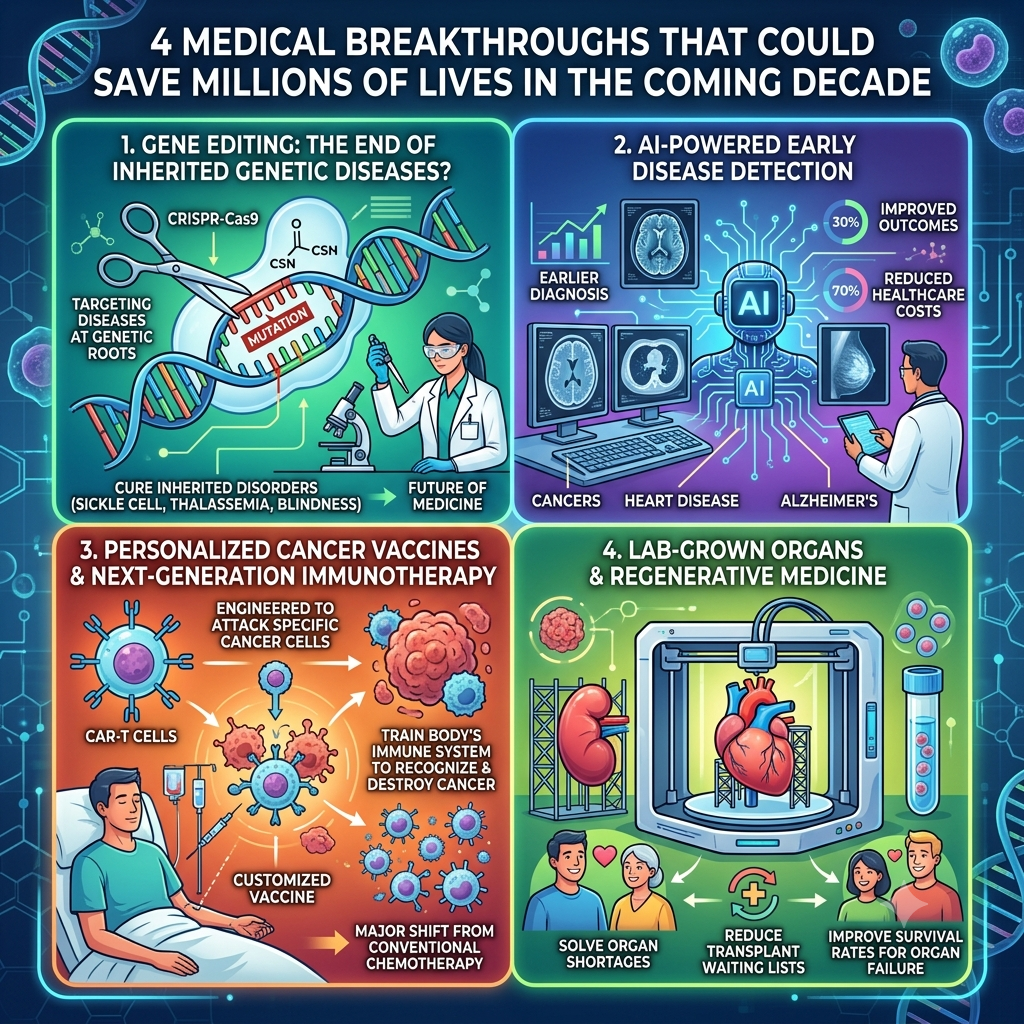
Personalized Cancer Vaccines and Next-Generation Immunotherapy
Treatment of cancer has taken a revolutionary turn with the advent of personalized vaccines and the next generation of immunotherapy that zeroes down on personalizing the treatment based on the individuality of a particular type of cancer in a patient. Differing from the conventional chemotherapy where normal cells are affected alongside the cancerous ones, the newer methods make the immune system of a person fight the disease cells. Personalized cancer vaccines are formulated through a process of identifying the uniqueness of the tumors in a patient and producing a particular vaccine against the specific mutations present in the tumor cells. On the other hand, therapies such as CAR-T cell therapy entail modification of a patient’s immune cells in the laboratory before being re-administered in the body. The therapies have proven successful in treating blood cancers and currently are undergoing trials with breast, lung, skin and colorectal cancers. According to scientists, the methods can improve survival chances and lower side effects that accompany other types of treatments. While costly and not all-inclusive to some cancer types, the ongoing studies are making them affordable and effective.
Creation of Organs Using Regenerative Medicine
One of the main problems that exist in contemporary healthcare sector is the lack of donor organs, however, regenerative medicine provides a possible solution to it. Stem cell research, tissue engineering, and advanced 3D bioprinting technologies allow scientists to develop human tissues and organs in laboratory conditions. In the future, lab-made organs might be used to substitute kidneys, hearts, livers, and other organs of a person without the need for human donor. Moreover, since the organs will be made from a patient’s own cells, the problem of rejection after transplantation will be solved. Scientists have been able to develop such products as artificial skin, cartilage, blood vessels, and mini-organ models for testing new drugs. Despite the fact that functional organs for transplantation are not ready yet, the pace of their development has increased dramatically during the last decade. Regenerative medicine also allows repairing the damaged tissues due to injuries, burns, and degenerative disorders. If these technologies will prove successful, transplant wait lists will decrease significantly, more people will survive thanks to them.
Conclusion
Medical science in the future will no longer be just limited to the cure of diseases but also prevention of diseases as well as reversal of these. Although all these scientific achievements are still under development, they hold the promise of conquering some of the major problems in human healthcare.