Ahmedabad’s BJ Medical College Launches Life-Saving Skill Lab to Train Students in Emergency Care
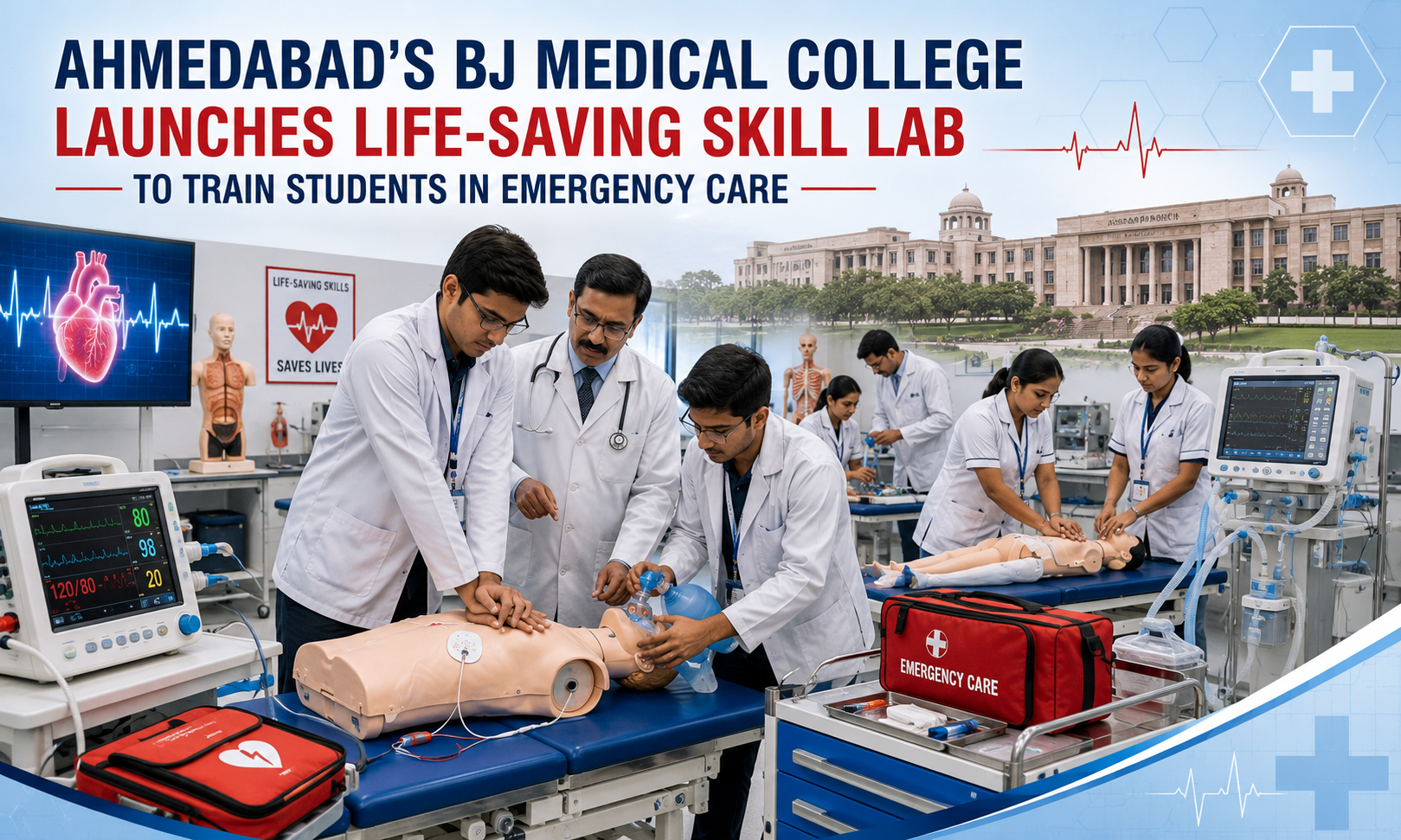
BJ Medical College in Ahmedabad has taken a major step toward strengthening emergency healthcare education by launching a dedicated Life-Saving Skill Lab for its students. Developed under the Central Government’s National Emergency Life Support Program, this modern facility is designed to provide practical, simulation-based training to medical students, nursing students, paramedical staff, and healthcare professionals. The initiative aims to improve emergency response capabilities by ensuring that future doctors and healthcare workers are well-prepared to handle critical situations where every second can make the difference between life and death.
A Significant Milestone for Medical Education
BJ Medical College is one of Gujarat’s oldest and most prestigious government medical institutions. With the establishment of this Life-Saving Skill Lab, the college has added another milestone to its long history of excellence in medical education. The facility focuses on practical learning rather than theoretical instruction, allowing students to develop confidence in handling real-life emergencies before entering clinical practice.
The new laboratory is expected to bridge the gap between classroom education and actual patient care by providing realistic emergency scenarios in a controlled environment.
Developed Under the National Emergency Life Support Program
The Life-Saving Skill Lab has been established with support from the Central Government’s National Emergency Life Support Program. This initiative aims to improve emergency medical services across India by providing quality training facilities in leading medical institutions.
The program emphasizes standardized emergency care training so that healthcare professionals across the country follow internationally accepted methods while responding to medical emergencies. Such initiatives contribute to improving survival rates and reducing preventable deaths caused by delayed or inadequate emergency treatment.
Focus on Practical Emergency Care Training
Unlike traditional classroom teaching, the Life-Saving Skill Lab provides hands-on training using advanced medical simulators and realistic training models. Students will learn how to react calmly and efficiently during emergencies while practicing essential life-saving procedures repeatedly until they gain confidence.
The laboratory has been designed to simulate hospital emergency rooms and trauma situations, allowing trainees to experience conditions similar to actual medical emergencies without putting patients at risk.
Training for Medical and Nursing Students
The Skill Lab will primarily benefit MBBS students, nursing students, interns, and postgraduate medical trainees. They will receive structured training in emergency response techniques that are considered essential in today’s healthcare system.
Students will learn how to recognize life-threatening conditions quickly, prioritize treatment, communicate effectively during emergencies, and work efficiently as part of a healthcare team. These practical skills complement their academic knowledge and prepare them for real clinical responsibilities.
Advanced Medical Simulation Equipment
The newly established laboratory features modern simulation technology that closely mimics real human anatomy and medical emergencies. High-quality mannequins, CPR models, airway management trainers, trauma simulators, and advanced monitoring systems will allow students to practice various emergency procedures safely.
Simulation-based learning enables trainees to repeat complex procedures multiple times until they achieve competence without compromising patient safety.
Learning Basic and Advanced Life Support
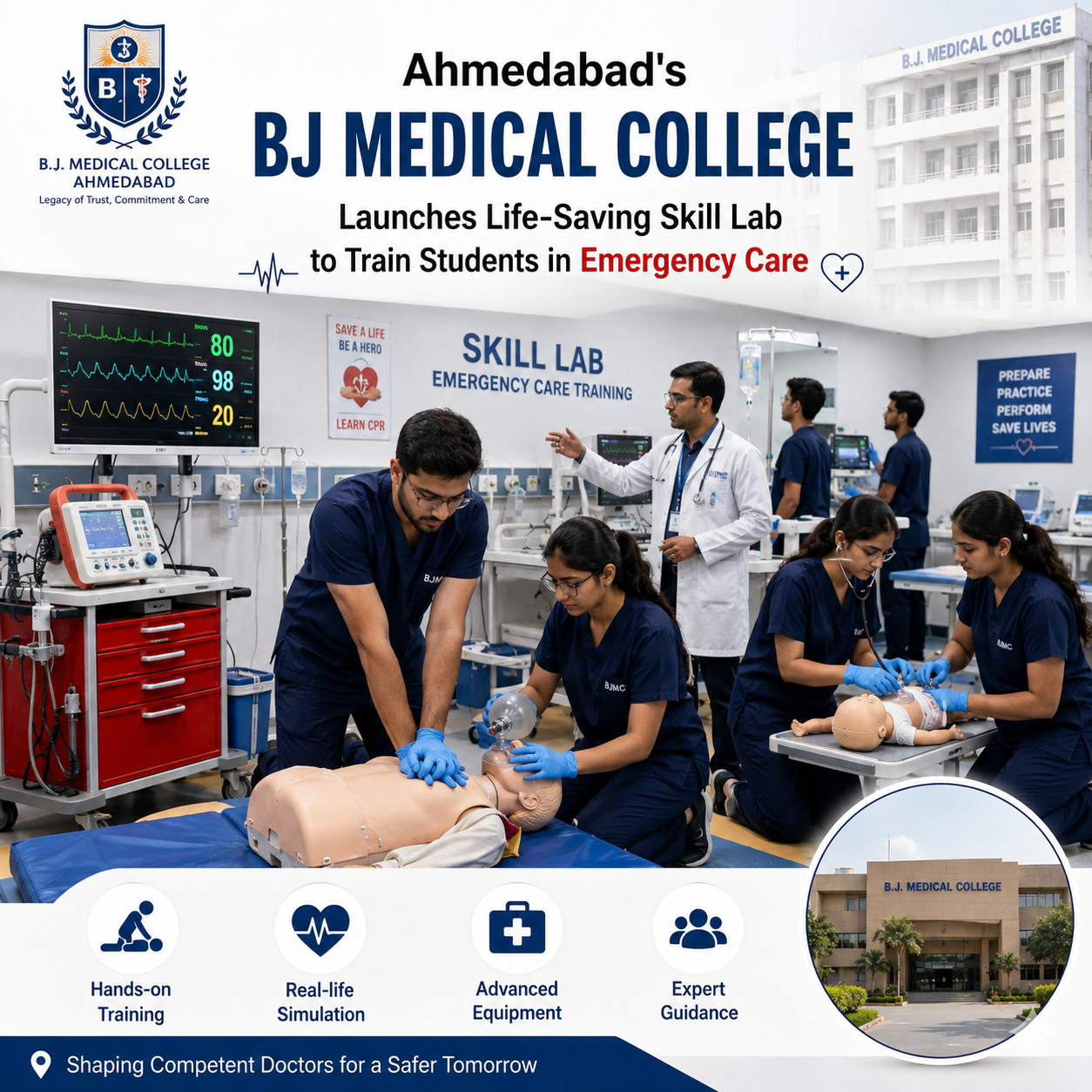
One of the key objectives of the Skill Lab is to provide training in Basic Life Support (BLS) and Advanced Life Support (ALS). Students will learn essential techniques such as:
- Cardiopulmonary Resuscitation (CPR)
- Airway management
- Artificial ventilation
- Cardiac emergency response
- Trauma stabilization
- Management of unconscious patients
- Emergency patient assessment
- Initial treatment during accidents
Mastering these techniques enables healthcare professionals to respond effectively during the critical first few minutes of medical emergencies.
Improving Response During Road Accidents
India witnesses a large number of road accidents every year, making timely emergency care extremely important. The Life-Saving Skill Lab will prepare future doctors and healthcare workers to provide immediate medical assistance to accident victims.
Students will learn trauma assessment, bleeding control, fracture stabilization, airway management, and emergency transportation techniques. These skills can significantly improve patient survival before advanced medical treatment becomes available.
Strengthening Disaster Preparedness
Apart from routine emergencies, healthcare professionals often face large-scale disasters such as earthquakes, floods, industrial accidents, and mass casualty incidents. The Skill Lab will also include disaster management training where students learn how to manage multiple patients under challenging conditions.
Simulation exercises will help trainees improve teamwork, communication, leadership, and decision-making skills during high-pressure situations.
Enhancing Confidence Through Simulation
Many young medical students experience anxiety when handling emergency patients for the first time. Simulation-based education allows them to gain practical experience in a safe environment before entering hospital emergency departments.
By repeatedly practicing emergency procedures, students become more confident, accurate, and efficient. This confidence directly contributes to improved patient care during actual emergencies.
Better Teamwork in Healthcare
Modern healthcare depends heavily on teamwork. Doctors, nurses, paramedics, technicians, and support staff must work together during emergencies. The Life-Saving Skill Lab encourages collaborative learning where students from different healthcare disciplines train together.
Team-based simulation exercises help participants improve communication, leadership, coordination, and clinical decision-making while understanding each member’s responsibilities during emergency care.
Improving Patient Safety
The primary goal of simulation training is to improve patient safety. When healthcare professionals receive adequate practical training before treating real patients, the chances of medical errors decrease significantly.
Students learn proper protocols, standard operating procedures, infection control measures, and emergency algorithms that contribute to safer and more effective patient care.
Supporting Future Healthcare Professionals
The healthcare sector is constantly evolving with new technologies, treatment methods, and emergency care guidelines. The Skill Lab provides an excellent platform for continuous learning and professional development.
Medical students graduating from BJ Medical College will possess stronger practical skills, making them better prepared for hospital duties, emergency medicine, critical care, and public health services.
A Boost for Gujarat’s Healthcare Infrastructure
The establishment of the Life-Saving Skill Lab also strengthens Gujarat’s healthcare education infrastructure. As one of the state’s leading government medical colleges, BJ Medical College serves thousands of students every year. The new facility is expected to benefit multiple batches of future healthcare professionals who will eventually serve hospitals across Gujarat and India.
Better-trained doctors and nurses contribute directly to improving the overall quality of healthcare services available to the public.
Conclusion
The launch of the Life-Saving Skill Lab at Ahmedabad’s BJ Medical College represents a forward-looking investment in medical education and emergency healthcare. By combining modern simulation technology with structured practical training, the institution is preparing future doctors, nurses, and healthcare workers to respond confidently during life-threatening situations.
As emergency medicine continues to play an increasingly important role in healthcare, initiatives like this ensure that medical graduates possess not only strong academic knowledge but also the practical skills needed to save lives. The new Skill Lab reflects BJ Medical College’s commitment to excellence in medical education and its dedication to producing competent healthcare professionals capable of delivering timely, effective, and compassionate emergency care for society.