




After Microsoft and Uber, Meta Moves to Control Soaring AI Costs
Artificial Intelligence has become an integral part of how big tech firms run on a day-to-day basis, assisting their employees in writing code, conducting research, and performing other tasks. The problem is that with the rapid expansion of artificial intelligence, companies have realized that the use of AI comes with huge financial costs. As a result, Meta, having spent months urging employees to utilize artificial intelligence as much as possible, now finds itself facing billions of dollars worth of costs associated with artificial intelligence. This means that Meta needs to introduce new expenditure control measures to deal with the skyrocketing cost of artificial intelligence. Notably, this isn’t the only tech giant currently wrestling with the financial burden caused by artificial intelligence; Microsoft and Uber also face this dilemma.
Meta’s Artificial Intelligence Spending Issues: From Tokenmaxxing to Budgeting
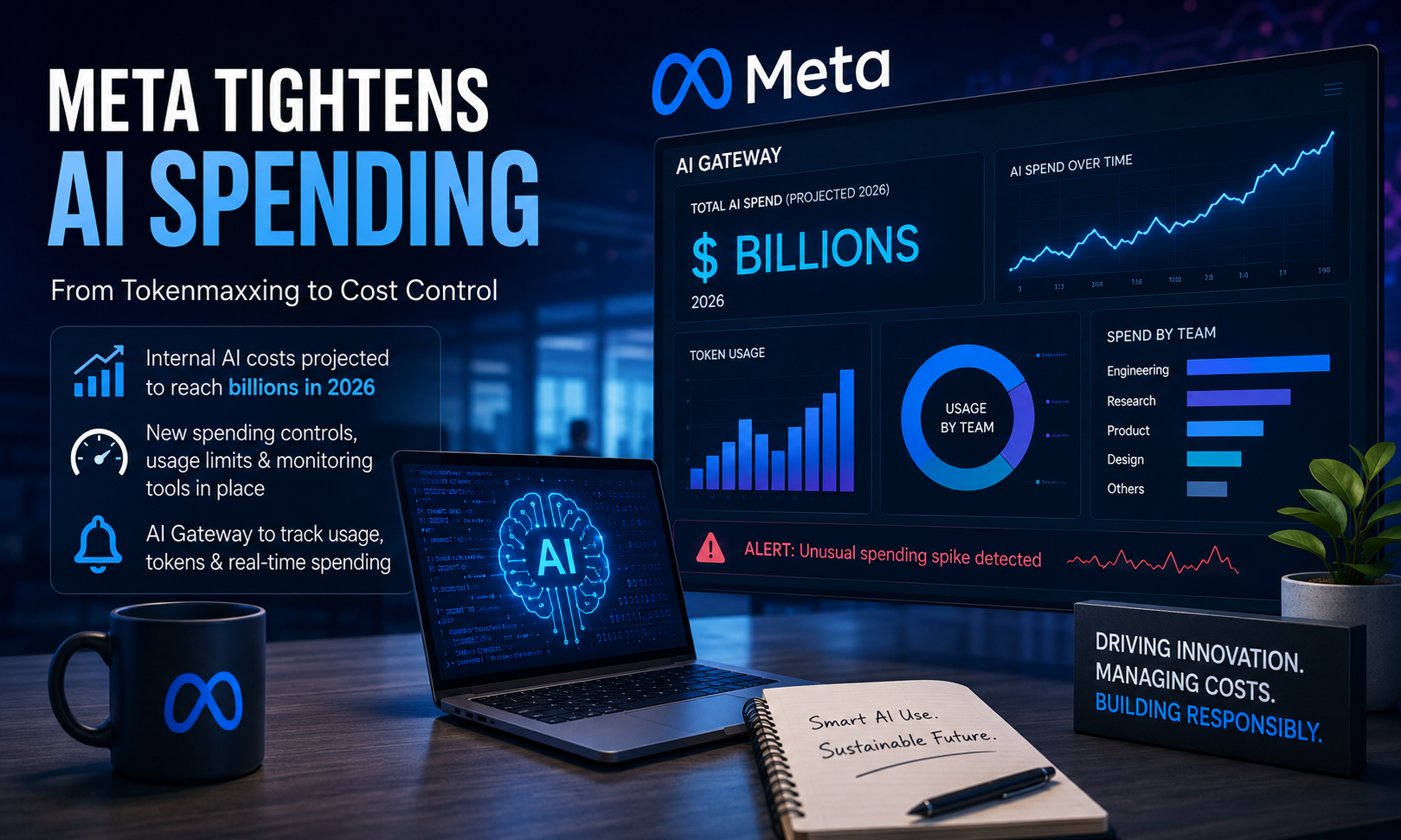
Meta has spent the majority of the last year urging its workers to incorporate AI as much as possible into their duties. The company cultivated a spirit of “tokenmaxxing” – an expression coined within Meta to represent the idea of using as much AI as possible for coding, researching, content making, and even regular office work. The motive behind this push was to increase productivity and ensure that people could work more effectively with the help of AI. Although this resulted in a massive uptake of this technology, it also caused an unprecedented surge in spending. Indeed, every use of artificial intelligence requires the use of computational power, which translates directly into costs. As more people started to use AI, its costs multiplied quickly. According to sources familiar with the matter, Meta is now expected to spend several billions of dollars on artificial intelligence in its internal processes by 2026. This has led the company to reconsider its stance. Now, instead of pushing for as much use as possible, it is trying to introduce the idea of responsible usage and cost control.
AI Gateway: Meta’s New System for Monitoring AI Use
Meta is in the process of creating a centralised platform called AI Gateway to help manage the increasing cost of AI. Teams will have a centralised platform that allows them to see how their teams are using AI tools and what their teams are spending on these tools. A real-time dashboard will allow teams to see how much they’ve used AI resources, how many tokens they’ve used, and where they’ve spent their money on these resources. All this data will give managers and employees the ability to see how much AI has cost them and how much AI has cost them financially as well as enabling employees to better manage their own resources. In addition, the platform will have automatic alerts that will notify employees if they go over their allotted budget for AI-related spending or if their spending is increasing exponentially. According to reports from previous employees, many employees had little idea how much their use of AI had cost Meta, hence it was difficult for employees to effectively manage the amount of AI resources available to them. AI Gateway wants to change this by giving employees transparency and accountability in their use of AI. In the future, Meta will have structured token budgets, allocation systems, and governance structures to ensure the efficient use of AI resources and to help avoid excessive spending on AI across departments.

Reasons Behind Increasing Costs of Artificial Intelligence Within the Technology Sphere
While the development of artificial intelligence may have been fast-paced and revolutionary, it brings its fair share of challenges along the way. Namely, the use of AI has led to increasing costs for organizations. While the price per unit response from an artificial intelligence system drops as a result of technological development, total expenditures only keep rising as employees and enterprises start using artificial intelligence in their daily routines much more often. Indeed, modern AI capabilities go beyond simple chatbot interactions. Many companies utilize AI coding assistance software, research programs, agents, and even workflow management systems that perform rather complicated actions requiring substantial computer power. These technologies generate massive token usage rates and consume high amounts of infrastructure, which results in higher operation costs. The more enterprises integrate artificial intelligence into their workflows, the more requests they will process and, therefore, the higher expenditure rate will be compared to previous periods. Even the world’s biggest tech companies find themselves under pressure due to such circumstances.
It Is Not Only Meta: Challenges of High AI Costs in Microsoft and Uber
The problem of increasing cost in relation to AI is not limited only to Meta’s case but also concerns other large technology corporations. For instance, according to some sources, Uber has already spent all allocated budget for AI programming for 2026 in the first four months due to excessive use of AI-based development tools. In addition, Microsoft has been considering ways of optimizing AI expenses related to its internal work because of the increased use of AI assistants by its workers. Thus, the challenge faced by Meta is also relevant to other leading IT companies. It is becoming evident that the integration of artificial intelligence can be very expensive for businesses due to necessary infrastructure maintenance and higher computing needs. The cases of Meta, Uber, and Microsoft illustrate that the issue of AI expense optimization will play an increasingly prominent role for corporate management in future.
Conclusion
The fact that Meta has decided to introduce AI spending controls demonstrates the increasing challenge faced by the tech industry. Although AI is making operations much easier and is contributing to productivity, increased use is resulting in higher expenses. Through the use of monitoring techniques and spending controls, Meta hopes to maintain a healthy balance between innovation and fiscal responsibility. As the use of AI becomes more common, and is used for things such as coding and research, the need for budget controls on token expenditure will play an equally important role as the development of the technologies themselves.