





From Green Ideas to Billion-Dollar Businesses: Startups Fighting Climate Change Profitably
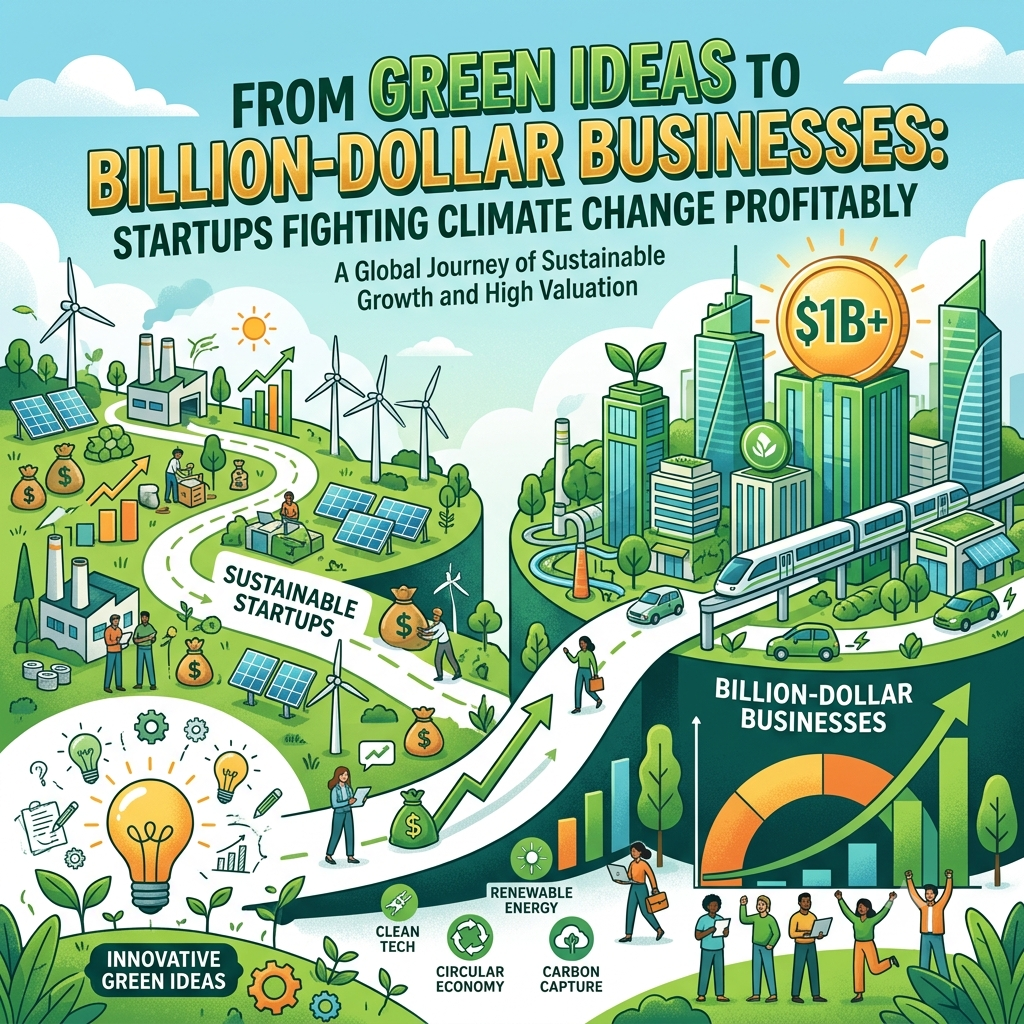
Climate change may be considered one of the major issues facing our world today; however, for many innovative businesses, climate change is also a huge business opportunity. All around the world, entrepreneurs are developing profitable companies that save CO2 from being emitted into the atmosphere, turn waste into resources, generate electricity from renewable sources, and enable industrial activities to become environmentally friendly. This is evidence that saving the planet and earning money may go hand in hand. Four such sectors are presented below.
From Waste to Value Added Products
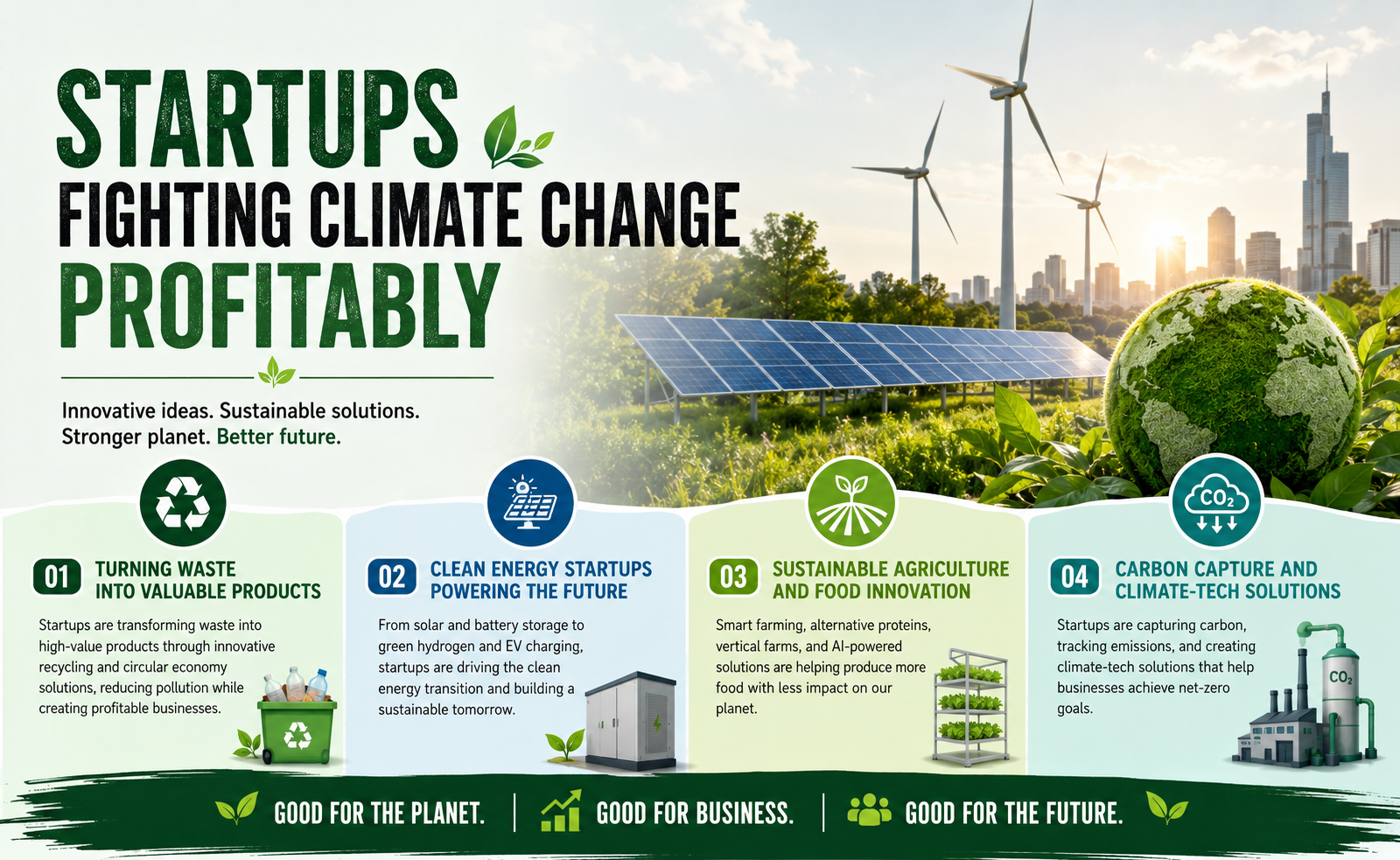
Among the interesting climate-related business trends is an emergence of ventures aimed at converting waste into value added products. Rather than dumping plastic, agricultural waste, old clothes or electronic waste into a landfill, such firms find ways to repurpose and recycle such materials using advanced techniques of recycling and manufacturing. In particular, there are ventures that use plastic waste for manufacturing of building materials, furniture and packaging. There are other firms that recycle food waste to produce biofuels and organic fertilizers. Agricultural waste, such as rice husk and sugarcane bagasse, is used to manufacture biodegradable utensils and packaging. It is a circular economy model that helps to reduce pollution, preserves natural resources and cuts down production expenses through reuse of existing materials. Customers and businesses opt for environmentally friendly products which create high demand for innovations. The government encourages recycling through favourable policies and incentives. Thus, by finding solutions to the problem of waste disposal and developing commercial ventures out of it, such firms show how environment-related activities may prove very profitable.
Startups in Clean Energy for the Future
The shift towards sustainable energy around the world has created many opportunities for startups producing new renewable energy solutions. Companies operating in the sphere of solar power generation, energy storage through batteries, electric vehicle charging services, green hydrogen production, and energy management systems have been attracting investments from governments and private investors. The cost reduction for renewable energy technologies is causing businesses and households to move away from fossil energy resources to renewable sources as quickly as possible. Numerous startups are developing AI-based energy management systems which will allow people to minimize electricity usage and manage energy consumption more effectively. Other startups are implementing fast charging stations for electric cars or creating efficient batteries for renewable energy storage. The development of such technologies does not only help decrease greenhouse gases but allows people to spend less on energy. The increasing need for sustainable energy infrastructure all over the globe provides many opportunities for climate tech startups.
Sustainable Agriculture and Food Innovation
Agriculture is responsible for emitting large amounts of greenhouse gases globally; however, some startups are assisting farmers in generating food more sustainably. Innovative startups working in climate-smart agriculture are utilizing technology such as artificial intelligence, drones, sensors, satellite images, and big data analytics to enhance efficiency and minimize the amount of waste. Precision farming technologies are enabling farmers to use fertilizers, pesticides, and water precisely where necessary while saving natural resources and increasing yield. Vertical farms, developed by other startups, are allowing growing crops indoor using far fewer amounts of space and water than required for conventional farming methods. Innovative startups operating in alternative proteins space are making a significant contribution to sustainable food production, which lies in development of cultivated meat and plant-based substitutes for animal products. Smart irrigation systems are enabling farmers to save water in times of drought without damaging crops. All these startups not only help to increase sustainability but also improve profitability through reducing production costs and enhancing efficiency.
Carbon Capturing and Climate-Tech Solutions
A newer breed of climate-tech companies is working with businesses to lessen their impact on the environment by creating advanced solutions for carbon management. Some firms are designing tools to capture carbon dioxide either at factories or from the air, thus stopping emissions from harming the environment and causing global warming. Other firms create software to measure, manage, and report carbon emissions, helping businesses to reach their sustainability goals and comply with environmental laws. The carbon credits market is developing as well; now, companies have an option to invest in environmental projects to offset any emissions that cannot be avoided. In addition, artificial intelligence and satellite technologies are widely used in the tracking of emissions and in accurate climate reporting. Due to government regulations regarding climate change and the need to reduce the net-zero emission level for corporations, the demand for such solutions is growing very fast. Billions of dollars are being invested into climate-tech as it solves one of the biggest problems in the world but also allows to make a profit.
Conclusion
The startups in the climate sector have demonstrated the ability to profit while being sustainable at the same time. This sector includes companies that utilize waste for their purposes, generate clean energy, revolutionize agriculture, develop carbon capture technologies, and many other examples where companies create solutions that positively impact both the environment and economy. In light of increasing climate issues, such startups will be important stakeholders of the future green world. The investment in these projects is profitable not only environmentally, but also in terms of economics.