




PM Modi Inaugurates India’s First Ring Metro in Delhi: A New Era of Smart Urban Mobility
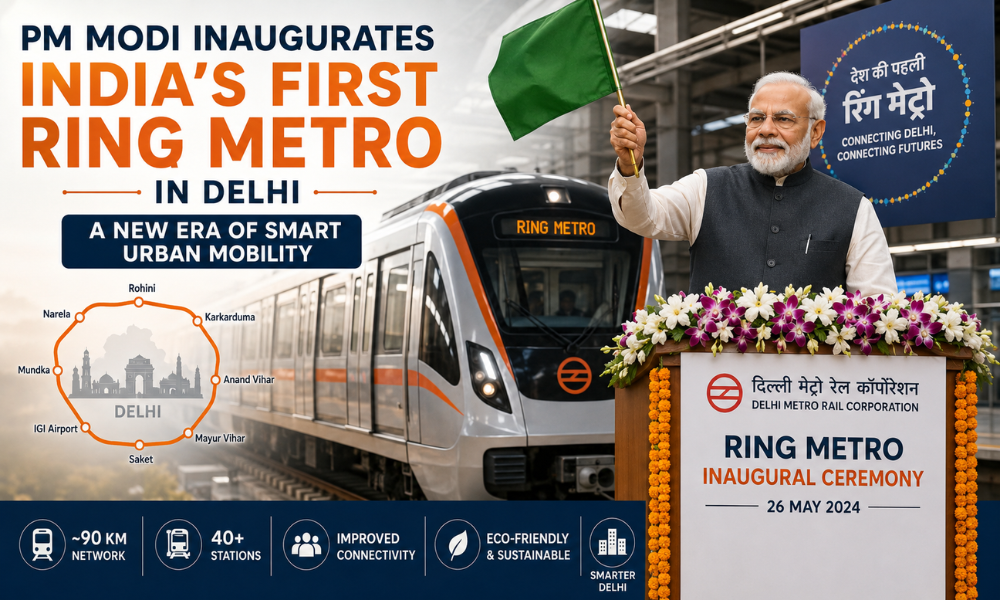
India has taken another significant step towards strengthening its urban transportation network with the inauguration of the country’s first Ring Metro by Prime Minister Narendra Modi in Delhi. Along with unveiling several major infrastructure projects, the launch of the Ring Metro marks a milestone in the evolution of public transport in the national capital. Designed to improve connectivity, reduce travel time, and provide seamless travel across different parts of the city, this project reflects the government’s vision of building modern, efficient, and sustainable urban infrastructure.
As Delhi continues to witness rapid population growth and increasing traffic congestion, the introduction of the Ring Metro is expected to transform the commuting experience for millions of daily passengers. The project also highlights India’s commitment to developing world-class transportation systems that support economic growth while promoting environmentally friendly mobility.
Why the Ring Metro Is a Landmark Project
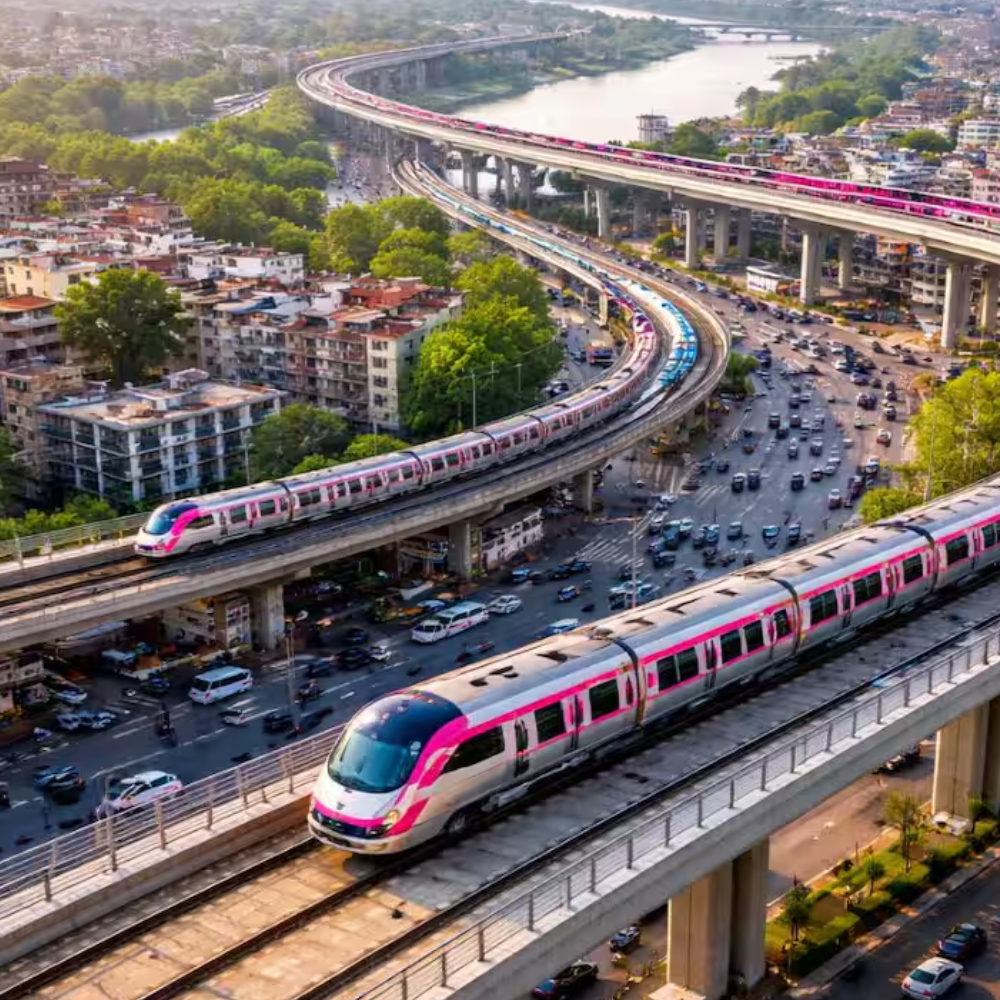
The Ring Metro is India’s first circular metro corridor that allows passengers to travel around the city without repeatedly passing through central interchange stations. Unlike conventional metro routes that typically connect one end of a city to another, the Ring Metro creates a continuous loop, making travel between different regions faster and more convenient.
This circular connectivity significantly improves access to residential areas, commercial hubs, educational institutions, hospitals, and business districts. Passengers can reach their destinations through shorter routes while avoiding unnecessary transfers.
The project is expected to reduce congestion at major interchange stations and distribute passenger traffic more efficiently across the Delhi Metro network.
Major Metro Expansion Alongside the Ring Metro
The inauguration also included the opening of new metro corridors under Delhi Metro’s Phase-IV expansion. These corridors further strengthen connectivity in several growing parts of Delhi.
Some of the major developments include:
- Extension of the Pink Line to improve east-west connectivity.
- Expansion of the Magenta Line to connect important residential and commercial zones.
- Better integration with existing Blue, Yellow, Red, and Violet Metro lines.
- Improved last-mile connectivity through feeder transport services.
Together, these new sections create a more comprehensive metro network capable of serving millions of commuters every day.
Better Connectivity Across Delhi
One of the biggest advantages of the Ring Metro is its ability to connect multiple areas without forcing commuters to travel through central Delhi.
Residents living in outer parts of the city often spend considerable time changing metro lines to reach their destinations. The Ring Metro simplifies these journeys by creating direct connections between several important locations.
This improved network benefits:
- Office professionals
- Students
- Business owners
- Tourists
- Government employees
- Daily commuters
Reduced travel time also means increased productivity and greater convenience for passengers.
Supporting Sustainable Urban Development
Modern cities require transportation systems that are both efficient and environmentally responsible. The Ring Metro supports India’s sustainability goals by encouraging more people to shift from private vehicles to public transport.
Some of the environmental benefits include:
- Lower carbon emissions
- Reduced fuel consumption
- Less traffic congestion
- Improved air quality
- Reduced dependence on personal vehicles
Every additional metro passenger contributes to lowering pollution levels and easing pressure on Delhi’s roads.
Strengthening Delhi Metro’s Growing Network
The Delhi Metro is already one of the largest and most advanced metro systems in the world. Over the years, continuous expansion has helped connect residential neighborhoods, industrial zones, airports, railway stations, and commercial centers.
The addition of the Ring Metro strengthens this network by introducing a new travel pattern that complements existing radial corridors.
Passengers can now choose more flexible routes depending on their destinations, making the entire network more efficient.
Economic Benefits of the Project
Large-scale infrastructure projects generate benefits that extend beyond transportation.
The Ring Metro is expected to stimulate economic activity in multiple ways:
Improved Business Opportunities
Better connectivity encourages commercial growth by making markets and business districts more accessible.
Increased Property Value
Areas located near metro stations often witness higher demand for residential and commercial properties due to improved accessibility.
Job Creation
Construction, maintenance, operations, security, and support services associated with metro projects create thousands of employment opportunities.
Boost to Tourism
Tourists visiting Delhi can travel comfortably between major attractions using the expanded metro network, reducing dependence on taxis and private vehicles.
Passenger Convenience at the Core
The Ring Metro has been designed with passenger comfort and convenience in mind.
Modern metro stations feature:
- Escalators and elevators
- CCTV surveillance
- Advanced security systems
- Digital passenger information displays
- Smart ticketing facilities
- Barrier-free accessibility for senior citizens and differently-abled passengers
- Improved waiting areas
These facilities ensure a safe and comfortable travel experience for all users.
Integration with Smart City Initiatives
India’s Smart Cities Mission emphasizes the development of intelligent infrastructure capable of supporting future urban growth.
The Ring Metro aligns perfectly with this vision by incorporating:
- Digital ticketing
- Efficient passenger management
- Smart surveillance systems
- Energy-efficient operations
- Integrated public transport planning
Such infrastructure plays an important role in building smarter and more sustainable cities.
Reduced Traffic Congestion
Delhi experiences heavy road congestion during peak hours, resulting in longer travel times and increased fuel consumption.
The expansion of the metro network is expected to encourage more commuters to shift from private vehicles to public transport.
As metro ridership increases:
- Road traffic decreases.
- Fuel consumption reduces.
- Travel becomes more predictable.
- Air pollution gradually declines.
The Ring Metro is therefore expected to become an important contributor to improving Delhi’s overall traffic management.
A Vision for Future Urban Mobility
Prime Minister Narendra Modi has consistently emphasized the importance of modern infrastructure in driving India’s development. The inauguration of India’s first Ring Metro reflects this long-term vision of creating efficient, accessible, and sustainable transportation systems.
As Indian cities continue to expand, circular metro corridors may become an important model for future urban transit projects. Other metropolitan areas could adopt similar systems to improve connectivity while reducing travel times and easing pressure on existing transport infrastructure.
The Ring Metro demonstrates how strategic planning and advanced engineering can improve everyday life for millions of citizens.
Conclusion
The inauguration of India’s first Ring Metro in Delhi by Prime Minister Narendra Modi represents a major milestone in the country’s urban transportation journey. By introducing a circular metro system alongside new metro corridors, the project significantly enhances connectivity, improves passenger convenience, and supports sustainable urban development.
Beyond making daily commuting easier, the Ring Metro contributes to economic growth, environmental conservation, and smarter city planning. As Delhi’s metro network continues to expand, projects like this will play an increasingly important role in shaping the future of public transportation in India.
With faster travel, better accessibility, and improved infrastructure, India’s first Ring Metro sets a new benchmark for modern urban mobility and reinforces the nation’s commitment to building world-class transportation systems for generations to come.