




India’s Biggest Upcoming Mega Projects That Will Transform the Country by 2035
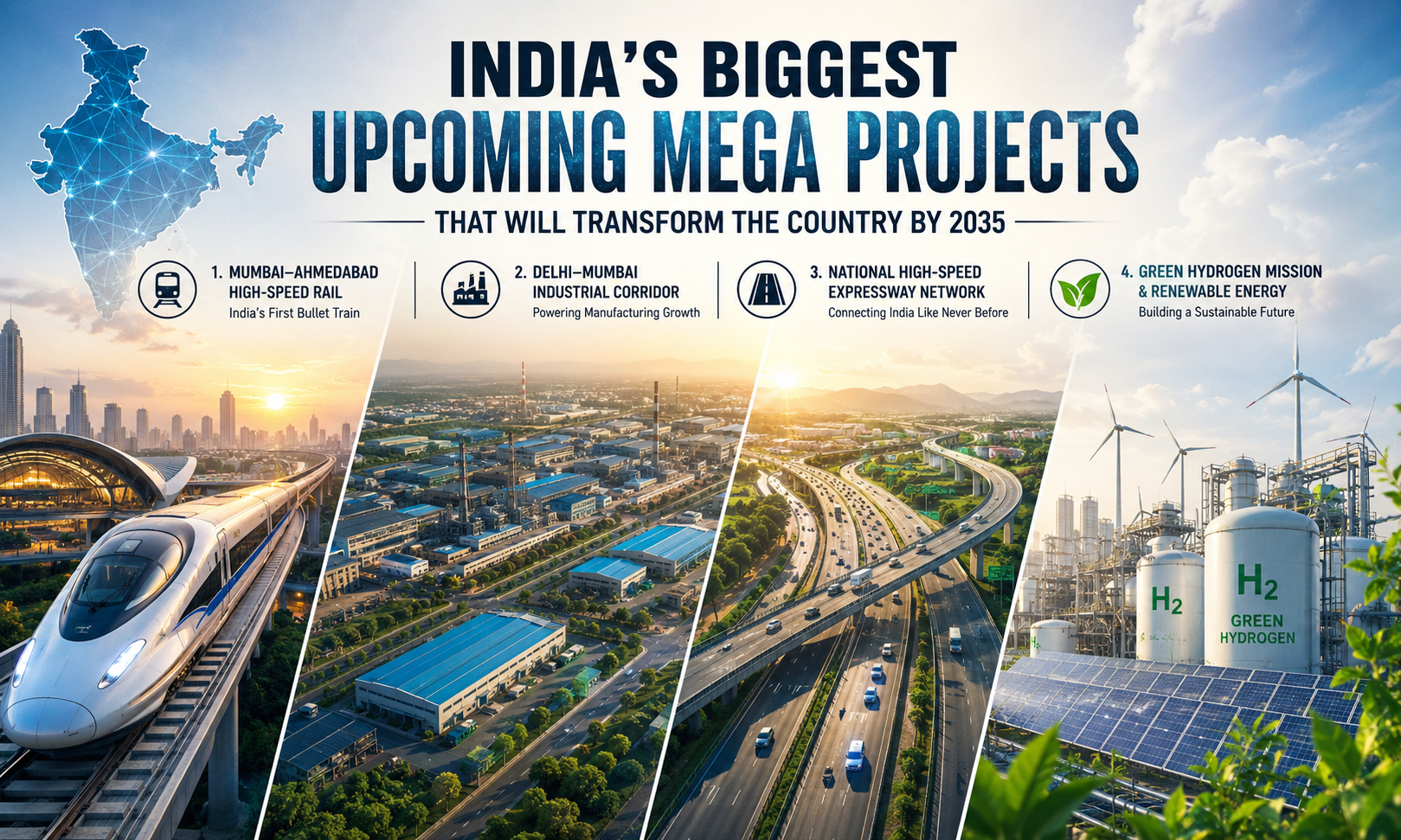
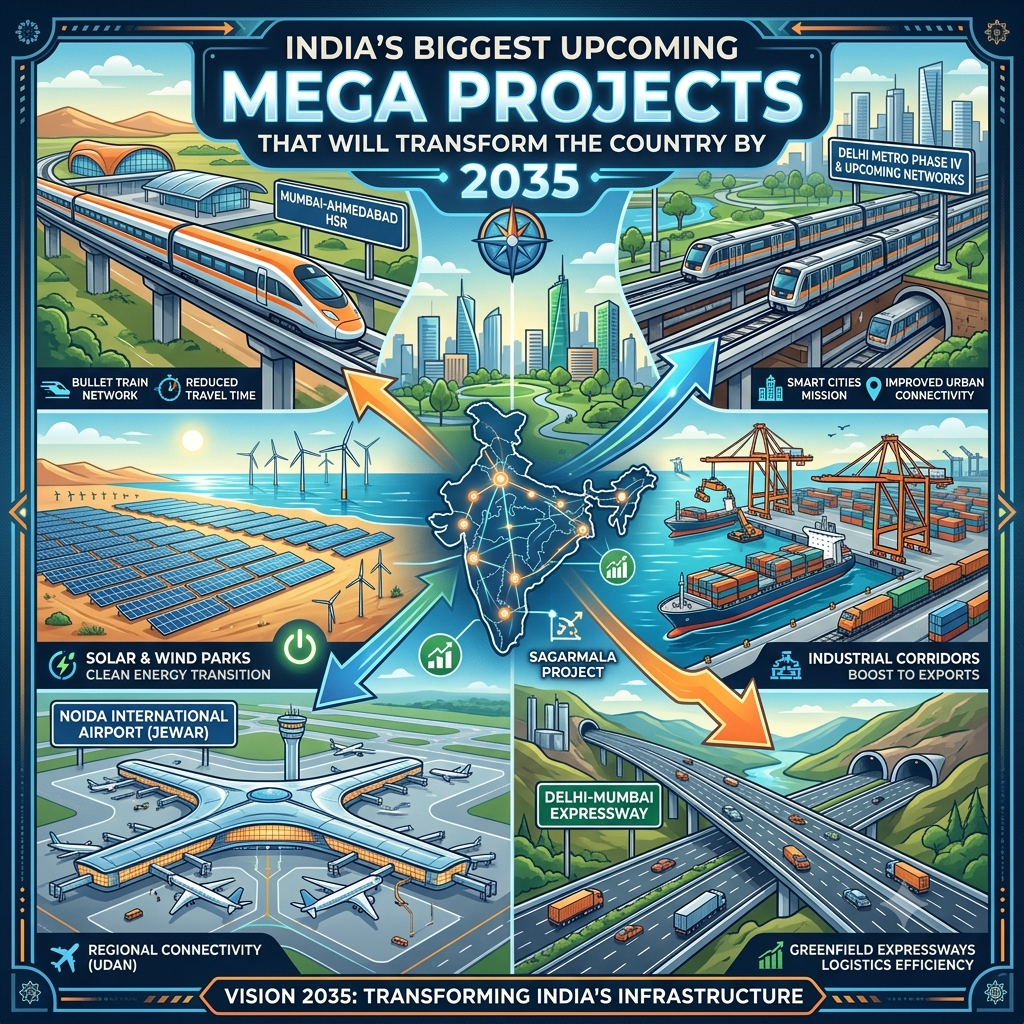
There is a massive infrastructure revolution underway in India. It ranges from bullet trains to industrial corridors, from highways to energy projects, and the Indian government is spending hundreds of billions of dollars in developing projects that would change the way Indians travel, conduct businesses, and earn their livelihoods. But these developments are not just about laying infrastructure; they are about fast tracking economic development, job creation, enhancing connectivity and making India a global superpower. Here are four of the biggest mega projects that will revolutionize India in the coming decades.
Mumbai–Ahmedabad High-Speed Rail: The First Bullet Train Revolution of India
The Mumbai–Ahmedabad High-Speed Rail project is undoubtedly among the most significant transport projects of India and an indication that the country has finally entered the world of bullet trains. Being 500 kilometers long, this rail corridor connects the cities of Mumbai and Ahmedabad in Maharashtra and Gujarat, respectively, through the use of highly-efficient Shinkansen technology of Japan, which allows trains to run at speeds of up to 320 km/h. After the project completion, the time needed to travel from one city to another is estimated at 2 hours as compared to about 7 hours at present times. The project involves not only fast trains but also modern stations, efficient safety systems, earthquake-proof infrastructure, and dedicated high-speed tracks. In addition to providing fast travel, the bullet train corridor is likely to boost the economic activity in terms of development of businesses, tourism, and real estate. The project is considered to be an example of a significant transfer of technologies to India since Indian engineers get experience in constructing and managing such railways.
Delhi-Mumbai Industrial Corridor (DMIC): Fueling India’s Manufacturing Economy
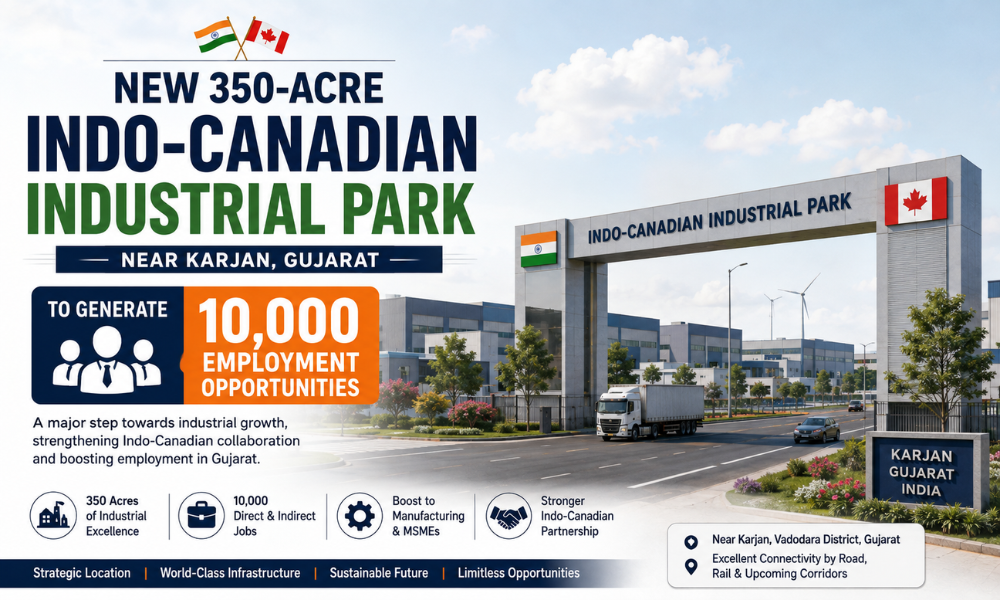
The Delhi-Mumbai Industrial Corridor (DMIC) is one of the world’s biggest infrastructural and industrial development programs that covers an approximate distance of about 1,500 kilometers between various states. Constructed along the Dedicated Freight Corridor, the program envisages creating industrial towns, logistics parks, manufacturing clusters, and advanced transportation infrastructure. The creation of a modern and efficient freight movement channel is likely to increase competitiveness of Indian manufacturing in the international markets. Apart from drawing foreign and domestic investments in electronics, automobiles, textiles, pharmaceuticals, and renewable energy industries, the DMIC will help achieve improvements in urban life standards by developing the modern industrial townships with advanced digital infrastructure and utilities. Millions of jobs will be generated when firms will set up their manufacturing units. The completion of this project will make the country a strong global manufacturing power and contribute to its economic growth.
National High-Speed Expressway Network: Connecting India in a Way It Has Not Been Connected Before
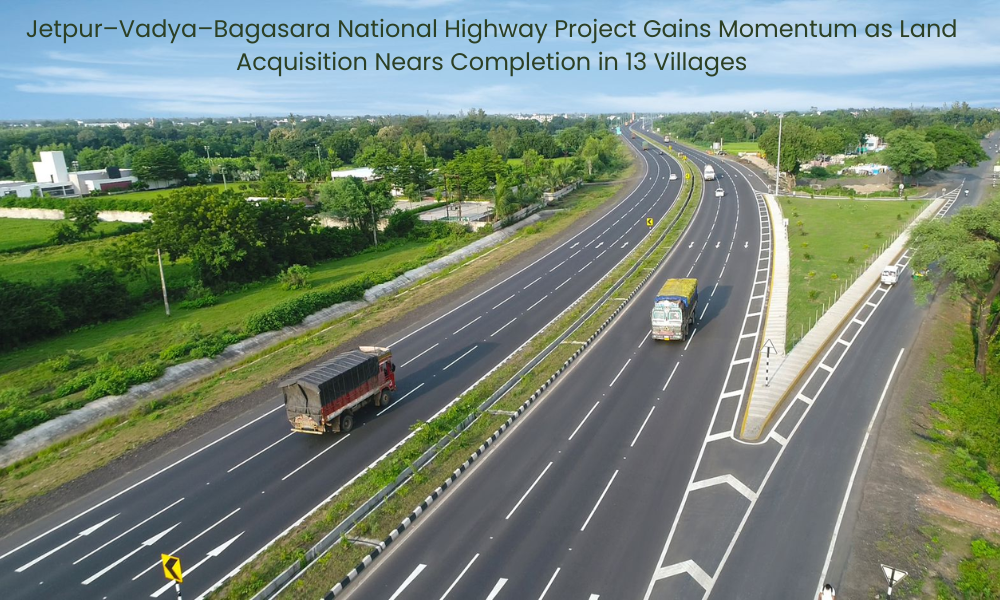
There are many projects of constructing expressways in India. The Bharatmala Pariyojana, the Delhi–Mumbai Expressway, the Ganga Expressway, and others are among them. Access-controlled highways are going to make travelling faster and safer. Moreover, they are going to make connections between big cities, industrial zones, ports, airports, and even villages more convenient. Faster roads mean that businesses would have better logistics and lower cost of delivering their goods around the country. Better connectivity means more tourism, regional trade, and economic development through connecting underdeveloped areas with developed ones. Modern highways are equipped with intelligent traffic control systems, electric vehicles charging stations, and environmentally friendly construction practices. While industries will be able to develop due to better supply chains and people will have faster and safer travels, all of these projects are creating a new level of transportation system in India.
India’s National Green Hydrogen Mission and the Rise of Renewable Energy Mega Parks: Towards a Sustainable India
The national mission on green hydrogen in India and the increasing number of renewable energy mega parks will mark an important milestone towards attaining energy independence and sustainability. The plan is to turn India into a leader of green hydrogen in the world, which will be produced through renewable energy sources rather than fossil fuels. Solar parks of tremendous sizes in states such as Rajasthan and Gujarat and wind energy projects will serve as the sources of clean energy that will facilitate hydrogen production. The efforts are likely to result in reduced carbon footprint, lower dependency on imported fuel, and improved energy security for many decades ahead. There are many opportunities associated with the production of green hydrogen, including its use in steel, fertilizer manufacturing, refining, transportation, and shipping industry, where traditional sources of energy are difficult to substitute. It is projected to attract billions of dollars in investments and create many high-skilled employment positions.
Conclusion
The development process that India has embarked upon to be a developed country is due to large infrastructure projects that will define its future for many years to come. These mega projects, from high speed trains to industrial corridors, expressways to energy projects, have been designed to bring improved connectivity, job opportunities, economic growth, and sustainable development. These projects, which will become a reality very soon, will not only help change the lives and working of the Indians but will also improve India’s standing at an international level. By 2035, these projects can become the backbone of the faster and better India.