Google’s Surprising AI Plan: Your Old Smartphone Could Soon Power Future Data Centres
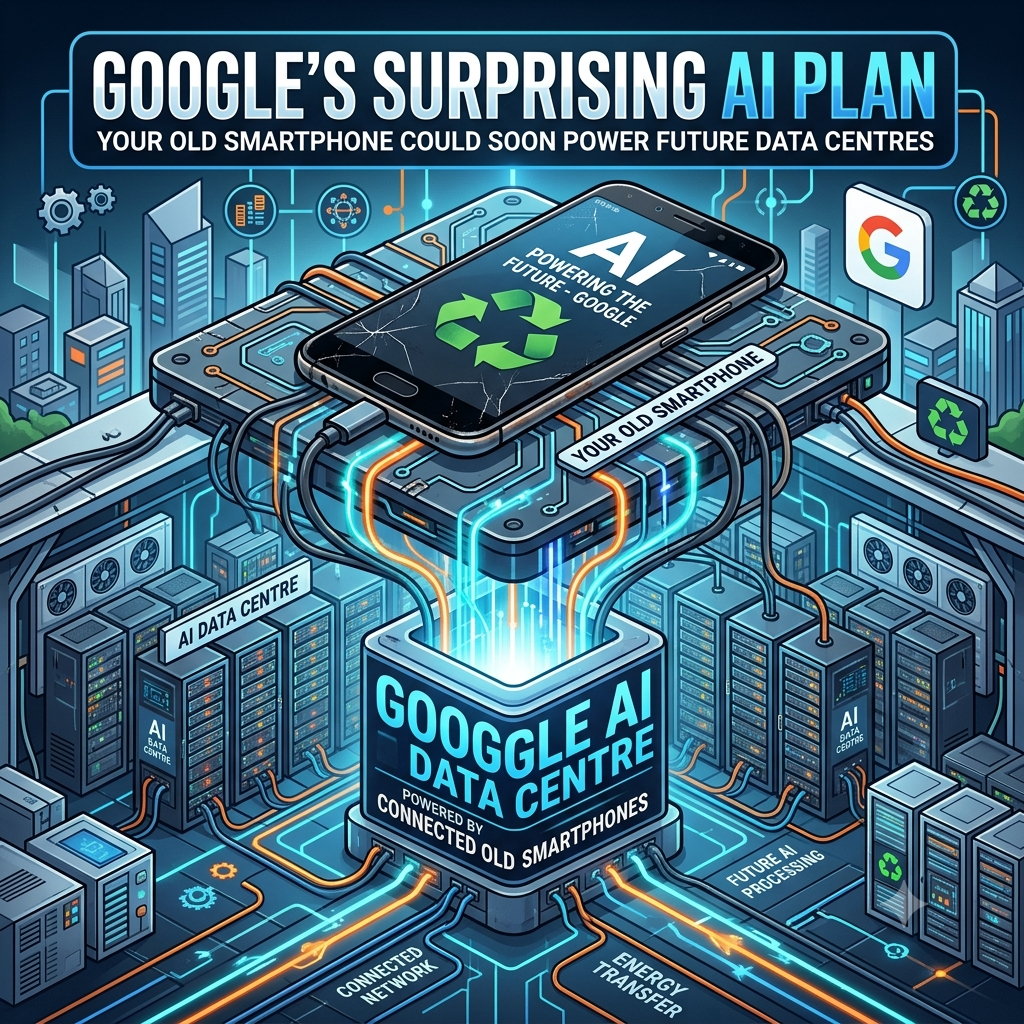
The big G might be getting a new use out of their decommissioned handsets. Rather than recycling used handsets or keeping them in drawers gathering dust, Google is looking for new ways to make use of them by building cheap computing clusters that can handle cloud computing and research tasks. In collaboration with scientists from the University of California San Diego, the tech giant hopes to use smartphone hardware to build tiny data centers, providing a more environmentally friendly method of computing. The program could provide a solution to e-waste as well as cut down on carbon dioxide emissions resulting from the production of new servers.
From the Drawers to Data Centres: The Plan for Using Retired Smartphones by Google
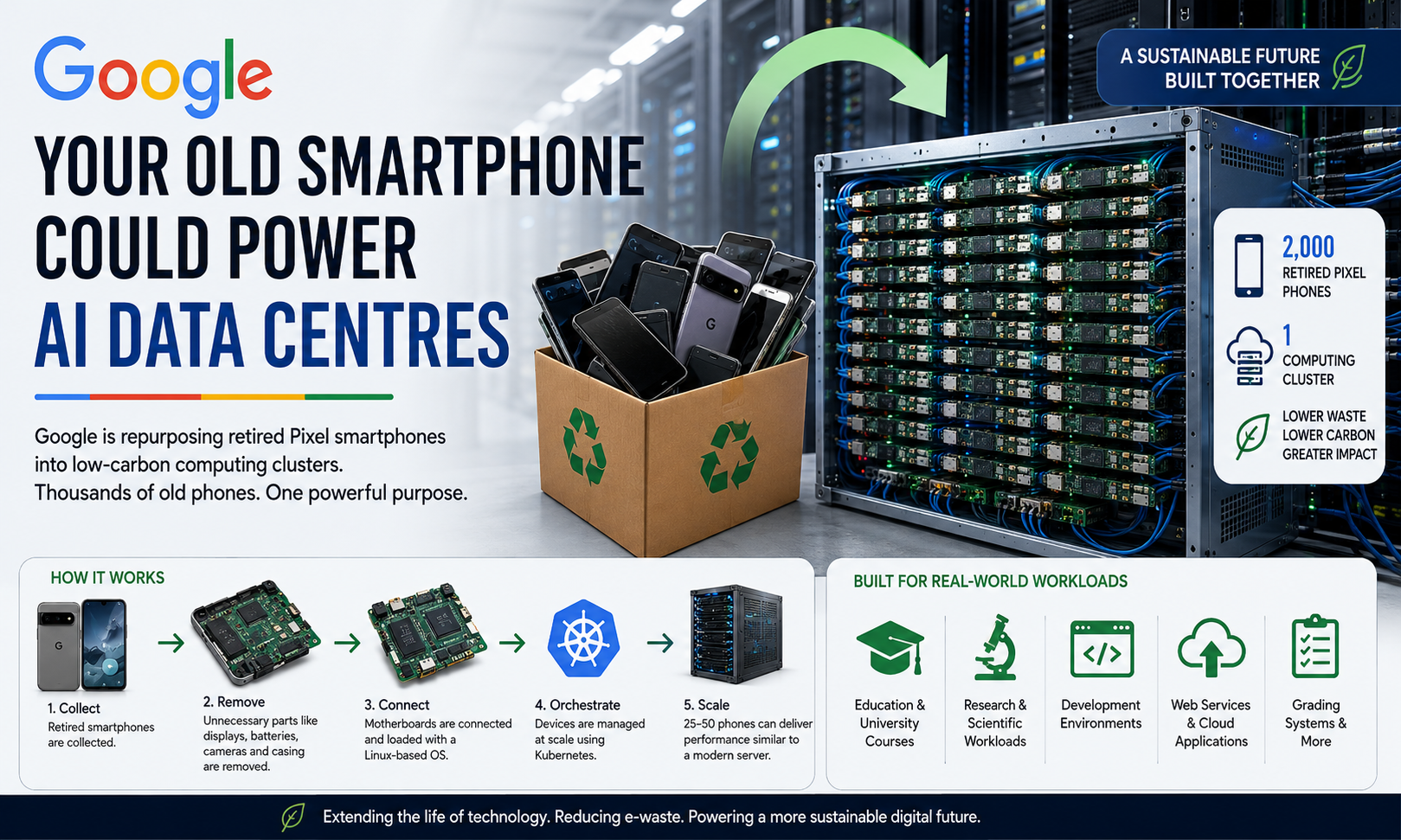
Every year millions of smartphones become outdated, even though these gadgets have perfectly working CPUs, memory, and storage. For Google, there must be much more useful things than just keeping these retired phones in the drawers or sending them to the recycling plants. The company is collaborating with the scientists from the University of California San Diego to come up with a new technology that allows turning these smartphones into clusters of computers able to provide their services within cloud technologies. The main point of the innovation lies not in creating something completely new but in using the existing resources in a different manner. It is necessary to mention that such a decision will allow not only saving on production costs but also lowering the level of electronic waste in our society. At present, the initiative is focused on the retired Pixel phones, but later the range of devices might be widened.
Phone Cluster Computing: How Thousands of Phones Created One Powerful Computer
Phone cluster computing uses thousands of cell phones as [a] single computer [with] no need for a physical connection. Phone cluster computing uses only those parts (motherboard/processor) of each phone that can perform calculations and run apps. Each of the thousands of phones in the cluster will be connected to one another (and have common resources) so that they create a virtual computer. The phones are connected to the Internet and run an operating system (Linux) to provide a concerted effort to turn multiple phones into one single computing resource. To grow the number of phones making up the cluster, Google uses Kubernetes (open-source application to manage the lifecycle of applications and servers) to assist with resource and workload management, which is similar to how today’s current networks function. Google believes that by using a combination of 25 to 50 smartphones as a virtual computer can produce results similar to what a modern server would produce. When there are hundreds or thousands of smartphones, it may be feasible for these smartphones to provide many different types of cloud services. In essence, the future of computing will be the efficient use of consumer hardware to create a useful and scalable computing resource.
Reasons Why Google Is Sure About The Role Old Smartphones Play In Making The Future Sustainable
One of the major reasons why the current project was initiated is because Google is aware of the impact of modern technology on the environment. Although tech firms have been able to advance technologies that will improve energy consumption at data centers, manufacturing hardware still consumes lots of energy and leads to carbon emissions. A server needs to be made of raw materials and shipped from one place to another, and these activities contribute to its environmental impact. Google is convinced that it is possible to overcome some of these problems through the reuse of phone hardware that already exists. Users usually replace their phones every few years, even though the device might possess enough capacity to execute a large number of computing operations. Reuse of the hardware would mean that there would be less demand for newly manufactured hardware, thus leading to less emissions during the manufacturing process. Furthermore, recycling used hardware will significantly help combat the problem of electronic waste. Therefore, smartphone computing clusters will represent an innovative solution within the framework of the circular economy model.
Not a Replacement for Nvidia: Real Applications of These Clusters
While the concept of thousands of smartphones collaborating is certainly appealing, it should be pointed out that the initiative is by no means aimed to become a replacement for advanced AI server farms that make use of powerful graphics processing units. The training of modern artificial intelligence programs, like Gemini, is a matter requiring enormous computational resources that can only be provided by professional hardware. Google considers phone clusters to be an efficient alternative when it comes to small tasks, where less computational power is required. They can be applied to educational purposes, to develop new algorithms, for hosting cloud-based development platforms, for running web apps, grading systems, and other types of computing services used in universities. Scientists from UC San Diego University have even considered developing their own 2,000-smartphone cluster that would help in running computer science classes, dedicated to system programming and parallel computing. Such a move will also allow experts to explore the performance of consumer hardware under intensive, data centre-level workloads.
Conclusion
The smartphone cluster development at Google is an example that shows how technology advancement and sustainable use go together. By transforming older cellphones into computer systems, Google aims at minimizing the electronic waste problem, reducing the emissions of carbon dioxide, and extending the life of the existing equipment. It should be emphasized that the phone clusters are not expected to substitute AI-powered server systems but might be a good idea for conducting research work, studying, and performing regular cloud operations. In case the program becomes a success, it might become a precedent in terms of utilizing technological advancements.