
Wire-Free by 2030: How Gujarat Is Rebuilding Its Urban Power Network
Gujarat’s about to kick off an awesome urban update with their Wire-Free City Mission. They’re planning to shove those overhead power lines underground across all urban spots by 2030. This isn’t just about keeping the streets pretty; it’ll boost reliability and safety too. The project’s gonna hit 17 municipal corporations and 151 municipalities, messing with around 46,000 circuit kilometers. Besides making outages less common, especially during storms, it pushes Gujarat towards becoming smart and attractive cities. Success here could inspire other regions to copy this move for their own infrastructure upgrades.
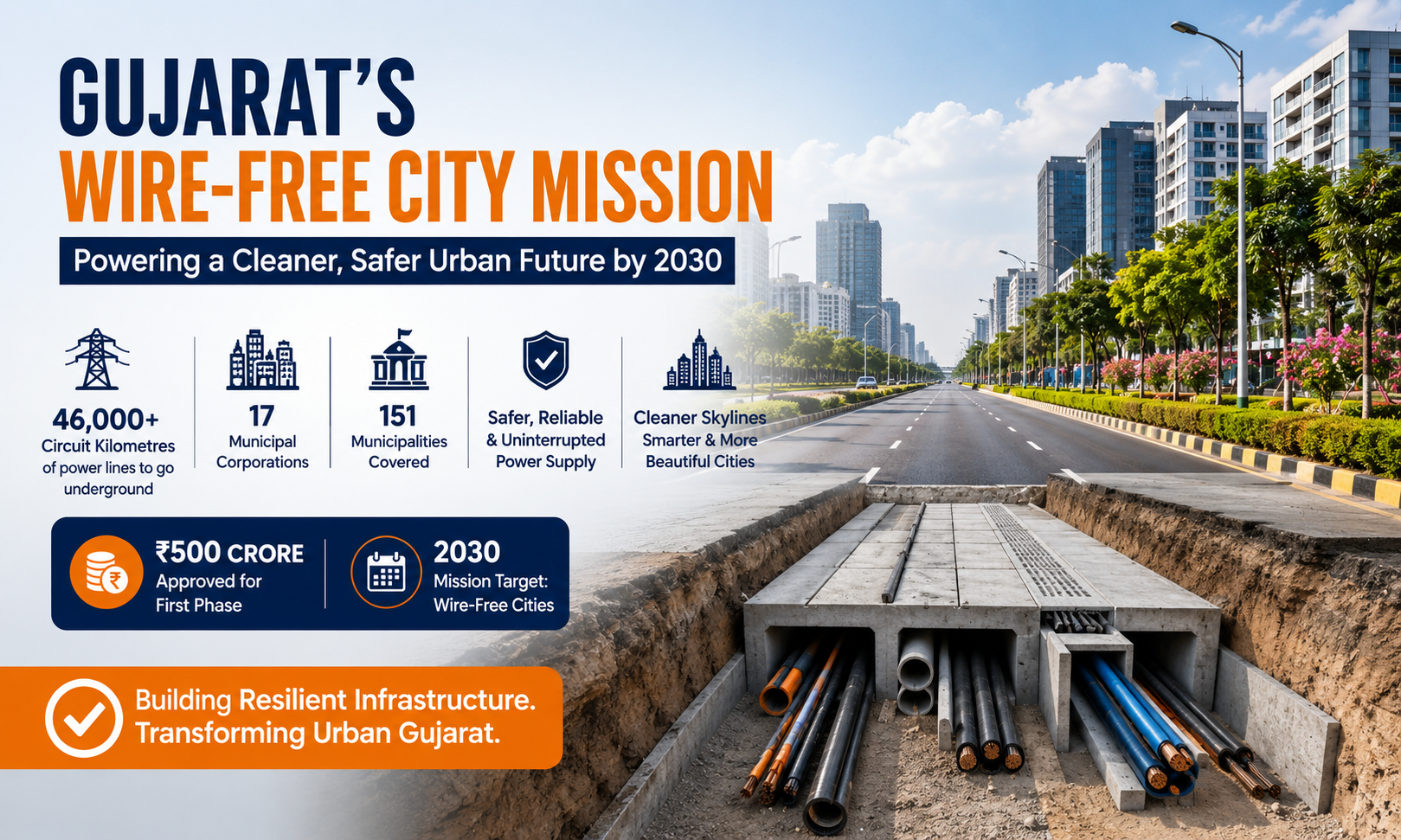
Gujarat Wire-Free City Mission: A Vision for Modern Urban Infrastructure
Gujarat has started an ambitious project known as the Wire-Free City Mission. Their goal is to move all urban power lines underground by 2030. The state Cabinet approved this plan which will hit all 17 municipal corporations and 151 municipalities. That makes it one of the biggest urban updates in India.
The government set aside 500 crore rupees for the first phase. Implementation’s going to be staged over the next few years. They want to deal with the problems of overhead wires, while getting ready for city growth.
As urban areas grow and people need more steady power, having up-to-date infrastructure is super important for sustainable development. So, moving from those old overhead networks to underground cables can make cities way safer and cleaner.
This move fits with their smart city and urban renewal targets. Plus, it focuses on better public services and tougher infrastructure. Success here could put Gujarat at the front of power distribution changes in India, and maybe even show other places how it’s done.
Cost of Underground Power Lines in Gujarat
As part of Gujarat’s Wire-Free City Mission, the state plans for its entire electricity transmission system to be built underground. This initiative will remove an estimated 46,000 km of existing overhead lines from the grid — 14,600 km will be high-voltage (11kV) transmissions and 31,400 km will be low-voltage distribution circuits. During phase one of the project, most low-voltage distributions will remain overhead until they are all replaced with underground systems in phases two and three of the project.
Among several advantages of switching from overhead to underground systems is that the underground systems will be protected from weather and natural disaster damage, thus resulting in long-term lower costs for repairs or replacements of underground systems as compared to overhead systems.
This project includes large amounts of civil work such as trenching, installing conduits, and upgrading substations and other infrastructure. Moving from overhead to underground will require significant investment and efforts to plan between both systems, but the projected long-term benefits from upgrading the power grid’s delivery systems will far exceed the costs. This modernization will improve the distribution of power and meet the demand placed upon expanding urban areas across the state.

Safer, More Reliable Power Supply for Growing Cities
Gujarat’s move to put power lines underground is all about making electricity safer and more reliable. You know how overhead wires can fall during storms or get caught in branches? That leads to outages and puts folks at risk. But with cables buried, those worries lessen because the wires are shielded from Mother Nature and wayward tree trimmers. So, there’ll be less need to deal with annoying outages and risky situations. Plus, this upgrade fits well with our growing reliance on tech – think about how much we depend on steady power for daily tasks now. Going underground not only cuts down on problems but also improves the general quality of electricity, making people happier. And don’t forget, with fewer parts above ground, the chance of someone getting hurt is seriously reduced. All these plusses make this change a smart play for Gujarat’s future – keeping cities humming and secure.
Cleaner Skylines and Smarter Cities: The Long-Term Impact
A cleaner skyline will look great, but there’s much more to this project than just creating an aesthetically pleasing environment; the Wire-Free City Mission is also meant to make life easier for the people in urban areas throughout Gujarat.
Overhead electrical/communication transmission lines and utility poles typically clutter up our city streets and impact both aesthetics as well as urban planning. By placing these types of utility networks underground, Gujarat can create cleaner skylines, wider street corridors, and better organized public spaces. Underground systems will support other current smart-city initiatives by creating more efficient modern infrastructure combined with improved professional urban design across all types of public property.
Furthermore, underground utilities will remain more intact during natural disasters; therefore, urban areas will recover more quickly after extreme weather. This additional durability will be critical in areas that have previously suffered from hurricane damage and/or severe storm-related flooding.
Furthermore, improved urban aesthetics will contribute to an increase in tourism, attract new business and investments, as well as increase the overall quality of life for residents. As cities become more visually attractive, and their infrastructures become more reliable, the state expects to create sustainable economic growth through modernization of its cities.
Gujarat may be one of the first states in India to create an overall wired-free network of power and utility services within urban areas; this would serve to create a benchmark for all future urban development in the rest of India.
Conclusion
Gujarat’s Wire-Free City Mission is a big move toward modernizing urban areas and making them smarter and safer. The plan to put kilometers of power lines underground can boost electricity reliability and public safety, while sprucing up city spaces too. If they pull it off by 2030, it will not only raise the bar for infrastructure in India but also motivate other regions to follow suit.