
Wonder in the Desert: A 28 km Long Artificial Lake Built in Jaisalmer, Will Stay Full Year-Round
India’s Thar Desert is one of the hottest and driest places on earth. For centuries, the golden sands of Jaisalmer have stood as a symbol of beauty, resilience, and the unforgiving harshness of desert life. Water has always been precious here — scarce, fought over, and deeply valued. But in 2026, something remarkable has happened in the heart of this ancient desert. A man-made engineering wonder has been built that promises to change life in Jaisalmer and Barmer forever — a massive 28-kilometre-long artificial lake that will keep water flowing through the desert every single day of the year.
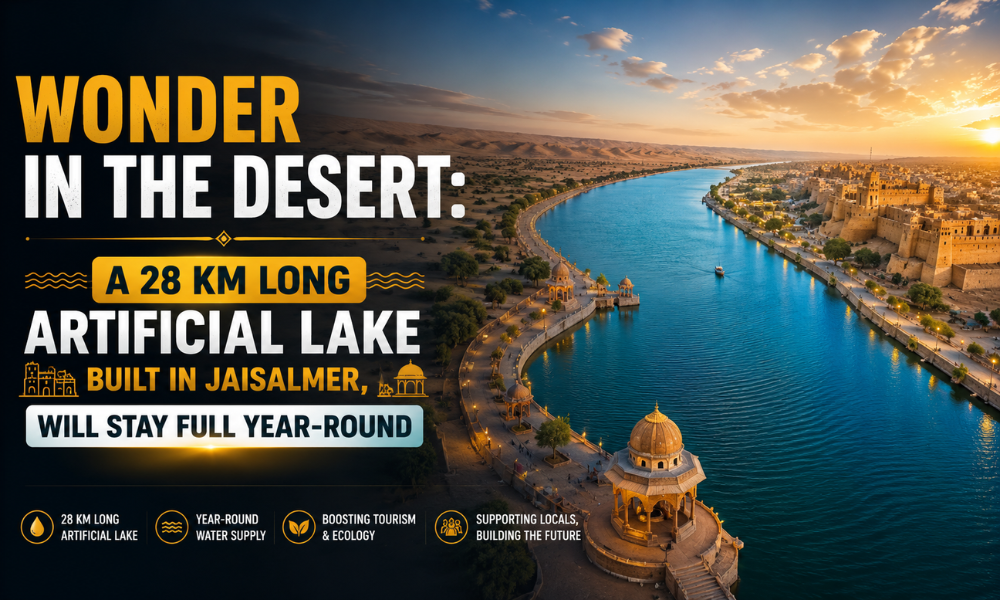
A Lake Like No Other
This is not a small water body or a modest reservoir. What has been built in Jaisalmer is a truly extraordinary structure — one of the largest artificial water storage projects ever constructed in the desert regions of India.
Here are the key facts:
- Length: 28 kilometers
- Depth: 33 feet
- Total floor area: Approximately 71 lakh square meters
- Water storage capacity: 1,413 million cubic feet
- Shape: Zigzag design, allowing maximum water storage across the desert terrain
- Connection: Linked directly to the Indira Gandhi Canal, ensuring a continuous and reliable water supply
- Coverage: Will supply water to the entire Jaisalmer and Barmer districts — 365 days a year
This single project has the potential to benefit approximately 50 lakh (5 million) people living across both districts, ending a water crisis that has persisted for generations.
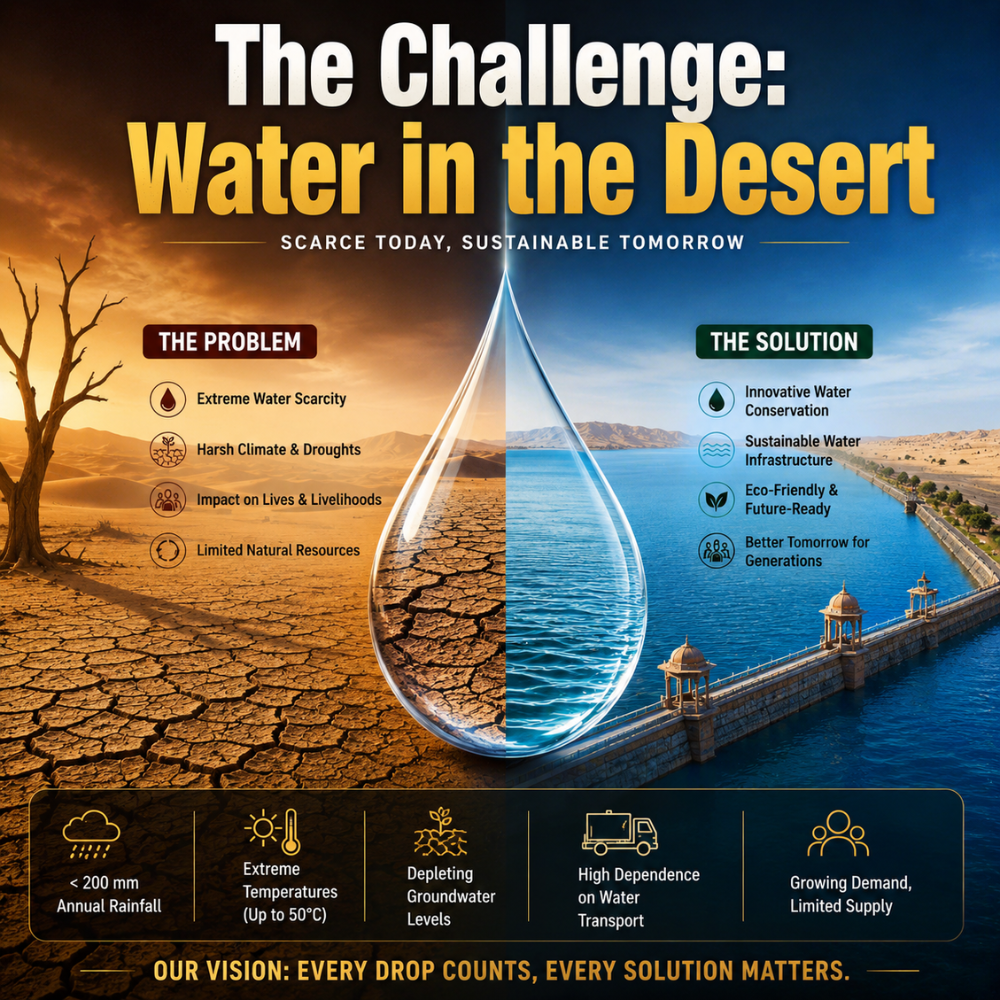
The Challenge: Water in the Desert
To understand why this project matters so deeply, one must first understand the nature of the problem it solves. Jaisalmer receives some of the lowest rainfall in India. The sandy, porous soil of the Thar Desert absorbs water at a rapid rate, making it nearly impossible to store rainwater naturally. For decades, residents of Jaisalmer and the surrounding Barmer region have faced acute water shortages, particularly during the long dry months between monsoons.
The desert soil’s natural tendency to absorb water quickly is the very reason that traditional water storage methods have always fallen short here. Even when water is brought in, it disappears into the ground before it can be properly collected and distributed to the communities that need it.
This new artificial lake has been designed specifically to overcome that challenge — not by fighting the desert, but by outsmarting it.
The Technology Behind the Lake
Building a long-lasting water reservoir in a sandy desert is no simple task. The engineers and planners behind this project have employed a sophisticated combination of construction techniques to ensure that the water stored in this lake does not simply drain away into the ground.
The key technological features include:
- 300-micron plastic sheeting laid across the entire floor of the lake, preventing water from seeping into the sandy desert soil beneath
- A 1.5-foot layer of soil applied on top of the plastic sheeting to protect it and keep it securely in place
- The plastic sheeting is designed to last 100 years, making this a century-long solution to the water crisis
- A zigzag lake design that maximizes water coverage across the available land while working with the natural contours of the desert terrain
- Direct connectivity to the Indira Gandhi Canal, which serves as the primary source of water for the lake
The Indira Gandhi Canal, one of India’s longest and most important irrigation projects, already runs through western Rajasthan, supplying water to several desert districts. By connecting this new artificial lake directly to the canal, engineers have ensured a steady, year-round flow of water into the reservoir — regardless of rainfall or seasonal changes.
Built by Hundreds of Hands
A project of this scale required not just engineering vision, but enormous human effort. The construction of the lake involved:
- A dedicated team of 400 laborer’s who worked tirelessly through challenging desert conditions
- 10 engineers overseeing every aspect of design, construction, and quality control
- Months of careful planning, site preparation, and execution in one of India’s most difficult terrains
The men and women who built this lake worked in extreme heat, remote conditions, and challenging terrain to deliver a project that will serve millions of people for generations to come. Their work deserves recognition alongside the engineering achievement itself.
What it Means for Jaisalmer and Barmer
The impact of this lake on daily life across Jaisalmer and Barmer cannot be overstated. For communities that have spent generations managing acute water shortages, the promise of a reliable, year-round water supply represents a fundamental change in the quality of life.
- Families will no longer depend on seasonal availability or long-distance water transport
- Farmers in both districts will have access to consistent irrigation, opening up possibilities for agriculture in areas previously too dry to cultivate
- Livestock, which is central to the rural economy of this region, will have guaranteed access to water throughout the year
- Towns and villages across both districts will receive steady municipal water supply for drinking, sanitation, and daily use
- The overall development of the region — schools, hospitals, local businesses — stands to benefit from reliable water access
The Public Health Engineering Department (PHED) of Rajasthan, which oversaw the project, has stated that this lake alone is capable of supplying water to the entire Jaisalmer and Barmer region for all 365 days of the year. That is a promise that would have seemed impossible just a few years ago.
Conclusion
A Symbol of What India Can Achieve
There is something deeply moving about the story of this lake. In a land where water has always been scarce and precious, where generations of people have adapted their entire lives around the absence of it, a team of engineers, workers, and planners came together and created something that defies the logic of the desert.
The 28-kilometre artificial lake in Jaisalmer is more than a water storage project. It is proof that with the right vision, technology, and determination, even the most challenging environments can be transformed. It is a reminder that the deserts of India are not obstacles to be endured — they are landscapes to be understood, respected, and, where necessary, gently reshaped for the benefit of the people who call them home.
In the golden sands of Jaisalmer, a miracle has quietly taken shape. And it is filled to the brim with water.