




Jagannath Rath Yatra in London 2026 – Indian & Foreign Devotees Come Together in Grand Celebration
In the heart of England’s magnificent capital, London, an extraordinary spectacle unfolded this week as the ancient and sacred festival of Jagannath Rath Yatra rolled through its modern streets with unparalleled grandeur. Amid a blazing heat of approximately 33 degrees Celsius — unusually fierce even by London’s summer standards — thousands of devotees from all walks of life gathered in joyful celebration, their collective energy transforming the city into a vibrant sea of faith, colour, and devotion
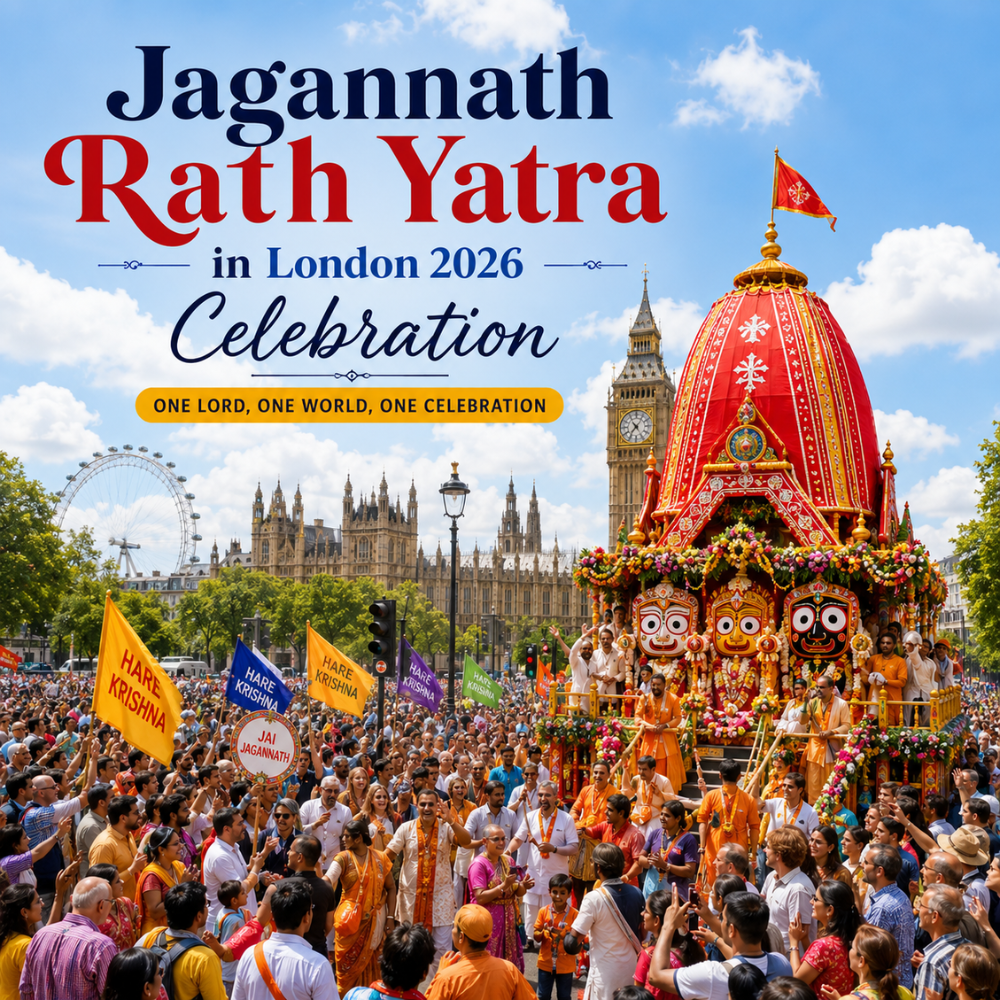
The air around Trafalgar Square resonated with the beating of drums, the blowing of conch shells, and the rhythmic chanting of “Jai Jagannath!” as the majestic chariot — adorned with intricate carvings, cascading flowers, and the towering shikhar of a traditional temple — was pulled through the streets by thousands of willing hands. It was a moment that merged the ancient spiritual traditions of India with the cosmopolitan spirit of one of the world’s most iconic cities.
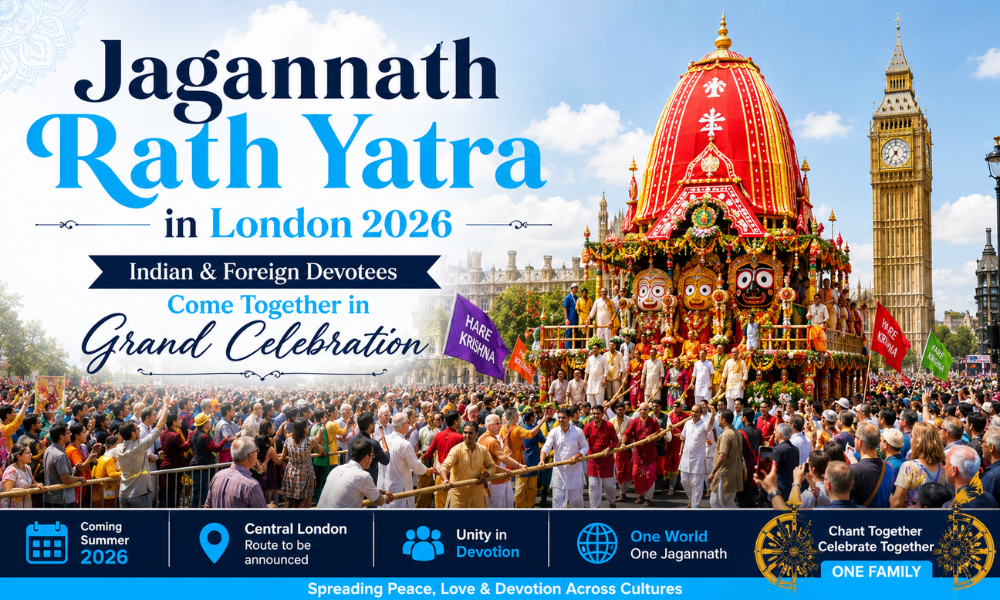
“In London’s heat, devotion burned brighter — thousands pulled the chariot of Lord Jagannath with bare hands and bare feet, their hearts aflame with faith.”
A Gathering Beyond Borders
What made this year’s Rath Yatra in London especially remarkable was the extraordinary diversity of those who participated. While Indian-origin British citizens and members of the Gujarati, Bengali, Odia, and wider South Asian diaspora formed a large and enthusiastic core of the crowd, they were joined in equal measure by British nationals, Europeans, Americans, and devotees from across Western nations. The festival drew visitors who had travelled specifically to witness this iconic event, many experiencing the Rath Yatra for the very first time.
Men, women, and children dressed in traditional Indian attire — crisp white dhotis, vibrant kurtas, and beautifully embroidered sarees in saffron, white, and yellow — mingled freely with foreign devotees who had embraced the spirit of the occasion by adorning similar clothing. Faces painted in the vivid blue of Lord Krishna, elaborate floral garlands around necks, and devotional flags waving in the warm breeze made the scene look like it had leaped straight from the ghats of Puri, Odisha, thousands of miles away.
Key Facts
- London Rath Yatra was first celebrated in 1969
- The procession begins from the iconic Hyde Park
- It concludes at the historic Trafalgar Square
- Temperature on the day: approximately 33°C
- Thousands of Indian and foreign devotees participated
- Organised by ISKCON (International Society for Krishna Consciousness)
The Sacred Chariots Take Centre Stage
At the heart of the procession stood three towering chariots, each one a marvel of craftsmanship and devotion. The largest chariot carried Lord Jagannath himself — the Lord of the Universe — flanked by his elder brother Balabhadra and his beloved sister Subhadra. Built by dedicated volunteers over weeks of preparation, the chariots were assembled with wood, colourful cloth, and ornate decorations that paid homage to the centuries-old tradition originating in the ancient city of Puri.
Devotees considered it a sacred act of the highest merit to take hold of the thick ropes and pull the chariots forward. Men and women, young and old, regardless of nationality, queued for their chance to participate in this divine act. The belief, as ancient as the festival itself, holds that pulling Lord Jagannath’s chariot even once in a lifetime is enough to wash away generations of accumulated karma and bring one closer to liberation.
Culture, Dance, and Devotion
Beyond the procession itself, the Rath Yatra transformed the surrounding streets into a living canvas of Indian culture. Classical Odissi and Bharatanatyam dancers performed on specially constructed stages, their graceful movements drawing applause from audiences who packed the pavements. Bhajan singers and kirtan groups filled the air with melodies that transported listeners to another realm entirely. Children dressed as Lord Krishna and Radha delighted onlookers, and volunteers distributed prasad — sanctified food — to all who gathered, without distinction of faith, nationality, or background.
The western devotees who participated were particularly moving to witness. Many had been followers of the Hare Krishna movement — formally known as ISKCON, the International Society for Krishna Consciousness — for decades. Their dedication to Indian spiritual traditions, expressed through spotless white and saffron robes, shaved heads, and faces marked with the tilak, demonstrated that the reach of Lord Jagannath’s grace knows no geographical limits.
“From Hyde Park to Trafalgar Square, the streets of London became a sacred path — one that has been walked in faith every year since 1969.”
A Tradition Rooted in History
The London Rath Yatra has a history that stretches back more than five decades. It was first celebrated in 1969, just two years after ISKCON’s founder Srila Prabhupada arrived in the United Kingdom to spread the message of bhakti yoga and devotion to Lord Krishna. That first procession was a humble affair compared to the magnificent spectacle that London witnesses today, but it planted a seed of devotion that has only grown stronger with each passing year.
Today, the London Rath Yatra stands as one of the largest Hindu festivals celebrated anywhere in the Western world, drawing media attention from across Europe and serving as a powerful symbol of India’s cultural reach and the universal appeal of its spiritual traditions. The route — beginning at Hyde Park and culminating at Trafalgar Square, one of the most recognised public spaces on the planet — could not be more apt. It is a statement: that the Lord of Puri is also the Lord of the world.
Conclusion
Perhaps the most profound aspect of the 2026 London Rath Yatra was what it communicated about the times we live in. In a world often divided by nationality, religion, politics, and language, thousands of people from dozens of countries gathered together under a blazing sun, pulled the same rope, chanted the same name, and shared the same food. No tickets were sold. No entry was barred. Every hand that reached for the rope was welcomed.
As the chariots finally came to rest at Trafalgar Square — with Nelson’s Column standing sentinel in the background — the crowd erupted in an overwhelming wave of joy. Strangers embraced, children were lifted onto shoulders to catch a final glimpse of the deity, and the kirtan reached a crescendo that seemed to rise above the noise of the city itself. It was, by any measure, an extraordinary moment — a reminder that when devotion is genuine, it needs no translation.