




One Drink Order Could Make or Break Your Interview: Inside Bupa CEO’s Unusual Hiring Rule
Most job interviews follow a predictable script — questions about experience, a rundown of skills, maybe an aptitude test thrown in. People took notice when Bupa CEO Iñaki Ereño said a drink order could reveal something real about a candidate. It’s an odd claim. It’s also spread fast — business circles, social media, all of it. Some think there’s genuine value in watching these small, unscripted moments. Others aren’t so sure — they worry it opens the door to personal bias creeping into what’s supposed to be an objective process.
A simple order with a larger purpose
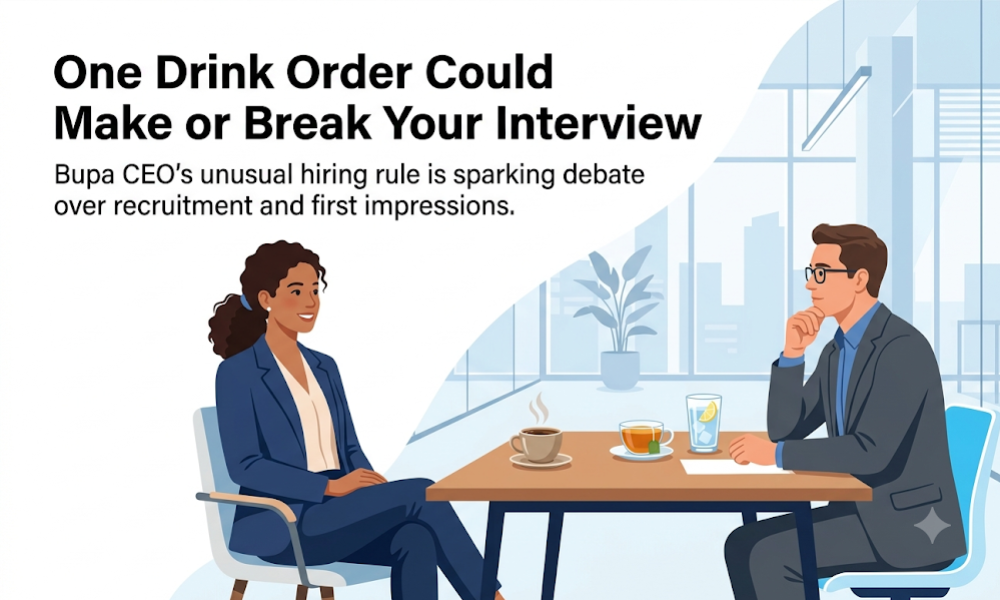
Here’s the thing — Ereño isn’t fixated on what people order.
Coffee. Tea. Water. None of that’s the point. What he’s actually clocking is the decision itself — does the person hesitate, ask a question if they’re unsure, or say what they want without overthinking it?
This isn’t happening in isolation, either. Recruitment as a whole has been shifting away from a pure focus on qualifications and technical chops. Increasingly, employers want to know how candidates think, how they talk to people, how they collaborate — especially for roles where leadership and teamwork carry real weight.
Why employers value behavioural signals
Recruiters have said this for years: an interview isn’t just the CV. It comes down to how someone handles pressure, how they talk, how they carry themselves walking through a room. And honestly, the moments before the “real” interview often give away more than a rehearsed answer ever will. How someone greets the receptionist. Whether they hold eye contact. For senior roles, personality and cultural fit can matter just as much as the CV.
The psychology behind everyday decisions
Psychologists have long studied how small, everyday decisions can hint at bigger behavioural patterns.
Small decisions hint at bigger patterns — psychologists have studied this for decades. Even choosing a drink means processing something, deciding, then saying it out loud. Trivial on the surface. Not entirely.
But a drink order isn’t just a character on display. Dietary needs. Health. Culture. Nerves. Someone ordering water might just be skipping caffeine — nothing deeper going on.
But behavioural experts urge caution here — reading too much into one interaction is risky.
Not everyone agrees with this approach. Many recruitment professionals continue to favour structured interviews and evidence-based assessments, pointing to consistent questions and measurable criteria as the fairer standard — a shift largely driven by efforts to reduce unconscious bias.
That’s precisely why many specialists warn against treating a single moment like this as proof of anything.
Supporters see value in authentic interactions
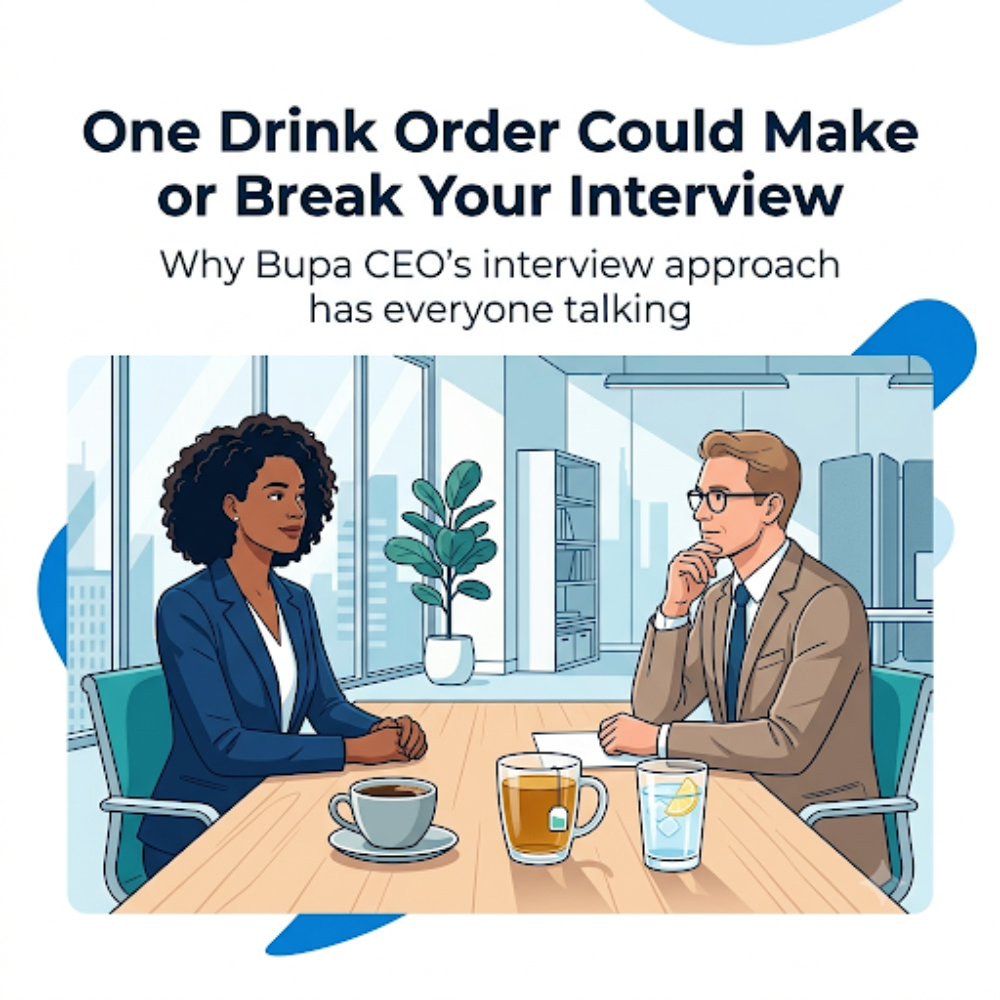
To be clear, people who back Ereño’s approach aren’t suggesting informal moments should replace structured interviews.
Instead, they view these interactions as an extra layer of insight. Formal questions tend to pull out rehearsed, polished answers. A casual chat before the interview even starts, though, can offer a more honest look at how someone actually communicates.
Supporters point to a handful of qualities these moments might reveal:
- Confidence without tipping into arrogance.
- Ease in unfamiliar situations
- Decisiveness, without unnecessary hesitation.
Plenty of experienced recruiters already lean into informal conversation to put candidates at ease — all while quietly watching how they behave in a less rigid setting.
Critics warn against unconscious bias
Not everyone’s sold on this, though.
Plenty of recruitment professionals still push structured interviews and evidence-based assessments as the fairer route — consistent questions, measurable criteria, all in the name of cutting unconscious bias out of the process.
Critics say leaning too hard on something like a drink order risks introducing assumptions that have nothing to do with actual job performance.
And fair enough — candidates come from all kinds of cultural and personal backgrounds. Some avoid certain drinks for medical, dietary, or religious reasons. Others get anxious in interviews and just don’t act like themselves.
Given all that, plenty of HR specialists say behavioural observations should stay in a supporting role — never the deciding factor in a hiring call.
The growing emphasis on soft skills
Ereño’s comments tap into something bigger happening across the hiring world.
Technical knowledge alone doesn’t cut it anymore for a lot of employers. Communication, adaptability, emotional intelligence, the ability to work well with others — these are increasingly non-negotiable.
The problem is, a standard interview question doesn’t always surface these traits.
So companies have started turning to group exercises, case studies, role-play, informal chats — anything that gives a fuller sense of how someone might actually show up on the job.
What job seekers can learn
Whether or not an interviewer follows Ereño’s exact method, one thing holds: interviews don’t really start with the first official question.
Candidates start making an impression the moment they walk in. How they greet reception, how they interact with staff, how they handle the unexpected, how they carry themselves throughout — all of it feeds into the picture an employer builds.
Still, don’t spiral over every small choice you make in an interview. Stay authentic. Stay professional. Preparation hasn’t lost its place either. Know the company. Understand the role. Come ready to talk through real wins.
Conclusion
Recruitment continues to evolve
Ereño’s comments are one thread in a much bigger shift. AI, skills-based hiring, behavioural assessments — recruitment is moving fast, and employers are still chasing better ways to measure what a resume can’t show.
Unusual interview techniques tend to grab headlines, sure — but most recruitment experts agree that no single observation should make or break a job offer.
Good hiring rarely rests on one thing. Structured interviews, evidence-based assessments, reference checks, plain judgement — it’s the mix that builds the full picture, not any single moment.
For job seekers, the takeaway is simple. Every interaction during an interview adds to the overall impression — whether that’s talking through experience, greeting a colleague, or just ordering a coffee. Authenticity, professionalism, and confidence are still what employers notice and remember.
The debate over Bupa CEO Iñaki Ereño’s interview habit doesn’t look like it’s fading anytime soon. But if nothing else, it’s a good reminder: good recruitment is about seeing the whole person, not judging them in one single moment.