





Why Keir Starmer’s Political Trouble Is Becoming a Market Problem
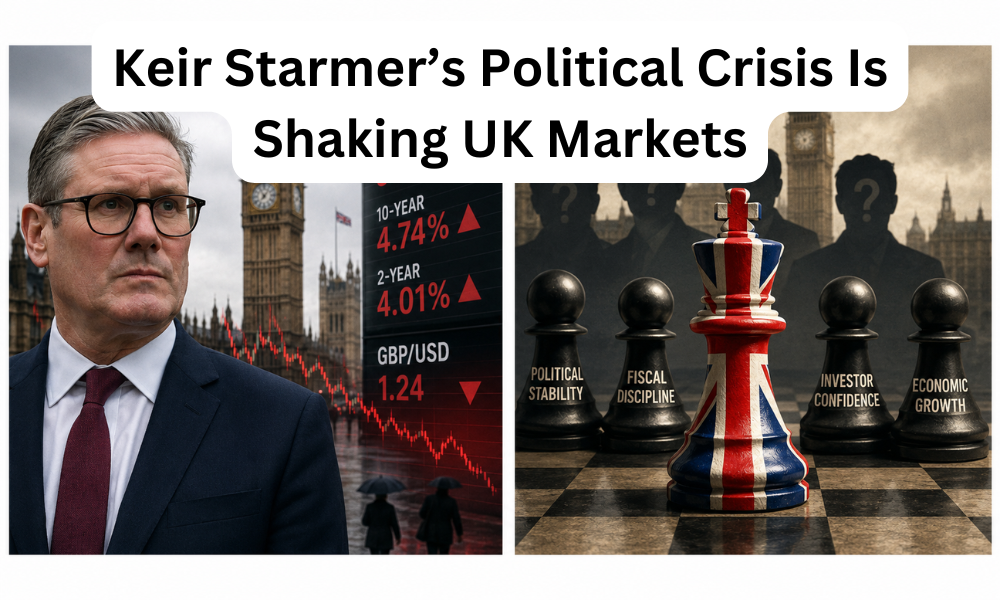
British Prime Serve Keir Starmer is confronting one of the most troublesome minutes of his political career. After overwhelming misfortunes for the Work Party in later nearby decisions and developing disappointment inside his claim positions, questions are no longer restricted to whether Starmer is debilitated — they are presently almost how long he can survive.
Ordinarily, authority shows interior Westminster would stay to a great extent a political story. But this time, speculators are paying exceptionally near consideration. The reason is basic: Britain’s budgetary markets still carry the scars of political flimsiness from later a long time, and another questionable move at the best might trigger new uneasiness over government borrowing, financial arrangement, and financial teaching.
What makes the circumstance indeed more delicate is that markets are not fairly stressed approximately whether Starmer clears out. They are stressed around when he takes off — and who might supplant him.
A Prime Serve Beneath Pressure
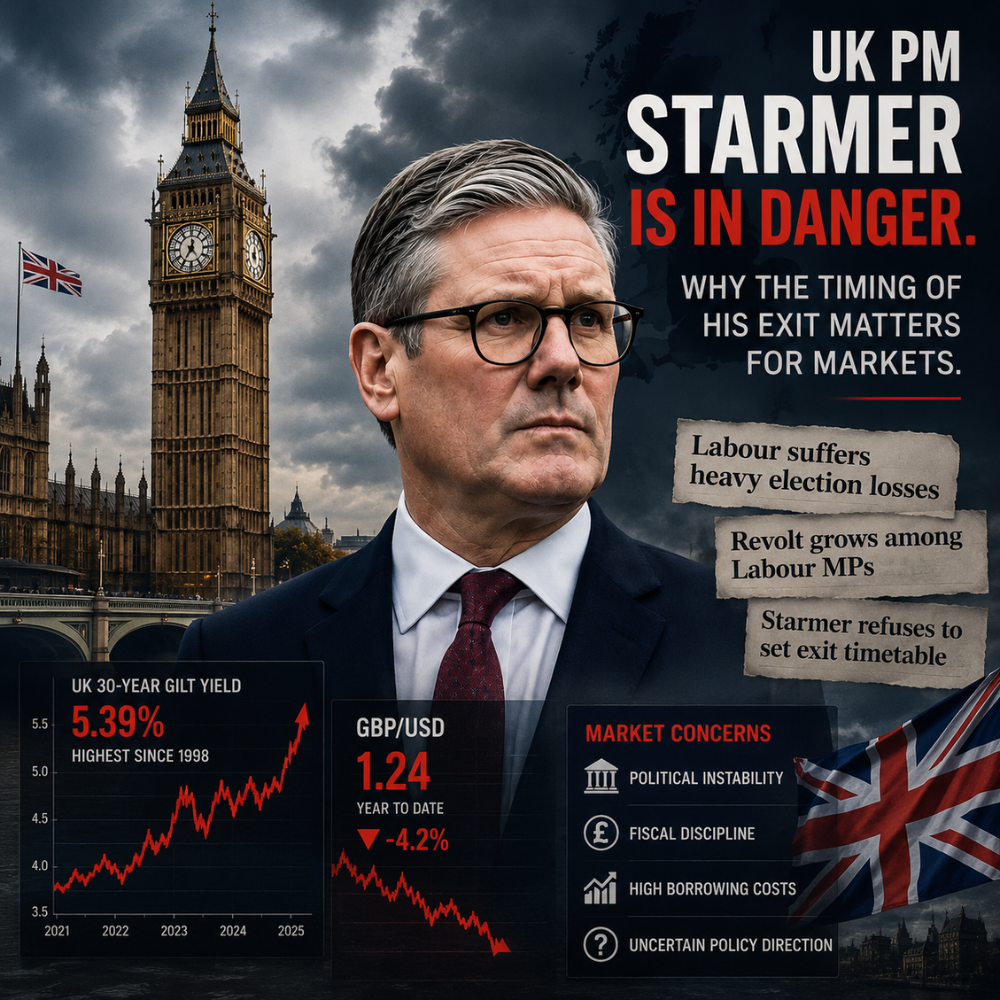
The quick trigger for the emergency was Labour’s baffling execution in nearby decisions. Reports recommend that more than 80 Work officials have either straightforwardly or secretly communicated concern over Starmer’s administration.
Despite the developing distress, Starmer has freely denied to leave. His partners demand he remains centered on administering and has no purposeful of setting a timetable for takeoff.
But legislative issues regularly get to be unsafe when pioneers show up politically injured but refuse to step aside. That makes instability — and monetary markets loathe instability more than nearly anything else.
Investors are presently attempting to reply a few troublesome questions:
Will Work slip into a drawn out authority battle?
Could an unused pioneer significantly alter investing policies?
Would Britain’s as of now tall obligation burden increment further?
Could another period of political insecurity harm the pound and bond market?
These concerns are as of now starting to appear in money related indicators.
Why Bond Markets Are Nervous
The clearest sign of speculator uneasiness has shown up in Britain’s government bond showcase, too known as the overlaid market.
According to reports, yields on long-term British government bonds bounced strongly as fears over Starmer’s future heightens. The abdicate on the 30-year plateau climbed to levels not seen since the late 1990s, whereas the pound debilitated against the U.S. dollar.
To conventional individuals, bond yields may sound specialized. But they matter enormously.
When speculators request higher yields, it implies they see more noteworthy chances in loaning cash to the government. Higher borrowing costs in the long run influence everything from open investing to contracts and commerce investment.
Britain is particularly powerless since it is still recuperating from the financial harm caused by previous Prime Serve Liz Truss and her sad 2022 “mini-budget.” That scene smashed financial specialist certainty after unfunded charge cuts activated a showcase emergency, constraining crisis intercession from the Bank of England.
Since then, both major political parties have attempted to console markets that Britain will stay financially dependable. Starmer’s Work administration at first profited from showing up more steady and direct than past governments.
Now, in any case, speculators fear that steadiness may be slipping absent again.
Why Timing Things More Than the Exit Itself
Interestingly, numerous investigators accept markets seem to really handle Starmer clearing out — given the move happens rapidly and predictably.
The genuine fear is a long, chaotic control struggle.
If Starmer leaves all of a sudden and a market-friendly successor develops rapidly, financial specialists may treat it as a reasonable political altar. But if Work enters months of infighting, instability over arrangement heading seems to develop altogether.
This is where the timing issue gets to be critical.
Some Labour figures supposedly need Starmer to remain long enough for More Notable Manchester Leader Andy Burnham to return to Parliament and possibly challenge the administration.
Burnham is seen by numerous Labour voters as a more populist and interventionist figure. Supporters see him as somebody able to reconnect with working-class voters. Pundits stress he may grasp higher open investing at a time when Britain’s funds are as of now stretched.
For markets, that refinements things enormously.
A delayed administration challenge including competing dreams for tax assessment, investing, and financial administration seem unsettled financial specialists. Bond dealers are greatly delicate to any signs that monetary teaching may weaken.
Britain’s debt-to-GDP proportion is as of now exceptionally tall, and financial specialists know the government has restricted room for costly arrangement tests.
The Wes Streeting Factor
Another title being examined intensely is Wes Streeting, who is seen by numerous as a more centrist and business-friendly figure.
Some investigators accept markets would react more emphatically to a quick move toward somebody like Streeting since he is seen as financially direct.
This makes an unordinary circumstance where budgetary markets are successfully gaming out inner Work Party politics.
Normally, speculators center on races between parties. But Britain’s delicate political climate implies indeed authority challenges inside the administering party presently carry critical financial consequences.
Britain’s Bigger Financial Problem
The more profound issue is that the UK economy remains fundamentally fragile
Growth has been drowsy, swelling weights proceed to wait, and open administrations are beneath strain. At the same time, the government faces weight to increment investing on healthcare, defense, framework, and vitality security.
Political flimsiness makes all of these issues harder to manage
Investors need clarity. Businesses need consistency. Shoppers need certainty that financial arrangement will not abruptly alter direction.
Instead, Britain once once more shows up caught in a cycle of political turbulence.
That recognition alone can be financially damaging.
International financial specialists compare nations continually. If Britain starts to seem politically questionable, capital can stream somewhere else. The pound debilitates, borrowing gets to be more costly, and financial certainty deteriorates.
This is why indeed rumors around administration changes presently move markets so quickly.
Can Starmer Survive?
For presently, Starmer is refusing to back down. His partners contend that expelling another prime minister would, as it were, extend the sense of chaos in British legislative issues.
But advanced legislative issues move quickly. Pioneers who show up secure one week can get politically separated the next.
Much depends on whether Work legislators conclude that Starmer still gives them the best chance of vanquishing rivals like Nigel Farage and the developing Change UK development.
If the party proceeds to disintegrate, the weight for a move might end up unstoppable.
And if that happens, markets will not essentially observe from the sidelines.
They will respond in genuine time.
Conclusion
Final Thoughts
Keir Starmer’s emergency is no longer a political story — it has ended up a financial one.
Financial markets are progressively treating Britain’s authority instability as a chance figure since the country’s financial validity remains delicate after a long time of instability.
The key issue is not simply whether Starmer survives. It is whether Britain can dodge another delayed period of political chaos that shakes speculator confidence.
In today’s worldwide economy, administration moves are not judged as it were by voters. They are judged immediately by bond dealers, cash markets, and worldwide investors.
And right presently, those speculators are observing Westminster exceptionally carefully.