
Hantavirus, unlike Covid, is difficult to transmit: Dutch doctor treating patient
There have been new worries about a new viral outbreak, following reports of a hantavirus infection on board a cruise ship called the MV Hondius. The case has attracted worldwide attention, but with worries about the virus being able to spread from person to person. But there have been calls from health experts in the Netherlands, who are currently treating an infected patient, not to compare the hantavirus to Covid-19 because the latter is much more easily spread. Isolation measures for the victims have been initiated in the Netherlands.
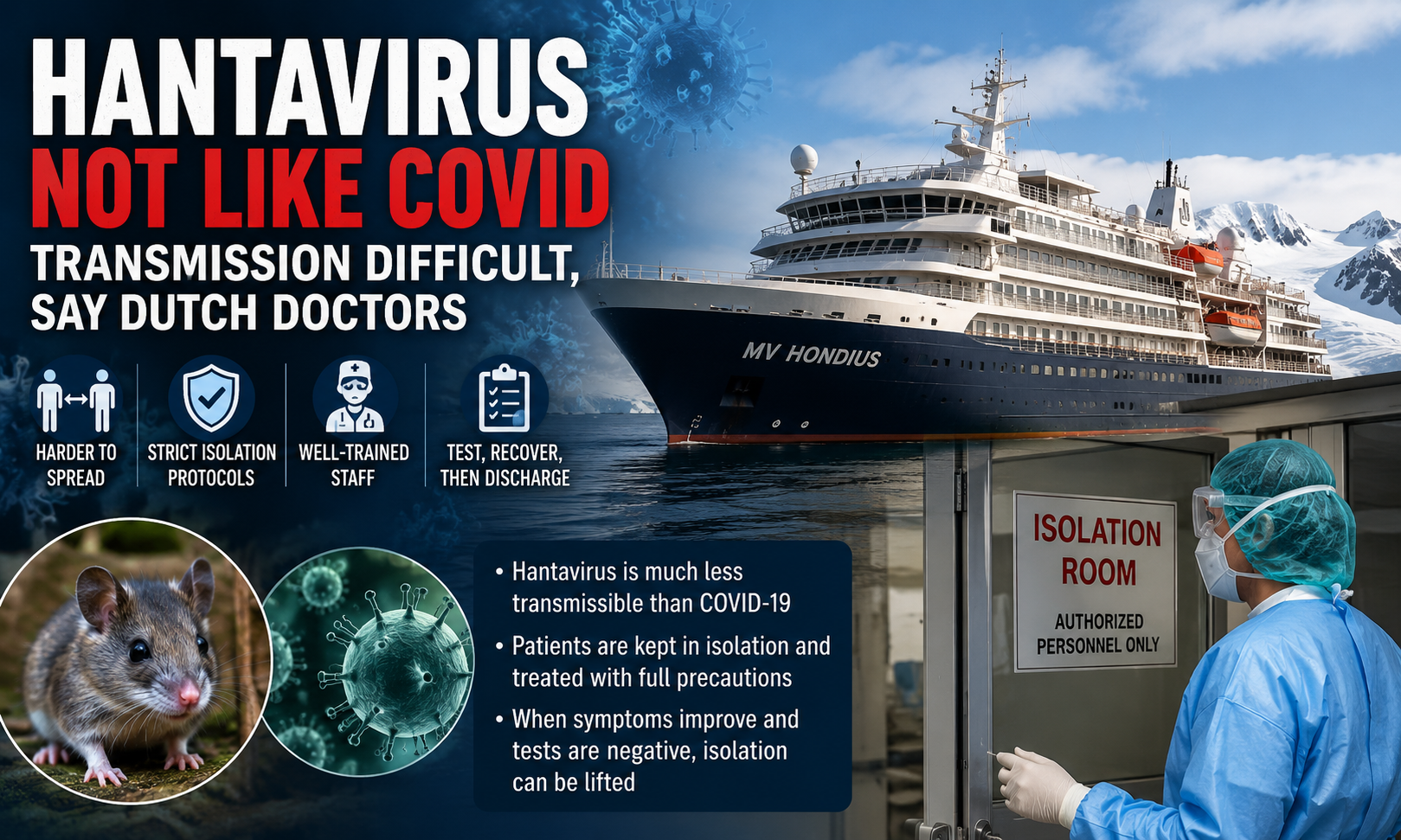
What Occurred at the MV Hondius Passenger Ship?
Once an outbreak occurred aboard the MV Hondius passenger ship, the news quickly developed into a global health issue as a number of people who appeared to be experiencing signs connected with hantavirus were reported. The cruise ship, which is renowned for providing expedition travel trips, became the focus of medical attention as officials started looking into the cases of infection and tracking down the passengers involved. One individual was admitted to an infectious disease facility in the Netherlands while medical professionals attempted to find out how the virus spread through the passenger vessel. The development triggered flashbacks to cruise ship epidemics during the period of the coronavirus pandemic. Nonetheless, health care specialists made it clear that the present scenario is vastly different from the previous one when the world was battling the coronavirus outbreak. Health care professionals instantly initiated rigorous safety measures, such as the isolation of patients and controlled treatment processes. While hantavirus poses significant risks to individuals’ well-being, health care professionals argue that the probability of a mass outbreak is minimal.
Why Doctors Say Hantavirus Is Different from Covid-19
According to Dutch infectious disease specialist Karin Ellen Veldkamp, there is no comparison between the hantavirus outbreak and the COVID-19 pandemic because transmission rates are fundamentally different. The primary method of transmission for hantaviruses is through contact with infected rodents and their feces, not by person-to-person contact like COVID-19. While human-to-human transmission of hantavirus has occurred, it is rare compared to COVID-19’s rapid rate of transmission. While there may have been some cases of limited human-to-human transmission on the cruise ship, the overall risk of transmission of hantavirus remains very low. People generally become infected through contact with the rodent population, while COVID-19 was spread worldwide through air and asymptomatic individuals. According to Veldkamp, hospitals are capable of safely handling these types of infections and managing them without inciting public panic. The purpose of Veldkamp’s statements was to alleviate people’s fears since they are posting on social media and suspecting there may be another outbreak like we experienced at the beginning of COVID-19. Other health practitioners have also indicated that existing isolation precautions and medical protocols are effective in controlling cases of hantavirus, thus it is unlikely that we will see a widespread public health emergency due to the hantavirus outbreak at this time.
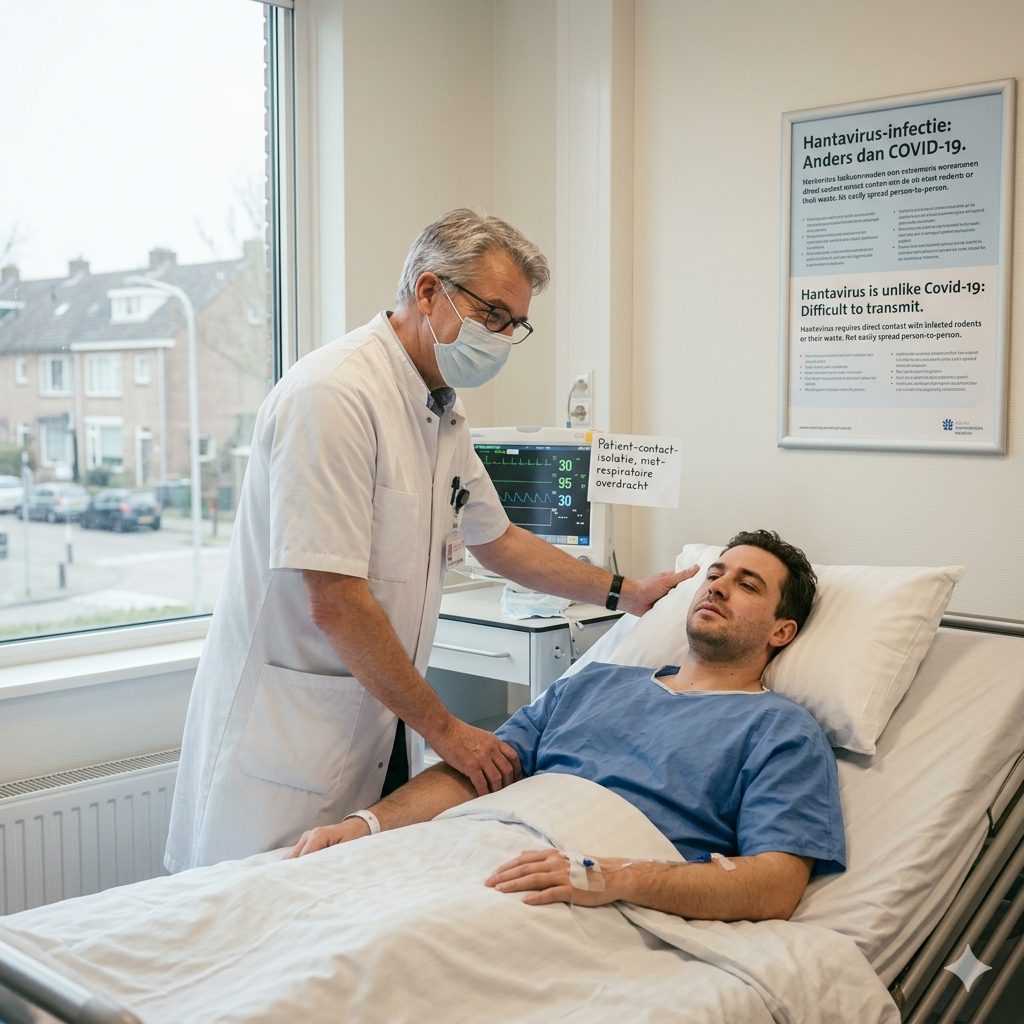
Inside the Isolation and Treatment Process in the Netherlands
The patient who has been transferred from MV Hondius is currently being treated at Leiden University Medical Centre under strict isolation protocols. As per the administering doctor, we used specifically designed infectious disease protocols to ensure that all patients and healthcare providers are protected from infection. When treating a patient, we are keeping him/her in a designated isolation room where only trained healthcare personnel will enter while wearing PPE. Our ultimate goal is to provide the patient with appropriate treatment while ensuring their safety. Unlike the fear-based environment seen in hospitals during the COVID pandemic, the healthcare team will be approaching this case with confidence and preparedness. The medical team is extremely trained in the management of communicable diseases and participates in preventative training frequently. Patients remain in isolation as long as there are visible symptoms; therefore, they must be tested prior to removing their isolation restrictions. Once recovery starts and their test is negative, they will be safe to be removed from isolation. The hospital has also confirmed that there will be multiple hospitals throughout the Netherlands that will be prepared for similar cases should further infection occur.
Can Hantavirus Spread Between Humans? What Experts Know So Far
One of the questions which arose because of this case is related to the ability of the virus to transmit between humans. Although it seems like it’s possible for hantavirus to do so, in very rare cases at that, the process is nowhere nearly as common and effective as the one used by coronavirus. Medical experts believe that there might have been some cases of human-to-human spread on board this vessel where the passenger was diagnosed with the condition. Typically, the virus gets transmitted through contact with rodents or the environment that has been exposed to them, but not directly through a person carrying it. That’s why all specialists who know about this issue are currently examining the information to make their decision. As for the duration of human infection, it’s quite hard to state because even the experts don’t know how long a person remains contagious after contracting the virus. It’s clear that once the patient recovers, it’s unlikely that they will pose any threat to others.
Conclusion
The recent breakout of the hantavirus aboard the MV Hondius has certainly caused much alarm, not least because of the lingering scars left by the experience of Covid-19 around the globe. Yet, according to medical authorities in the Netherlands, the hantavirus is significantly less contagious and can be easily handled via appropriate quarantine and hospitalization measures. As investigations continue into the origins of the illness and the possible vectors of its transmission, it seems that, for now, everything is under control. What the event demonstrates, among other things, is how vital preparedness and quick action become in such cases.