




AI Pressure Mounts in Banking Sector as 1 in 3 BFSI Employees Consider Quitting
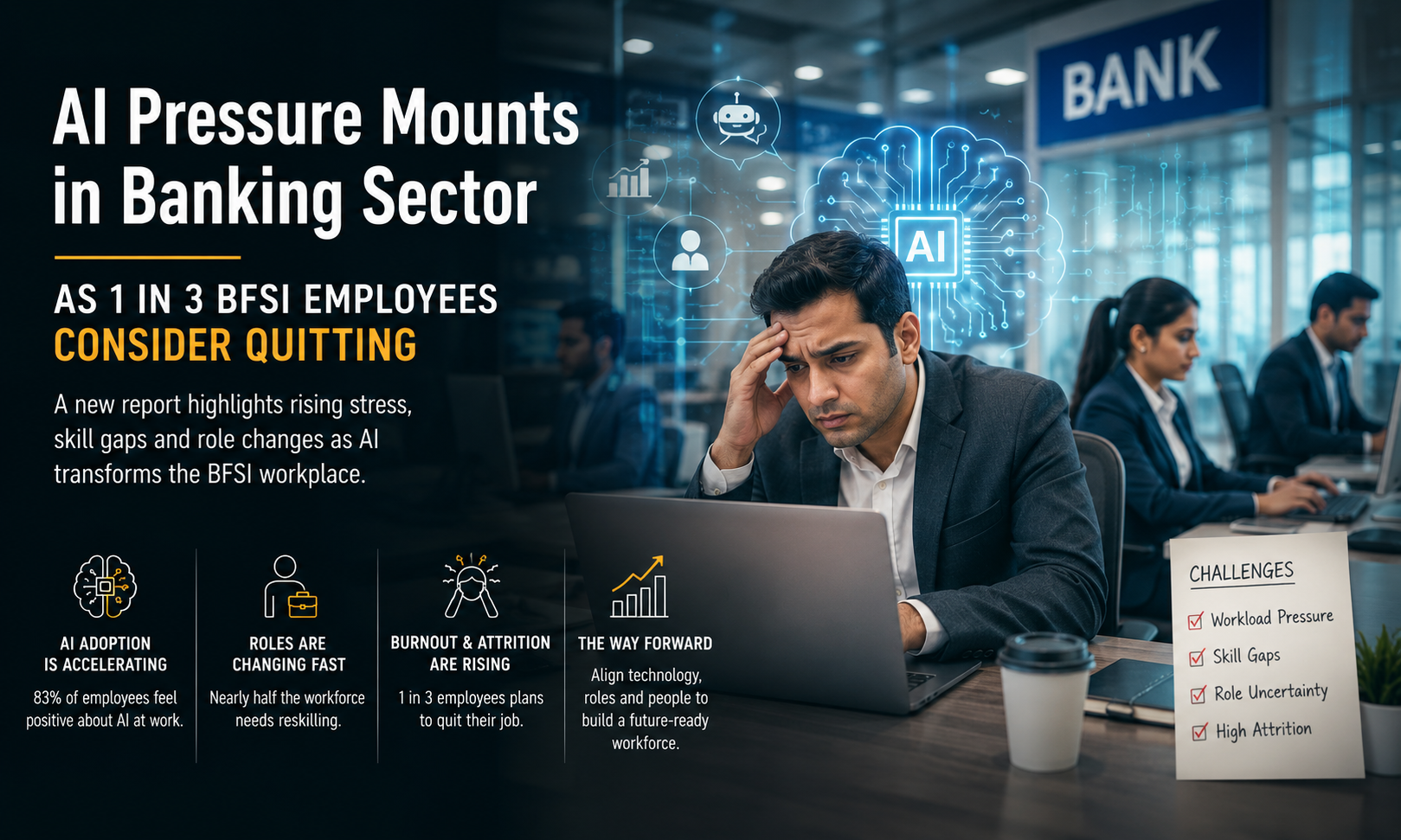
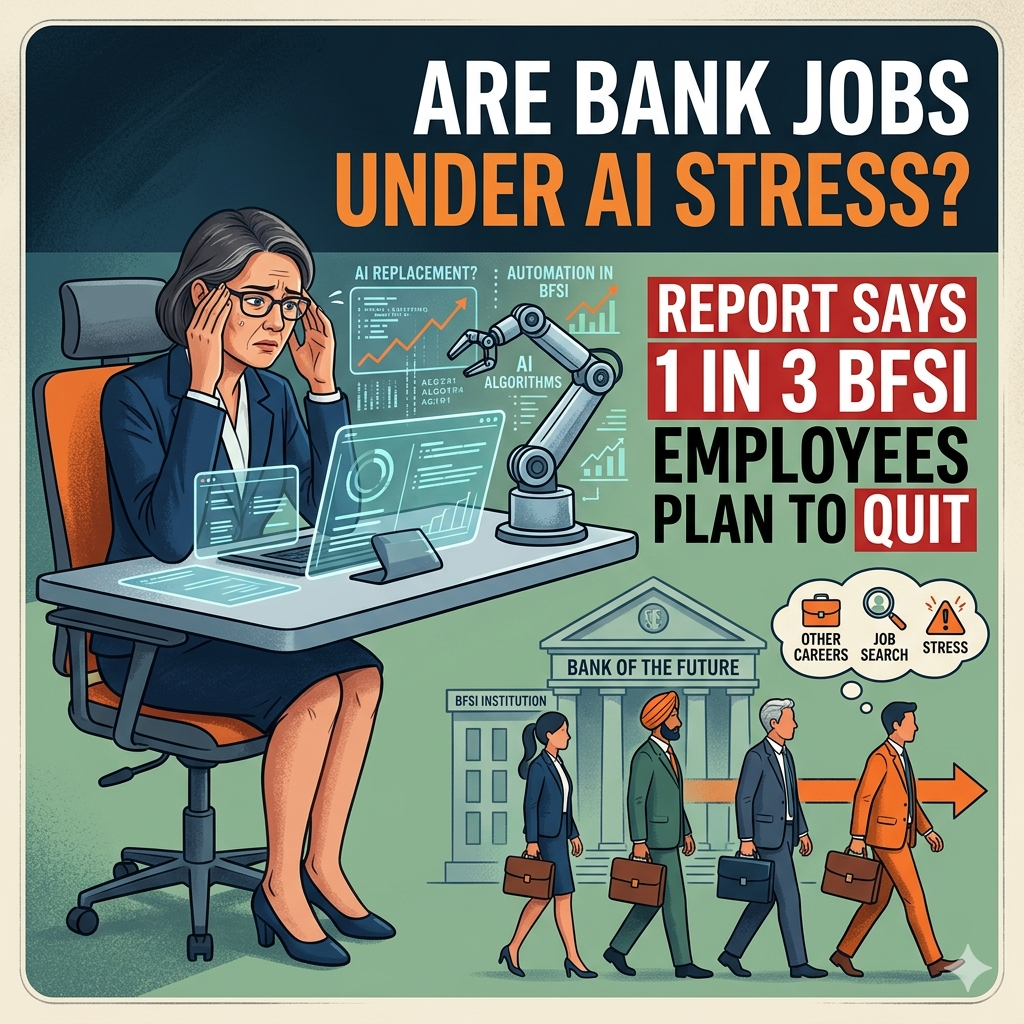
It appears that the BFSI sector is undergoing yet another massive workplace transformation in recent times. With the use of technologies such as artificial intelligence and automation becoming integral parts of the BFSI sector, there seems to be growing pressure on employees to adjust to new roles and increased workloads. According to a study conducted by Great Place To Work India, more than 30% BFSI employees are planning to switch jobs, due to the issues like skill gaps and job-related stress. Although the BFSI employees appear to be hopeful about the use of artificial intelligence in the future, the same study shows that firms may have been rushing into the implementation of technology.
Impact of Artificial Intelligence and Digital Transformation on Banking Careers
The banking and finance industry is undergoing a major transformation, with artificial intelligence and digitalisation becoming a norm in business processes. Tasks such as automated customer care, intelligent fraud detection, digital customer onboarding, and advanced analytics are all increasingly dependent on technology. Although this revolution allows for modernisation, it has also altered the traditional job roles in the banking industry. Employees must now be proficient in technological systems and workflows and continuously learn about new advancements. Routine tasks are gradually being automated, and employees are required to perform tasks that involve analysis and focus on customers. Employees’ apprehension of the obsolescence of their skills leads to confusion within the sector. Furthermore, companies are restructuring departments at a pace faster than the comfort level of employees, leading to a challenging scenario for professionals in the banking and finance industries.
Increasing Rates of Employee Attrition, Burnout, and Workload Pressure in the Banking Sector
This report analyses employee attrition rate, employee dissatisfaction due to their workload, and the impact of excessive work pressure causing burnout. As companies continue to build their digital banking services, they have become subject to ever-tighter regulatory controls that increase compliance requirements. Employees are expected to perform at a higher level than what is realistically not possible, and they feel the pressure to work harder with increasing workloads. Many teams have become heavily skewed in terms of skill set, with very few employees possessing the experience necessary to complete essential work tasks, thereby increasing employee stress and chances of employee attrition. Many employees are feeling the brunt of this shift in the workplace due to high employee expectations for performance and the long-term capability to influence others. According to the report, almost 33 percent of employees are currently considering leaving their employment, representing a significant challenge to the banking industry. While a good many employees are accepting of change and technology, the increasing likelihood for added workload pressure, along with a lack of appropriate system.
The Need for Reskilling in the Banking Industry
Currently, many banks struggle to fill vacant positions because there is an insufficient supply of workers with the required skills. Most sectors of the work force are experiencing the impact of evolving technology at a rapid pace and thus requiring reskilling as a result of digital transformation. According to reports, nearly half of today’s workforce will require reskilling in the next five years due to the impact of artificial intelligence and the increased application of technology within capital markets and banking operations. The fact is that most organisations continue to take a reactive approach to training their staff, with 70% of employees only upgrading their skills when they are needed to complete an existing assignment and very few will ever engage in self-directed development or prepare for future methods of conducting their jobs. This has created a divide between what is required of the business versus what the employee has been trained to deliver. Banks will increasingly deploy automation, advance the use of data transformation processes, deploy enhanced cyber security programs, and develop new services based on artificial intelligence. Employees who are not receiving updated training and developing digital skills are at a disadvantage against their peers. As banks continue to add new technology to their business, employees are struggling to keep up the pace with learning new technologies and are, as a result, feeling stressed due to their inability to perform the way they originally intended because of performance pressures they have developed that they can’t meet. If banks do not make a significant commitment to ongoing training, strong leadership support, and structured reskilling programs, many consulting firms believe that the banking industry will face serious problems with execution because of a lack of flexible, future ready, and sustainable talent.
Can Banks Balance AI Growth with Employee Well-Being?
The BFSI industry expects significant growth from AI technologies; however, the real difficulty will be finding ways to ensure that technological advancement is not in contradiction with employee welfare. The report reveals that the majority of employees perceive AI technology positively and have a good understanding of the importance of AI technology in increasing efficiency and productivity. Nevertheless, many employees believe that companies prioritize the pace of implementing AI technology above all else, disregarding the employees’ preparedness for the changes that accompany it. Moreover, there are evident leadership gaps, as managers tend to be good at ensuring performance rather than assisting in employees’ personal and psychological development. To be ready for the changes in their jobs, employees require adequate communication, mentorship, and assurance that their jobs will continue to exist. If banks do not find ways to integrate the technological advancement with the workforce, they can expect high attrition rates and low productivity levels in the future.
Conclusion
The BFSI industry is reaching an important junction whereby both technological innovation and people dynamics are changing together. Though the use of AI opens up new vistas in terms of efficiency and innovation, at the same time, there is increased stress placed on employees owing to the changes in the nature of their jobs. It becomes very clear from the report that the success of future banks does not lie merely in digital transformation alone but also in how well the organizations can help people through it. Organizations that focus on training, developing leaders and supporting the health of their employees are most likely to succeed and retain talent.