Gujarat’s Largest Biogas-Powered Mega Kitchen: Feeding 10,000 Pilgrims Daily Without LPG or Firewood
In an era where sustainability is no longer a choice but a necessity, Gujarat has emerged as a pioneer in combining tradition with innovation. One remarkable example is its largest biogas-powered mega kitchen, which prepares meals for over 10,000 pilgrims daily—without using LPG cylinders or firewood. This initiative is not only a testament to technological advancement but also a model for eco-friendly mass food preparation systems across the world.
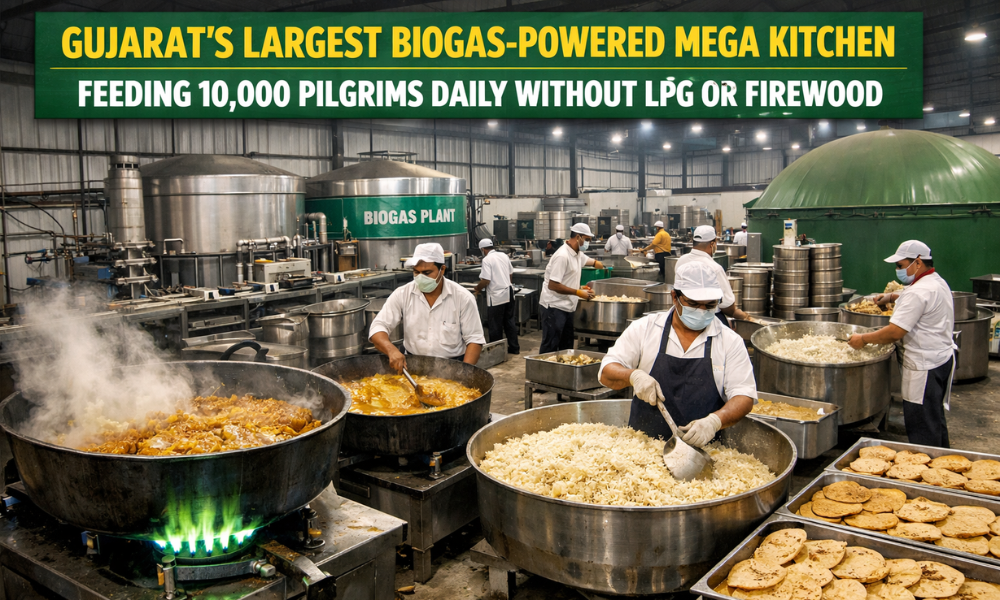
Introduction to the Mega Kitchen
Located in a prominent pilgrimage destination in Gujarat, this mega kitchen serves thousands of devotees every day. Pilgrimage centers often face the challenge of preparing large quantities of food efficiently while managing costs and environmental impact. Traditionally, such kitchens relied heavily on firewood or LPG, both of which contribute to pollution and resource depletion.
This biogas-powered kitchen has revolutionized the process by adopting a clean, renewable energy source derived from organic waste.
How the Biogas System Works
At the core of this kitchen lies an advanced biogas plant that converts organic waste into usable fuel. The system operates through the following process:
- Collection of Organic Waste
- Food leftovers, vegetable peels, and other biodegradable materials are collected daily.
- Waste is segregated to ensure only organic matter enters the system.
- Anaerobic Digestion
- The organic waste is fed into a biogas digester.
- In the absence of oxygen, microorganisms break down the waste.
- This process produces methane-rich biogas.
- Gas Storage and Supply
- The generated biogas is stored in tanks.
- It is then piped directly to the kitchen burners.
- By-product Utilization
- The leftover slurry is used as organic fertilizer.
- This supports agriculture and reduces chemical fertilizer use.
Key Features of the Mega Kitchen
- Massive Cooking Capacity
- Prepares meals for over 10,000 pilgrims daily.
- Can scale up during festivals and peak seasons.
- Zero Dependence on Conventional Fuels
- No LPG cylinders required.
- No firewood usage, reducing deforestation.
- Eco-Friendly Operations
- Significant reduction in carbon emissions.
- Minimizes waste through recycling and reuse.
- Cost Efficiency
- Lower operational costs over time.
- Reduced expenditure on fuel procurement.
- Hygienic and Automated Processes
- Modern cooking equipment ensures cleanliness.
- Streamlined workflows improve efficiency.
Environmental Impact
The environmental benefits of this kitchen are substantial and far-reaching:
- Reduction in Greenhouse Gas Emissions
Biogas is a cleaner fuel compared to LPG and firewood. By switching to biogas:
- Carbon footprint is significantly reduced.
- Methane emissions from waste are captured and utilized instead of being released into the atmosphere.
- Waste Management Solution
- Tons of organic waste are processed daily.
- Prevents landfill accumulation and associated pollution.
- Conservation of Natural Resources
- Saves trees that would otherwise be cut for firewood.
- Reduces reliance on fossil fuels.
Social and Economic Benefits
- Supporting Pilgrims
- Provides free or affordable meals to thousands.
- Ensures consistent food quality and availability.
- Employment Opportunities
- Creates jobs in waste management, kitchen operations, and maintenance.
- Encourages skill development in sustainable technologies.
- Community Awareness
- Educates visitors about renewable energy.
- Inspires adoption of eco-friendly practices in daily life.
Technological Innovations
This mega kitchen integrates several modern technologies:
- High-Efficiency Burners
- Designed specifically for biogas usage.
- Ensure uniform cooking and reduced energy loss.
- Automated Stirring and Cooking Systems
- Reduce manual labor.
- Maintain consistency in food preparation.
- Smart Monitoring Systems
- Track gas production and consumption.
- Ensure safety and efficiency.
Challenges and Solutions
While the system is highly efficient, it does face certain challenges:
- Initial Investment
- Setting up a biogas plant requires significant capital.
- Solution: Government subsidies and CSR funding can help.
- Waste Segregation
- Proper segregation is essential for smooth functioning.
- Solution: Awareness programs and strict protocols.
- Maintenance Requirements
- Regular monitoring is necessary.
- Solution: Skilled staff and periodic inspections.
A Model for the Future
This kitchen serves as a blueprint for other religious institutions, community kitchens, and large-scale food service operations. With increasing awareness about climate change and sustainability, such models can be replicated across India and globally.
Potential areas of expansion include:
- Schools and universities
- Hospitals
- Disaster relief camps
- Urban community kitchens
Government and Institutional Support
The success of such projects often depends on collaboration:
- Government policies promoting renewable energy
- Financial incentives for green infrastructure
- Partnerships with NGOs and private organizations
These factors play a crucial role in scaling similar initiatives nationwide.
Conclusion
Gujarat’s largest biogas-powered mega kitchen stands as a shining example of how innovation and sustainability can coexist with tradition. By feeding over 10,000 pilgrims daily without relying on LPG or firewood, it addresses critical challenges related to energy, waste management, and environmental conservation.
This initiative not only reduces ecological impact but also demonstrates economic viability and social responsibility. As the world looks for sustainable solutions to feed growing populations, such models offer a practical and scalable path forward.
Adopting similar systems across various sectors can significantly contribute to a cleaner, greener, and more self-reliant future.