
Wireless Charging: Is MagSafe and Pixelsnap Really Worth It?
Remote charging utilized to feel like enchantment. Fair put your phone on a cushion, and it begins charging—no cables, no complaining. But if you’ve really utilized it every day, you’ll know it’s not continuously that smooth.
Now with advances like MagSafe and Pixelsnap, things are changing once more. Phones can snap into place with magnets, adjust impeccably, and charge more efficiently.
But here’s the genuine address: is this fair another favourite highlight, or something that really makes life easier?
Let’s break it down in a viable, no-hype way.
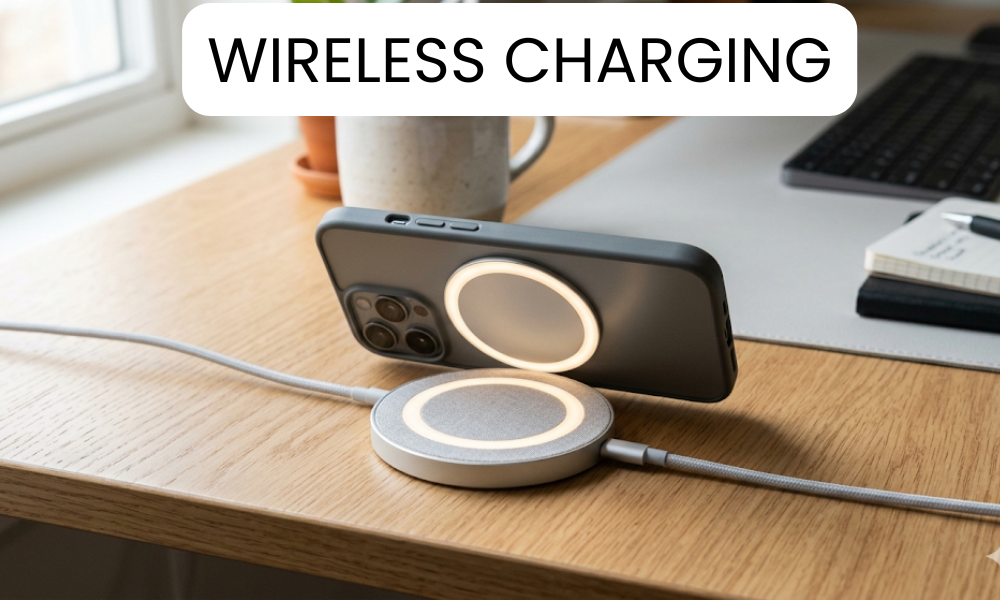
What Is Remote Charging, Really?
At its center, remote charging isn’t genuinely “wireless.” There’s still a cable associated with the charger—you can just evacuate the cable between the charger and your phone.
It works utilizing electromagnetic areas to exchange vitality from the charging cushion to your phone. Most advanced phones utilize the Qi standard, which has been around for years.
But there’s continuously been one irritating issue: alignment.
You put your phone somewhat off-center, and abruptly it charges slowly—or not at all.
Enter MagSafe and Pixelsnap: The Attractive Upgrade
This is where things get interesting.
How Attractive Charging Changes the Experience
Apple’s MagSafe presented a basic idea—add magnets to the back of the phone. These magnets adjust the phone flawlessly with the charger each single time.
Google took after with Pixelsnap, built on the more up to date Qi2 standard.
What is cruel about you?
The charger “snaps” into the right position
No speculating or altering needed
Charging gets to be more consistent
Accessories (stands, wallets, holds) too connect magnetically
In genuine life, this feels less like a tech inclusion and more like a little regular comfort that fair works.
Qi2: The Unused Standard Behind It All
The more current Qi2 standard is what makes this attractive framework conceivable over brands.
It fundamentally takes the thought of MagSafe and institutionalizes it so more companies can utilize it.
What’s superior with Qi2?
Improved arrangement → less vitality loss
Better productivity (compared to more seasoned remote chargers)
Support for attractive accessories
But let’s not oversell it.
Even with Qi2, remote charging still has limits.
The Greatest Truth: Wired Charging Is Still Faster
No matter how progressed remote charging gets, material science has its claim rules.
Wireless charging will never be as productive as stopping in a cable.
Why?
Energy is misplaced amid transfer
Heat is produced in the process
Charging speeds are capped
For example:
Magnetic remote charging can go up to around 15W–25W on more current devices
Wired charging effectively goes past that
So if you’re in a rush and your phone is at 10%, you’ll still reach for the cable.
The Warm Issue No one Talks Almost Enough
If you live in India, these things are indeed more.
Wireless charging creates more warmth than wired charging since of vitality loss.
And warm is not your phone battery’s best friend.
What this implies in genuine life:
Slightly speedier battery debasement over time
Phone getting warm amid charging
Slower charging in hot weather
Most cutting edge phones oversee warm well, but it’s still something to keep in mind—especially in summer.
Where Remote Charging Really Shines
Now let’s have a conversation where it truly makes sense.
- Night Charging (Best Utilize Case)
You put your phone on the charger some time recently while sleeping.
No stopping in. No checking cables. Fair drop and sleep.
This is where remote charging feels perfect.
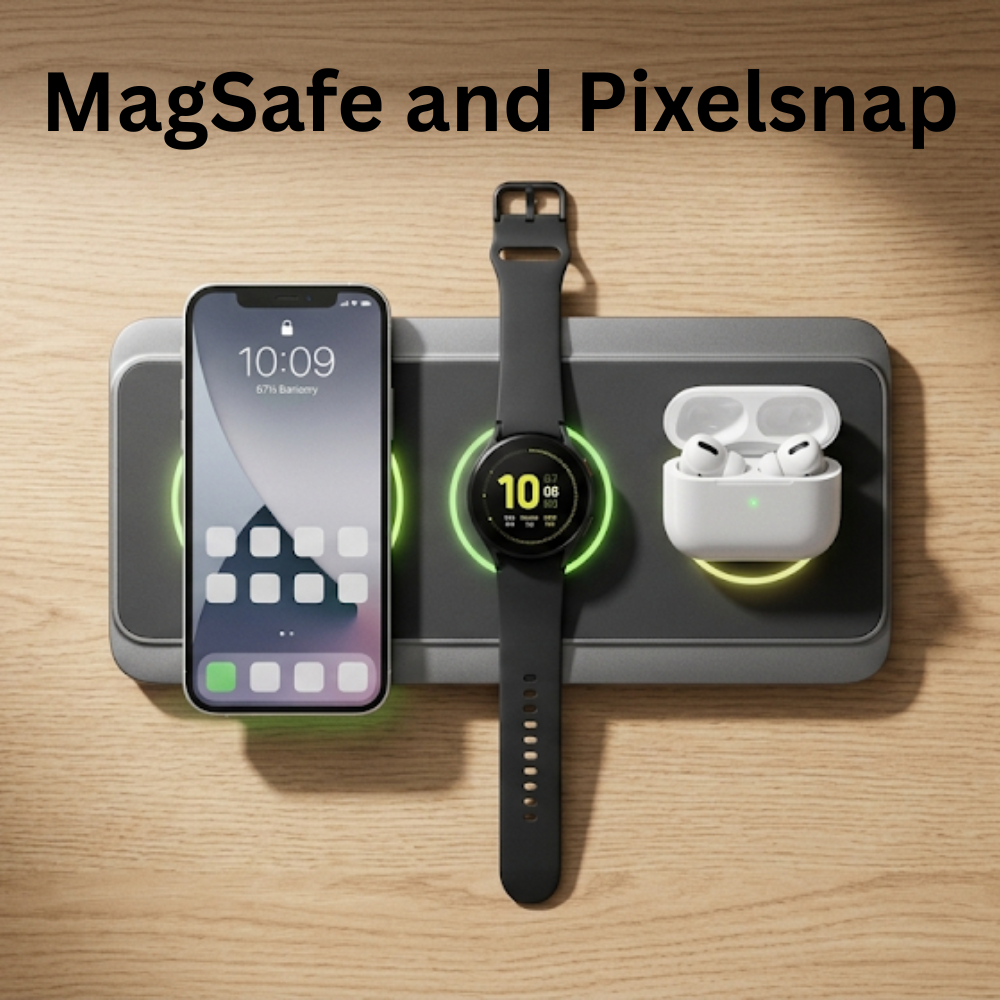
- Work Work area Setup
Imagine working on your portable workstation and casually putting your phone on a stand.
It remains charged
You can see notifications
No untidy cables
Magnetic chargers with stands make this setup feel clean and organised.
- Car Usage
Magnetic chargers in cars are truly a game-changer.
You fair snap your phone onto the mount:
No battling with holders
No stopping cables whereas driving
Easy route access
Where It Still Falls Short
Let’s be honest—this tech is not perfect.
- Slower Charging
Even with enhancements, it’s still slower than wired charging.
- Additional Cost
You’ll frequently need:
A congruous charger
A case with magnets (in the event that not built-in)
That includes your add up to cost.
- Compatibility Confusion
Not all chargers work the same way.
Older Qi chargers = slower speeds
Qi2 chargers = way better performance
MagSafe adornments may not completely work on all devices
So you need to be a bit cautious when buying.
Pixelsnap vs MagSafe: What’s the Genuine Difference?
Let’s keep it simple.
MagSafe
Works best with iPhones
Mature environment (parts of accessories)
Reliable and broadly available
Pixelsnap
Google’s adaptation for Pixel phones
Based on Qi2 (more all inclusive approach)
Still developing in terms of accessories
In short:
MagSafe = cleaned and established
Pixelsnap = unused, promising, and evolving
So… Is Remote Charging Worth It?
The fair reply: it depends on how you utilize your phone.
It is worth it if:
You charge for the most part overnight
You like clean, cable-free setups
You utilize a work area or car mount regularly
It’s not worth it if:
You require quick charging all the time
You’re on a tight budget
You anticipate it to supplant wired charging completely
A More Reasonable Way to See at It
Wireless charging is not a replacement.
It’s a comfort feature.
Think of it like this:
Wired charging = speed and efficiency
Wireless charging = consolation and ease
Once you begin seeing it that way, it makes more sense.
Conclusion
Final Thoughts
Wireless charging has at last ended up usable, much obliged to attractive arrangements with MagSafe and Pixelsnap.
It’s smoother, more dependable, and really feels down to earth now.
But it’s still not perfect—and likely never will be.
If you go in expecting speed, you’ll be disappointed.
If you go in anticipating comfort, you’ll cherish it.
And truly, in regular life, now and then comfort wins.