Why Every Indian Truck Says ‘Horn OK Please’ – The Untold Story Behind the Iconic Slogan
The phrase has become an inseparable part of India’s road culture, yet its origins remain surrounded by mystery, folklore, and fascinating theories. While no single explanation has been officially confirmed, the story behind “Horn OK Please” offers a glimpse into India’s transport history, road safety practices, and colorful trucking traditions.
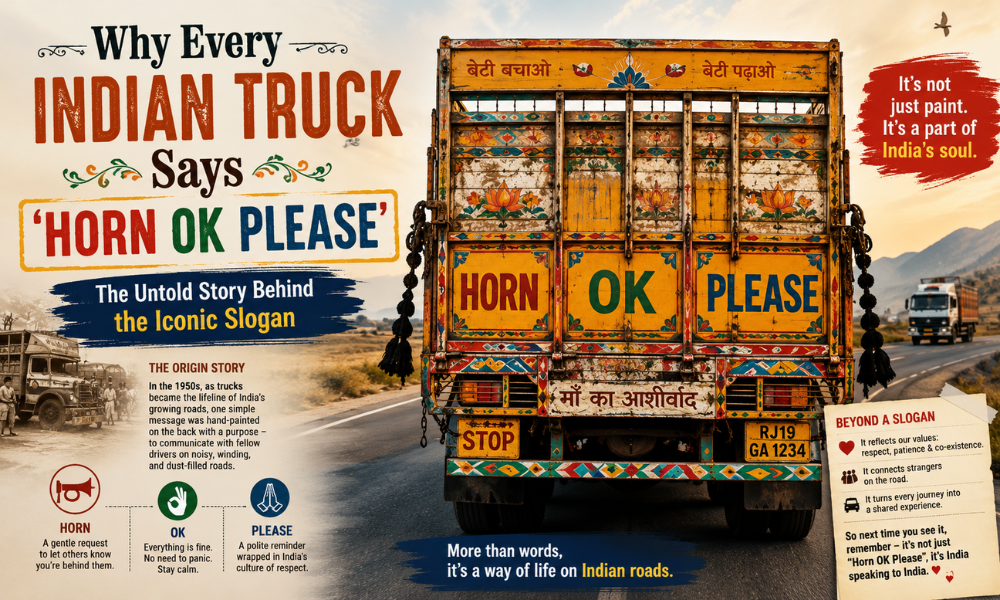
For generations, Indian highways have been filled with brightly painted trucks carrying a simple yet unforgettable message: “Horn OK Please.” Whether you’re traveling through bustling cities, rural roads, or national highways, chances are you’ve spotted this iconic slogan countless times. But have you ever wondered why almost every Indian truck carries these three words?
The Most Common Explanation: A Road Safety Message
The most widely accepted theory is that “Horn OK Please” was originally a practical safety instruction.
In the past, Indian roads were narrower, traffic management systems were less advanced, and heavy trucks often lacked modern rear-view mirrors. Overtaking a large truck could be risky because drivers behind had limited visibility of oncoming traffic.
To avoid accidents, motorists were encouraged to sound their horn before attempting to overtake. The truck driver, upon hearing the horn, would become aware of the vehicle behind and allow sufficient space for safe passing.
In this context:
- Horn – Blow the horn before overtaking.
- OK – The truck driver has acknowledged your presence.
- Please – A polite request to follow the safety practice.
The slogan acted as a simple communication tool on roads where visibility and signaling systems were limited.
The Curious “On Kerosene” Theory
One of the most intriguing explanations dates back to the years following World War II.
According to popular folklore, fuel shortages led some commercial vehicles to operate using kerosene as an alternative fuel. Truck owners allegedly painted the letters “OK” on their vehicles to indicate they were “On Kerosene.”
Because kerosene was believed to be more combustible than regular fuel, drivers behind these trucks were advised to maintain caution and use their horns before overtaking.
Over time, the letters “OK” reportedly became part of the phrase “Horn OK Please.”
While this theory is frequently repeated and widely known, historians have found little documented evidence to conclusively verify it. Nevertheless, it remains one of the most fascinating stories associated with the slogan.
A Symbol of Highway Communication
Before mobile phones, GPS navigation, and advanced vehicle technology, road communication relied heavily on simple visual messages and driver etiquette.
Truck operators often painted instructions on the backs of their vehicles, including phrases such as:
- Use Dipper at Night
- Keep Distance
- Blow Horn
- Wait for Side
“Horn OK Please” emerged as one of the most effective messages because it was short, easy to understand, and useful in everyday driving situations.
It served as an informal language that drivers across different states and languages could understand instantly.
The Role of Indian Truck Art
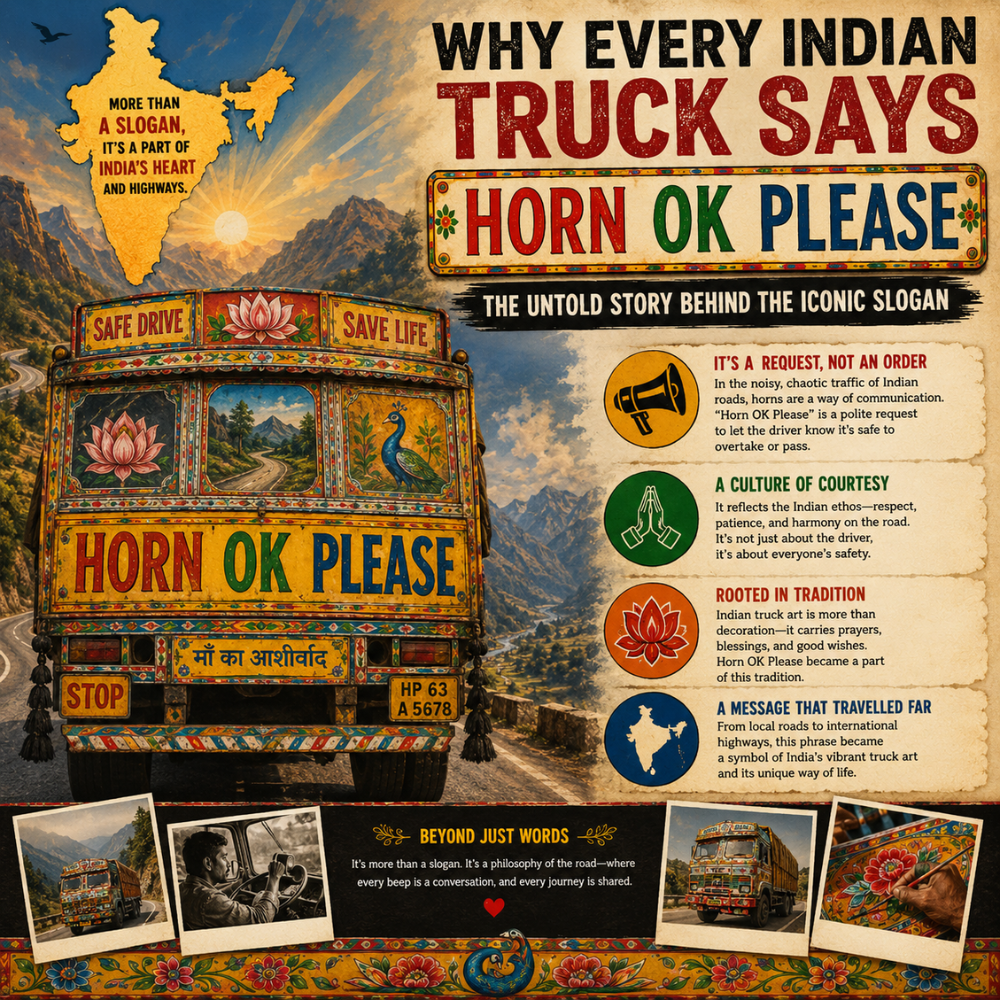
The popularity of the slogan is also closely tied to India’s vibrant truck art culture.
Truck owners have long decorated their vehicles with colorful paintings, religious symbols, motivational quotes, and humorous messages. These artistic traditions transformed trucks into moving canvases that reflected regional identities and personal beliefs.
As truck art evolved, “Horn OK Please” became more than just a road instruction—it became a cultural symbol.
The phrase was often painted in bold lettering alongside:
- Bright floral patterns
- National symbols
- Spiritual imagery
- Decorative mirrors
- Hand-painted designs
Eventually, the slogan became so common that many trucks continued displaying it even when its original practical purpose became less important.
Why the Slogan Survived Modern Times
Today’s trucks are equipped with better mirrors, improved braking systems, and advanced safety technologies. Highways are wider, traffic rules are more structured, and communication methods have evolved significantly.
Yet “Horn OK Please” remains visible across India.
Its survival can be attributed to several reasons:
Tradition
Many truck owners continue the practice because it has been passed down through generations.
Cultural Identity
The slogan has become a defining feature of Indian trucking culture.
Driver Awareness
Even today, horns play a major role in highway driving, particularly on busy roads where large vehicles operate.
Nostalgia
For many Indians, the phrase evokes memories of long road trips and classic highway journeys.
From Roads to Popular Culture
The influence of “Horn OK Please” extends far beyond highways.
The slogan has appeared in:
- Films
- Music albums
- Fashion collections
- Art exhibitions
- Advertising campaigns
Its distinctive wording instantly connects people to Indian roads and transport culture, making it one of the country’s most recognizable phrases.
What began as a practical instruction gradually evolved into a symbol of everyday India.
The Mystery Remains
Despite decades of discussion, no definitive historical record confirms exactly how “Horn OK Please” originated. Multiple theories continue to coexist, and that uncertainty is part of the slogan’s enduring charm.
Whether it emerged as a road safety instruction, a fuel-related warning, or a combination of both, the phrase reflects an era when communication on the road depended on simple human interaction.
Conclusion
“Horn OK Please” is much more than a painted message on the back of a truck. It represents a unique chapter in India’s transportation history, combining safety, tradition, creativity, and culture into three memorable words.
The next time you find yourself behind a brightly decorated truck on an Indian highway, take a moment to appreciate the story behind the slogan. What appears to be a simple road instruction is actually a lasting symbol of India’s rich trucking heritage—one that continues to travel the country’s roads, generation after generation.