TADIKA Festival in Southern Thailand Celebrates Culture, Education, and Community
The TADIKA Festival is one of the most meaningful cultural and educational celebrations held in Southern Thailand. While Thailand is globally known for festivals like Songkran and Loy Krathong, the TADIKA Festival reflects the unique traditions of the country’s southern border provinces, where Malay-Muslim communities have preserved their rich cultural identity for generations. The festival serves as a vibrant gathering that combines education, cultural heritage, religious values, and community participation into one memorable event.
A Celebration Rooted in Tradition
The word “TADIKA” refers to Islamic kindergartens or early childhood religious education centers found across Southern Thailand and neighboring Malaysia. These schools play an essential role in introducing children to moral values, religious teachings, and community traditions from an early age. The festival celebrates the achievements of these educational institutions while providing students with an opportunity to showcase their talents and creativity.
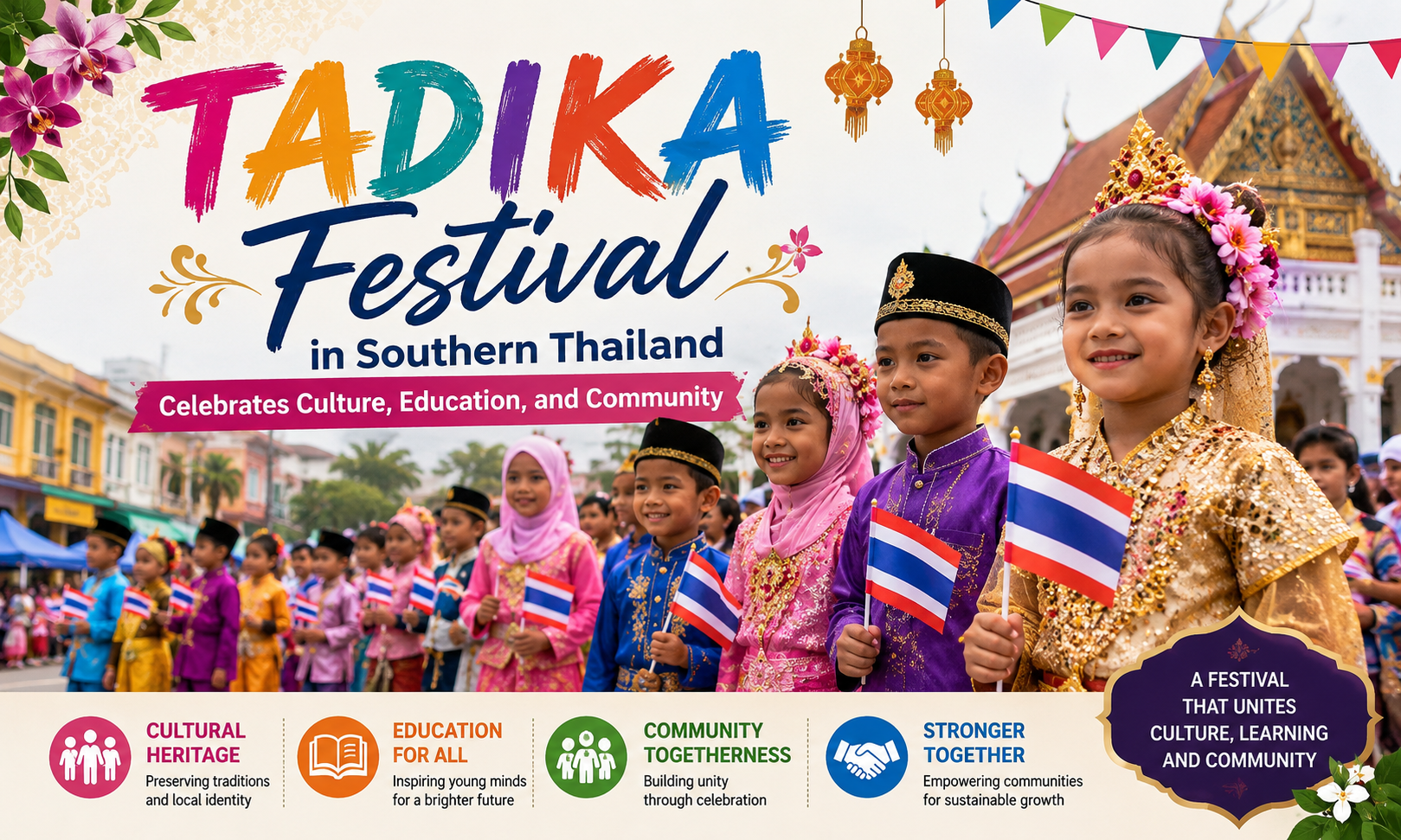
Every year, thousands of students, teachers, parents, and community members gather to participate in this colorful event. The atmosphere is filled with excitement as participants proudly display traditional costumes, cultural performances, and beautifully decorated parade floats.
Preserving Cultural Heritage
One of the primary objectives of the TADIKA Festival is to preserve the rich cultural heritage of Southern Thailand’s Malay-Muslim communities. As modernization continues to influence daily life, festivals like this help younger generations appreciate the customs and traditions passed down by their ancestors.
Children actively participate in performances that feature traditional music, folk dances, storytelling, and artistic displays. These activities encourage students to understand the importance of preserving their cultural identity while sharing it with visitors and neighboring communities.
The festival also highlights traditional craftsmanship, local art, and decorative designs that represent the creativity and skills of the region’s people.
Education Beyond the Classroom
Education is at the heart of the TADIKA Festival. While classroom learning focuses on academic and religious instruction, the festival provides valuable real-world experiences that help children develop confidence, teamwork, leadership, and communication skills.
Students spend weeks preparing for performances, parades, competitions, and exhibitions. Through these activities, they learn discipline, responsibility, and cooperation while building friendships with participants from different schools.
Teachers also play an important role by guiding students, organizing events, and encouraging creativity. Parents actively support their children throughout the preparations, making the festival a true community effort.
Spectacular Cultural Parades
The colorful parade is often the highlight of the TADIKA Festival. Participants march through designated routes wearing beautifully designed traditional attire inspired by Malay culture and Islamic traditions.
Many groups create impressive decorative structures using flowers, natural materials, and artistic displays. Some students carry symbolic cultural items while others perform traditional music along the parade route.
These vibrant processions attract large crowds who gather to celebrate the creativity and dedication displayed by participating schools.
The parade not only entertains visitors but also demonstrates the unity and pride shared by local communities.
Encouraging Community Participation
One of the most remarkable aspects of the TADIKA Festival is the strong sense of community involvement. Families, religious leaders, educators, volunteers, and local organizations work together to ensure the event’s success.
Parents assist with costume preparation, transportation, decorations, and student support. Community members volunteer their time to organize logistics, coordinate performances, and welcome guests.
This collaborative spirit strengthens relationships between schools and local communities while reinforcing shared values of cooperation, respect, and mutual support.
Promoting Religious and Moral Values
The festival reflects the importance of religious education within Southern Thailand’s Muslim communities. Alongside cultural activities, many events encourage students to practice moral values such as kindness, honesty, discipline, respect, and compassion.
Educational exhibitions, Quran recitation competitions, Islamic knowledge activities, and moral development programs often form part of the celebration. These activities help children develop strong character while reinforcing the principles taught in their schools and families.
The festival demonstrates that education extends beyond academics by nurturing responsible and ethical future citizens.
A Platform for Young Talent
The TADIKA Festival provides an excellent platform for children to showcase their talents in front of large audiences. Students participate in singing, public speaking, storytelling, art competitions, cultural performances, and creative exhibitions.
These opportunities build confidence and encourage students to discover their strengths while developing valuable life skills. Teachers recognize outstanding performances and celebrate the achievements of participants, motivating children to continue learning and improving.
Many students look forward to the festival throughout the year because it allows them to express themselves creatively while representing their schools with pride.
Supporting Local Culture and Economy
Large community festivals often create positive economic opportunities for local businesses. Food vendors, handicraft sellers, traditional clothing makers, photographers, and small entrepreneurs benefit from the increased number of visitors attending the celebration.
Visitors can explore local products, taste regional cuisine, and purchase handmade crafts that reflect the unique identity of Southern Thailand. This support helps preserve traditional industries while generating income for local families.
The festival also encourages cultural tourism by introducing visitors to the customs and traditions of the region.
Strengthening Unity and Understanding
The TADIKA Festival serves as a symbol of unity among diverse communities in Southern Thailand. Schools from different districts come together to celebrate shared traditions while promoting mutual understanding and respect.
Children learn the value of teamwork through group performances and collaborative activities. Families from different backgrounds interact during the event, creating friendships that strengthen social harmony.
The festival reminds participants that education, culture, and community are closely connected and that preserving these values benefits future generations.
Looking Toward the Future
As the TADIKA Festival continues to grow, it remains committed to preserving cultural traditions while adapting to the changing needs of modern society. Organizers continue introducing new educational activities, interactive exhibitions, and creative performances without losing the festival’s original purpose.
Digital technology, improved event management, and greater community participation have helped the festival reach wider audiences while maintaining its authentic cultural identity.
The continued support of educators, families, community leaders, and volunteers ensures that future generations will continue celebrating this meaningful tradition.
Conclusion
The TADIKA Festival in Southern Thailand is far more than a colorful annual celebration. It is a powerful expression of culture, education, and community spirit that brings together students, families, educators, and local residents in a shared celebration of heritage and learning. Through vibrant parades, traditional performances, educational activities, and strong community involvement, the festival preserves the rich traditions of Southern Thailand’s Malay-Muslim communities while inspiring younger generations to value their cultural identity. As it continues to grow, the TADIKA Festival remains an important symbol of unity, pride, and the lasting importance of education in building stronger communities.