




Qualcomm Bets on Car-to-Car Communication Tech in India
For years, connected-vehicle technology has felt like something India would get to eventually — a feature reserved for markets with better roads, stricter safety mandates, and drivers who stick to their lanes. That perception is starting to shift. Qualcomm, which is one of the world’s largest manufacturers of chips for mobile phones, has begun to position India as a growth market for its technology that allows cars to communicate with each other and with their surroundings, which is being accelerated by a recent change in regulation that eliminated one important barrier.
What V2X Technology Is
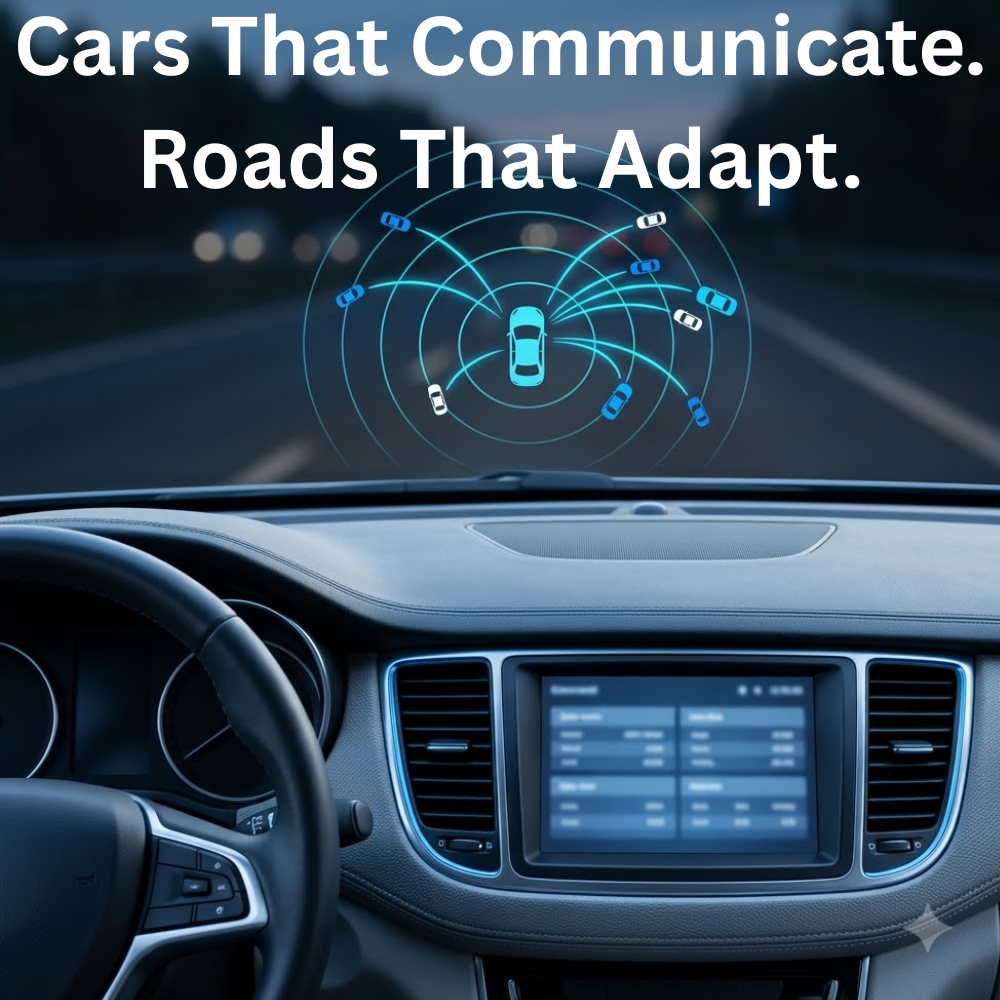
Most basically, V2X technology lets a car relay information from its speed, position, and direction, and even braking to another vehicle without requiring any human input. In addition to exchanging data with other cars on the road, V2X-equipped cars could also allow the traffic light, roadside units, and ultimately pedestrians to be part of the communication stream.
This technology can allow a car’s safety features to respond to potentially dangerous situations on the road not visible to the car’s cameras or radar or to a driver, such as for example, a car braking suddenly around a bend or a pedestrian walking out from between two parked cars. Even more basically, a car would be able to receive information about potentially dangerous factors on the road ahead sent from other vehicles and from infrastructure, allowing for a quicker response than would be possible by direct observation.
Qualcomm’s proposed solution, which goes by the name C-V2X, relies on mobile phone standards rather than the short-range radio technology that was proposed in the early versions of V2X. This allows for potentially greater range and better traffic management in dense streams of traffic, as well as better utilization of existing infrastructure as it can use the mobile phone network.
Why India Is an Interesting Market
Qualcomm’s increasing interest in the Indian market is not an accident. It is the result of both the company’s efforts and some changes on the regulatory front, which have allowed Qualcomm to begin to view India as an important market for V2X.
According to the company, a recent government decision to delicense the 5.9 GHz spectrum band specifically for connected-vehicle communication has removed a major regulatory obstacle that was holding back V2X rollout in the country. Spectrum access is one of those unglamorous but essential building blocks — without dedicated, interference-free bandwidth for vehicles to communicate on, none of the safety features V2X promises can function reliably at scale.
A Qualcomm executive noted that India’s mobility environment differs significantly from other regions, suggesting that solving for Indian conditions could translate into solutions applicable almost anywhere.</cite> That’s a notable statement, given how often connected-vehicle technology is developed first for orderly, well-regulated traffic systems in Europe, Japan, or China, then adapted — often imperfectly — for markets with denser, less predictable traffic patterns. Qualcomm’s framing suggests the opposite approach for India: build for the hardest traffic conditions first, and the resulting technology becomes more broadly useful rather than less.
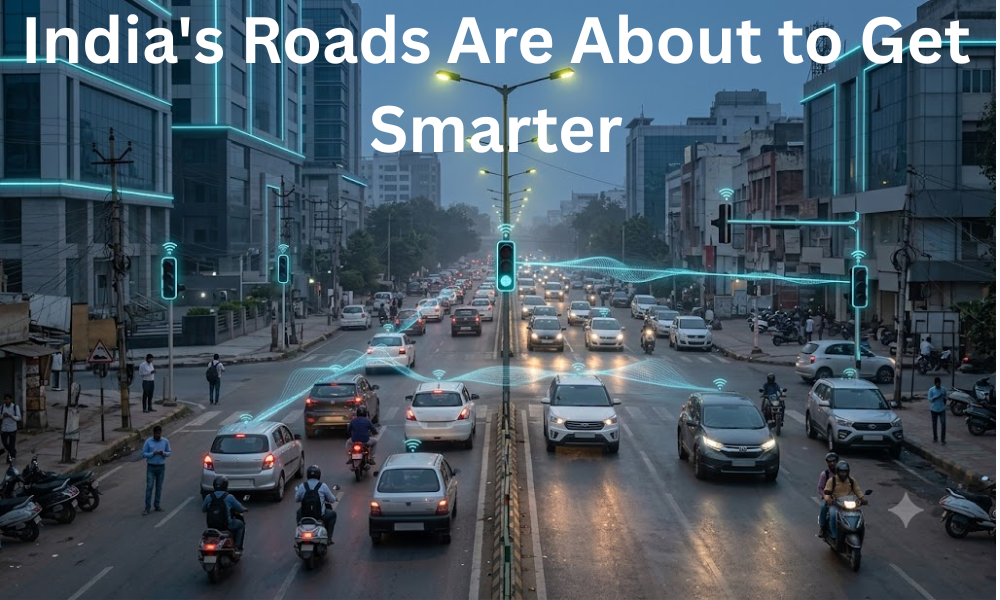
That’s not a minor point. Indian roads have two-wheelers, cars, auto-rickshaws, pedestrians, and stray animals all sharing the road, with little in the way of lanes to separate them. A V2X system that would operate safely in such conditions would have to handle a vastly more complex set of signals than one designed for a European highway. Qualcomm appears to be betting that cracking this problem gives it a technological edge that translates well beyond India’s borders.
A Technology Already in Motion Elsewhere
Globally, C-V2X has already moved past the pilot stage. The technology is said to have been introduced already in over a million cars in Japan, and in four million cars in the Volkswagen Group’s European fleets, while adoption is also substantial in China. Several other carmaker programs are set to follow, starting around 2027-2029, which suggests that the technology is set to become a mature industry fixture.
For India, that global momentum matters because it lowers the cost and complexity of adoption. Automakers don’t need to build V2X capability from scratch — chipsets, standards, and manufacturing processes already exist and are being refined at scale elsewhere. What India needs is the regulatory groundwork, local infrastructure investment, and automaker buy-in to bring that existing technology into Indian vehicles and roads.
The Road Ahead
Qualcomm has been clear that spectrum access alone won’t be enough. The next phase depends on collaboration between automakers, component suppliers, and policymakers to actually roll out compatible vehicles and roadside infrastructure. That means traffic signals and road systems capable of communicating with vehicles, automakers willing to integrate the necessary hardware into new models, and a broader push to standardise how this technology gets deployed across different vehicle makes and price points.
This is where the real test lies. India’s automotive market is famously price-sensitive, and safety technology that adds cost to a vehicle has historically had a tough time gaining traction outside the premium segment. For V2X to move from a promising pilot into something available in mass-market cars and two-wheelers, it will likely need either regulatory mandates, like those that pushed airbags and ABS into wider adoption, or a steep enough drop in component costs to make it commercially viable without government intervention.
Conclusion
Qualcomm’s engineering presence in India — built over years of chip manufacturing and R&D investment in the country — gives it a practical advantage in navigating this rollout. Rather than treating India purely as an export market for finished technology, the company appears to be positioning its local teams to adapt V2X specifically for Indian traffic conditions and use cases, rather than importing a one-size-fits-all solution built for calmer roads elsewhere.
Whether this bet pays off will depend on how quickly India’s automakers, telecom infrastructure, and traffic authorities move in the same direction. But the regulatory shift on spectrum access is a meaningful first step — and for a technology that has spent years being talked about as a “someday” feature for Indian roads, that alone marks a real change in trajectory.