
India-UK Trade Pact Opens Car Market: What Lower Import Duties Mean for Consumers and Automakers
India and the UK will be entering a new era of economic relations following the launch of their Comprehensive Economic and Trade Agreement (CETA) on July 15th. One of the major benefits of this agreement is the slashing of import tariffs on UK-manufactured vehicles, making different makes of vehicles accessible to Indians. Although CETA will create new openings for trade and investment, it will also provide protection for India’s thriving domestic auto industry. The agreement will play an important role in influencing car prices and consumer choice in the automotive industry of both nations.
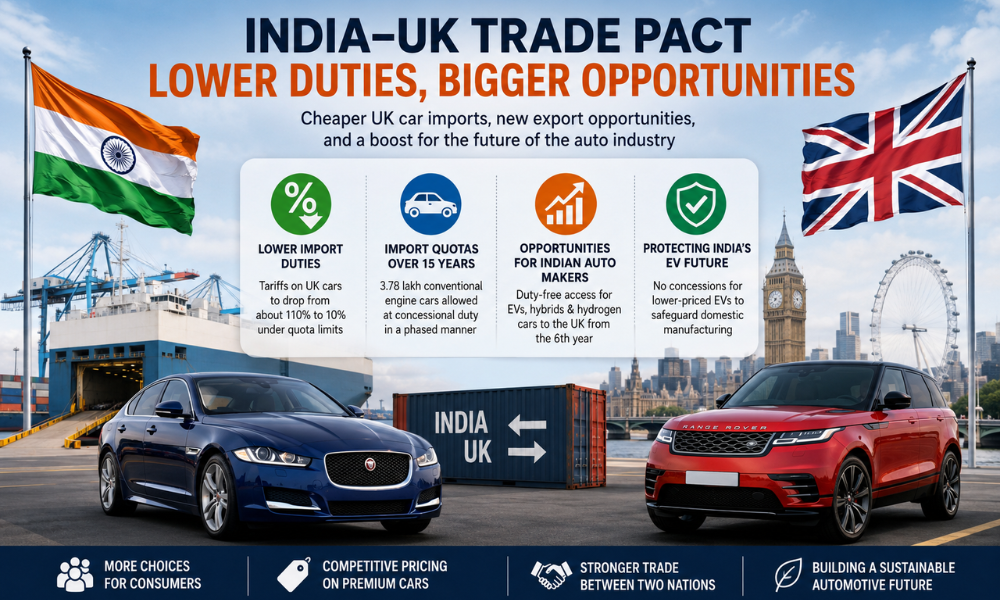
How the New India-UK Trade Agreement Will Change Customs Duties On Imported Cars
There are several important factors associated with the recent signing of the CETA agreement between India and UK. Among other things, this document provides for changes concerning the introduction of new customs duties on automobiles produced in the UK and imported into India. Before the signing of the treaty, vehicles imported to the country were subject to customs duties reaching up to 110 percent, thus substantially raising their cost. However, according to the new agreement, the above-mentioned taxes are going to decrease to reach 10 percent in a matter of 15 years. There is also an agreed quota for the imported passenger cars that should be observed by both parties of the treaty. Depending on the category of a particular vehicle (whether it is a heavy or light car), different kinds of duties will be introduced, which will depend on engine capacity and import quota.
Import Quotas and Their Implications on India’s Auto Market
An important aspect of the trade agreement between India and the United Kingdom is that the two nations are using import quotas, which would allow them to fix the number of automobiles manufactured in the UK that would be allowed into India at concessional duty rates each year. As part of the agreement during the first year, there will be 20,000 passenger cars that would be admitted into the country. These figures shall eventually increase but will be at higher levels during the early stages of the agreement, after which they shall stabilize towards the end of the agreement period. The purpose of this arrangement is to control any abrupt flow of imported vehicles into the domestic market, which might otherwise cause chaos in the local industry. It is anticipated that luxury and premium car brands manufactured in the United Kingdom will be the major beneficiaries in the initial phases because the low rates of duty could reduce their prices. This means that consumers will have a greater selection to choose from, including brands that had been out of reach owing to excessive import taxes.
Opportunities for Indian Automakers in the UK Market
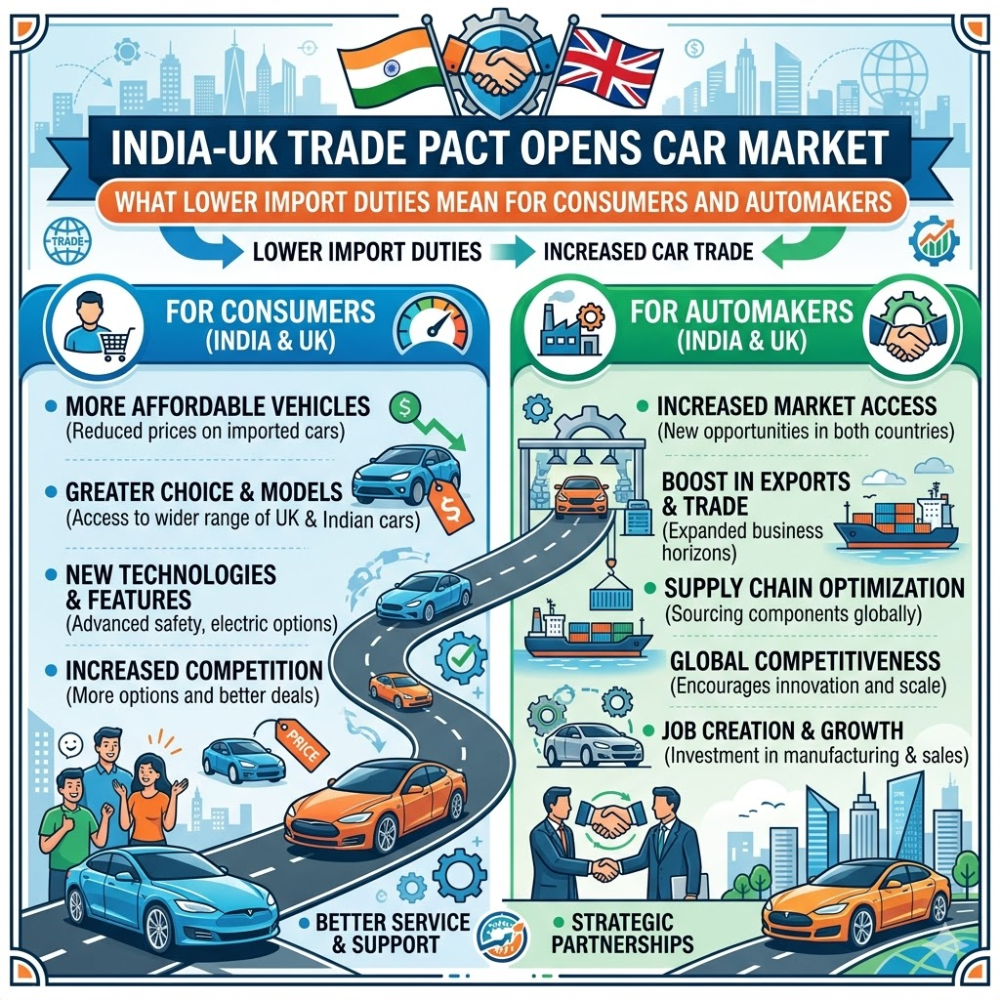
Indian car manufacturers have a lot to gain from exporting vehicles to the UK. Indian manufacturers like Tata Motors, Mahindra & Mahindra, and Maruti Suzuki should see an increase in exports because of the introduction of electric, hybrid, and hydrogen vehicles into the UK market. From the sixth-year point in the current agreement, Indian-made, “green” passenger vehicles in specified price ranges will be eligible for duty-free access to the UK. This provision will enhance India’s desire to become a major global supplier of next-generation automobiles. The UK automotive market is already very interested in acquiring cleaner modes of transportation and this makes it an attractive location for Indian car manufacturers that are investing heavily in electric transportation. With reduced trade barriers, manufacturers will be more likely to increase their production capacity, upgrade their technology and increase their international presence. Increased exports of Indian cars will lead to increased employment, attract investments, and enhance India’s standing as a competitive automotive manufacturing centre that can produce high-quality vehicles for advanced markets.
Reasons for India Protecting Its Domestic EV Industry
While India has opened its market to a certain number of imported vehicles, it is making efforts to protect its growing EV industry. As per the trade deal, there will be no concession provided for the importation of low-priced electric vehicles from the UK. India wants to ensure its competitiveness in the particular sector wherein the country aims to become a world leader. In addition, India will not give any concessions for the import of electric, hybrid, or hydrogen-fueled passenger cars for the first five years. Once the process of granting concessions begins, it will cover only expensive cars in specific price segments and quota limits. This policy decision by the government indicates India’s ambition to promote the manufacturing and innovation activities of domestic companies in the EV sector. For instance, some companies including Tata Motors, Mahindra & Mahindra, and Maruti Suzuki have made considerable investments to manufacture low-cost EVs suitable for Indians.
Conclusion
This trade agreement is a giant leap forward in building strong economic relations and creating growth opportunities for the automotive industry. Although reduced tariffs will help Indian customers buy more cars from the United Kingdom, the agreement will provide protection to local carmakers due to properly formulated quotas and exemptions for electric vehicles. Over the coming 15 years, this trade agreement can prove beneficial for the growth and innovation of auto industries of both nations.