
Iguazu Falls National Park: The Majestic 80 Metre Waterfalls on the Argentina Brazil Border
Iguazu Falls National Park is one of South America’s most spectacular natural destinations, famous for its enormous waterfalls, lush subtropical rainforest and extraordinary wildlife. Located in Argentina’s Misiones Province along the border with Brazil, the park protects the Argentine side of the world-famous Iguazu Falls. The waterfall system stretches for nearly three kilometres, with water plunging from heights of up to around 80 metres across a series of powerful cascades.
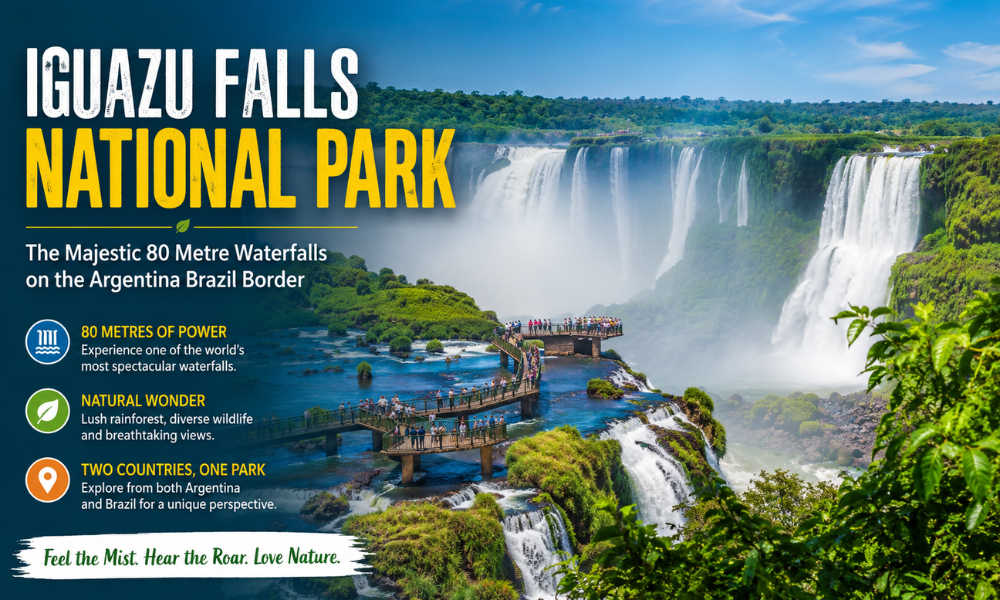
The image above captures the dramatic character of Iguazu Falls particularly well. Visitors can be seen walking along elevated pathways while enormous volumes of water rush through the landscape. The combination of roaring waterfalls, mist, forest and rocky surroundings makes the destination unlike an ordinary sightseeing location.
Where is Iguazu Falls National Park?
Iguazu National Park is situated in the northern part of Argentina’s Misiones Province, close to the border with Brazil and near the famous Triple Frontier region where Argentina, Brazil and Paraguay meet. The Iguazu River forms part of the international border between Argentina and Brazil before eventually joining the Paraná River.
On the Brazilian side is the neighbouring Iguaçu National Park. Together, the two protected areas conserve an important section of the Atlantic Forest and provide different perspectives of the same spectacular waterfall system.
The Argentine national park covers approximately 67,698 hectares and was officially created in 1934 to protect the waterfalls and the surrounding Paranaense rainforest.
The Majestic 80-Metre Waterfalls
The most famous attraction inside the park is, naturally, Iguazu Falls. Rather than being a single waterfall, Iguazu is a huge collection of cascades and individual drops spread across a broad section of the Iguazu River.
According to UNESCO, the waterfall system extends for approximately 2,700 metres and features vertical drops of around 80 metres. The falls are formed along a basaltic geological formation, creating the dramatic cliffs and channels through which the river plunges.
Argentina’s official tourism information describes the falls as consisting of approximately 275 individual cascades. Their appearance can change depending on rainfall and river levels, meaning the landscape can look dramatically different from one visit to another.
The enormous amount of falling water creates clouds of mist that constantly rise above the river. On sunny days, the spray can produce beautiful rainbows, adding another layer to the already impressive scenery.
The Famous Devil’s Throat
One of the most dramatic sections of Iguazu Falls is Garganta del Diablo, or Devil’s Throat. This huge horseshoe-shaped section concentrates a tremendous volume of water and creates an unforgettable combination of sound, spray and movement.
Standing near the viewing areas, visitors can experience the force of the river as millions of litres of water rush downward. The roar of the falls can be heard from a considerable distance, while the surrounding mist creates a constantly changing atmosphere.
The Devil’s Throat is one of the highlights for visitors exploring the Argentine side and is among the locations that demonstrate why Iguazu is considered one of the world’s great natural spectacles.
A UNESCO World Heritage Site
Iguazu National Park is not important only because of its waterfalls. Its surrounding rainforest is also internationally significant. UNESCO added Iguazu National Park to the World Heritage List in 1984, recognising both its exceptional natural scenery and biological importance.
The park forms part of one of the major remaining protected areas of the Paranaense subtropical rainforest. UNESCO notes that the ecosystem contains more than 2,000 species of vascular plants, around 400 bird species and potentially about 80 mammal species.
This makes Iguazu an important destination for people interested in nature as well as waterfalls.
Rich Wildlife and Biodiversity
The rainforest surrounding Iguazu Falls supports a remarkable variety of animals. Visitors may encounter colourful birds, monkeys, coatis, butterflies and other wildlife while travelling through the park.
Argentina’s national parks authority reports more than 450 bird species recorded in the park. Commonly observed wildlife includes toucans, various colourful fruit-eating birds, coatis, capuchin monkeys and squirrels. The park also provides habitat for more elusive species, including the jaguar.
The surrounding vegetation is equally impressive. Dense rainforest contains vines, ferns and epiphytes, while distinctive trees such as palm and palo rosa contribute to the character of the landscape. Some palo rosa trees can reach around 40 metres in height.
Why the Rainforest Is So Important
The beauty of Iguazu is closely connected with its rainforest ecosystem. Water from the waterfalls constantly produces moisture, creating an extremely humid environment around the islands, riverbanks and forest.
This combination of water and forest supports a remarkable variety of habitats. UNESCO identifies the wider protected landscape as one of the important remaining sections of the Interior Atlantic Forest, an ecosystem that has experienced substantial historical loss and fragmentation.
Protecting Iguazu therefore means protecting much more than a famous tourist attraction. It also means conserving forests, waterways, plants, birds and wildlife.
A Popular Destination for Travellers
Iguazu Falls attracts visitors from around the world and is considered one of Argentina and Brazil’s major natural attractions. Argentina’s official tourism information highlights activities such as walking along viewpoints and taking boat trips that approach the waterfalls.
The park offers visitors the opportunity to experience the falls from different viewpoints rather than simply seeing them from one location. Walkways and observation areas allow travellers to appreciate the scale of the cascades while moving through the surrounding forest.
Boat excursions can provide a much closer encounter with the water. Visitors should expect to get wet during excursions approaching the base of the falls, so suitable waterproof clothing is useful.
Best Time to Experience Iguazu Falls
Iguazu National Park can be visited throughout the year. Argentina’s national parks authority describes the region as having a warm, humid subtropical climate, with rainfall particularly concentrated during the summer period.
Water levels can influence the appearance and power of the waterfalls. During wetter periods, the river may carry particularly large volumes of water, producing a spectacular display. However, weather conditions can also affect visibility and walking conditions.
For travellers, the best time ultimately depends on whether they prefer stronger water flow, milder temperatures or particular wildlife and photography conditions.
A Natural Wonder Worth Protecting
Iguazu Falls became internationally recognised not only through its UNESCO status but also through its reputation as one of the world’s great natural attractions. Argentina’s national park authority notes that the falls were selected as one of the New Seven Natural Wonders of the World in 2011.
But popularity also creates responsibilities. Large numbers of visitors require careful management so that tourism does not damage the fragile ecosystem. UNESCO has identified issues such as deforestation, agricultural expansion, poaching and the environmental pressures associated with tourism and infrastructure as matters requiring ongoing attention.
Conservation efforts are therefore essential to ensure that future generations can experience the same extraordinary landscape.
Conclusion
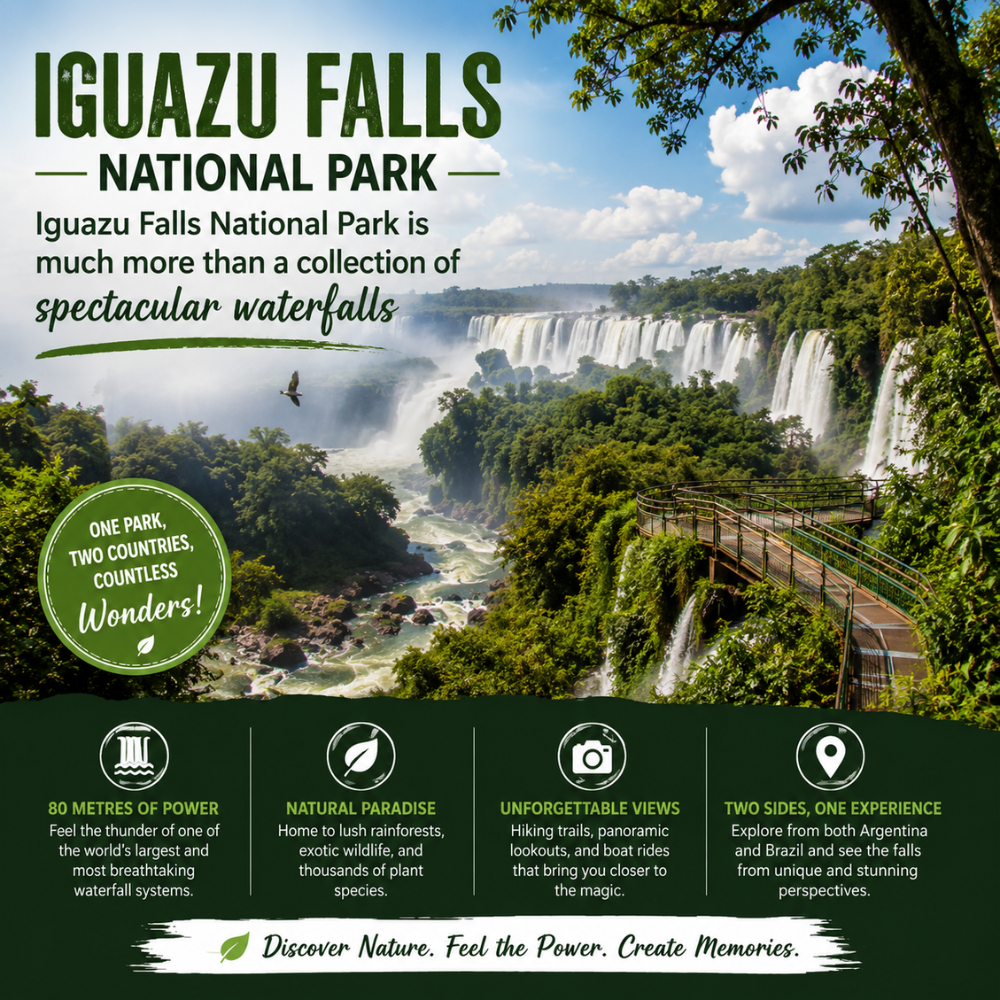
Iguazu Falls National Park is much more than a collection of spectacular waterfalls. It is a remarkable combination of 80-metre-high cascades, rainforest, wildlife, geological history and international conservation.
The Argentina-Brazil border location gives Iguazu an especially distinctive character, while the surrounding Paranaense rainforest adds depth to the experience. With approximately 275 cascades, extensive viewing areas, rich biodiversity and UNESCO World Heritage recognition, Iguazu stands among the world’s most impressive natural destinations.
The newspaper image beautifully reflects the scale of the attraction: visitors walking above rushing water while enormous waterfalls rise behind them. For anyone fascinated by nature, geography or spectacular landscapes, Iguazu Falls offers an experience that combines adventure and natural beauty in one extraordinary destination.