
The Smart Glasses Race Is Heating Up: Could They Replace Smartphones?
It does not come as a surprise that smart glasses continue to generate much buzz in the consumer technology industry. Thanks to their artificial intelligence (AI), real-time translation services, navigation and virtual assistance, among other things, they will offer a more intuitive interaction with consumers. There are high chances that smart glasses may soon be regarded as the next big computing platform thanks to fierce competition among leading tech firms in developing such products.
The Emergence of AI-Smart Glasses
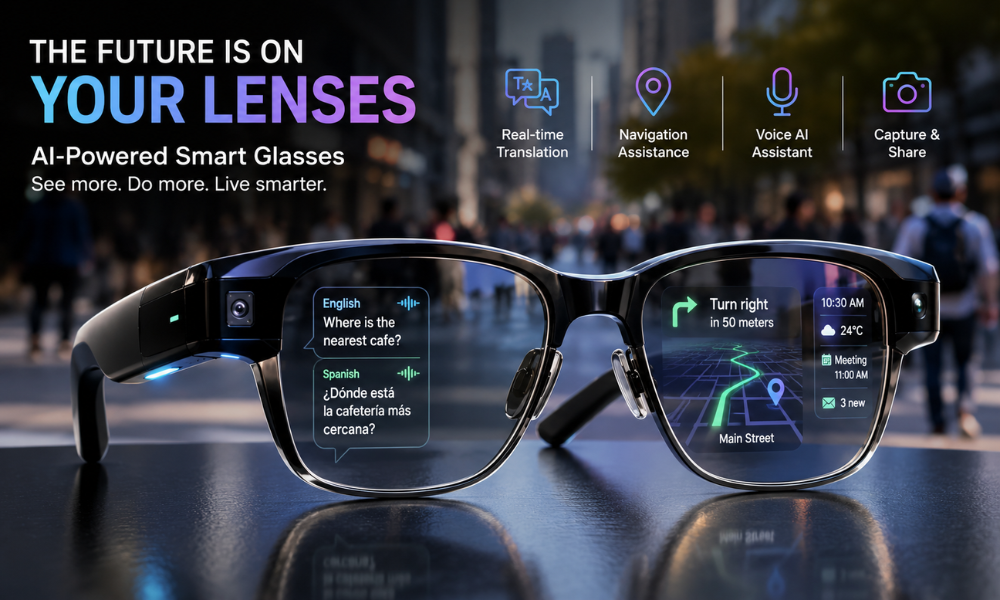
Smart glasses have come a long way since the early experimental stages towards becoming advanced technological products with the potential of becoming part of our everyday life through the application of advanced artificial intelligence, processing units, high-resolution screens, and batteries. Compared to other wearable technologies, such as a fitness bracelet, smart glasses enable individuals to interact with information without needing to check their smartphones frequently. Artificial intelligence contributes greatly to this interaction through voice commands and assistance in identifying objects, environments, and providing useful data about the surroundings in real-time. Thanks to these advancements, large tech firms are now showing interest in developing smart glasses, seeing them as the future of personal computers. Due to continuous improvements in artificial intelligence and the design of smart glasses similar to traditional glasses, smart glasses are quickly emerging as the next generation of technology products that may change the way we relate with computers on a day-to-day basis.
Possible Changes to Everyday Life Through Such Features
Smart glasses’ unique value comes from the fact that they provide access to digital data via the user’s line of sight without taking their hands away. Real-time language translation can be one of the best features since it allows displaying the text or speaking in another language within moments. Another feature that can make everyday life much easier for the average consumer is navigation since directions will be available without the need to check the smartphone. Smart glasses can show other important functions such as notifications, provide answers via an AI service, recognize objects, and even display context about them based on location. Professionals may find smart glasses helpful in increasing their productivity as they can see reminders for meetings, emails, and other relevant content instantly. Travellers can benefit from having an instant translator and navigation at their disposal, while students may gain access to relevant information much faster. Moreover, accessibility features may help people with hearing and vision problems as well. Thus, by utilizing the power of augmented reality and AI, smart glasses allow improving various aspects of everyday life.
Billions in Investment by Big Technology on Smart Glasses
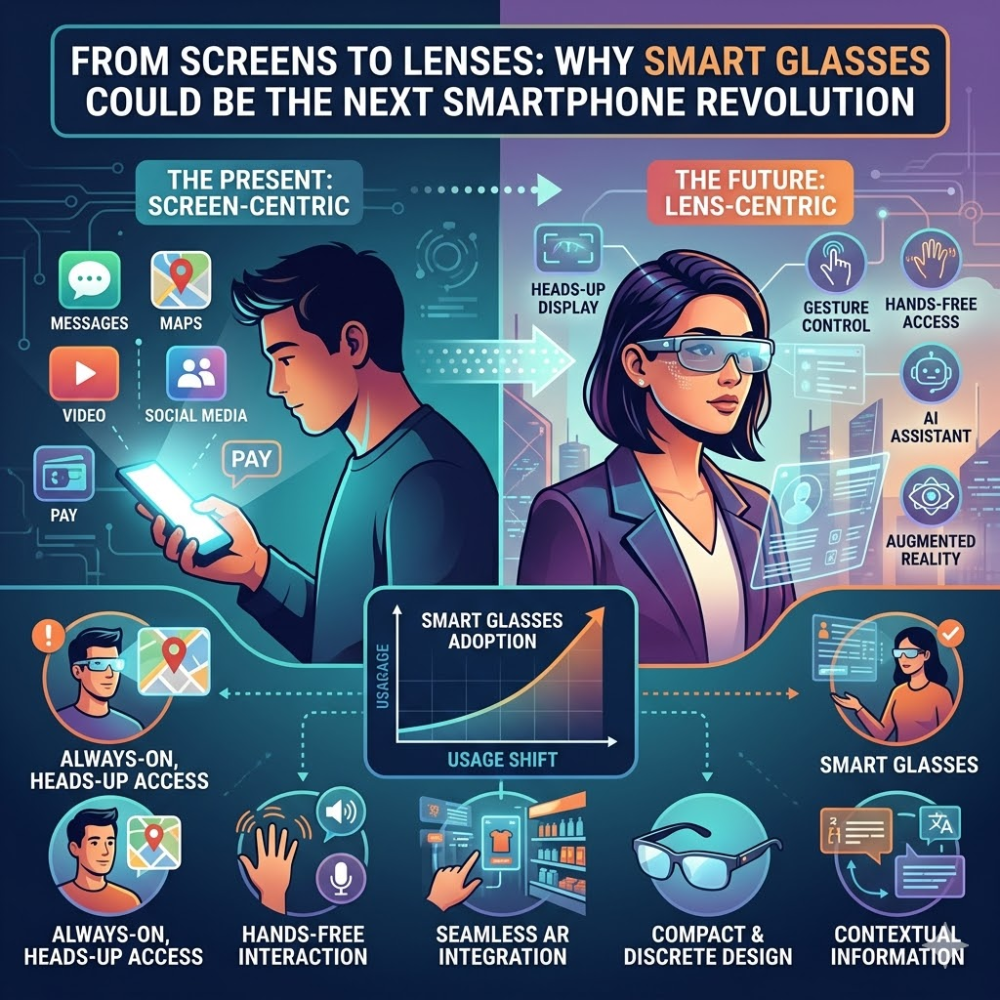
Big tech companies consider smart glasses as their opportunity to create the next computing platforms. With smartphone markets nearing maturity and growth slowing, companies are looking to deliver new products that will generate innovation and revenue for the future. Smart glasses represent a chance to provide users with an immersive and always-on computing experience using AI. Therefore, companies are investing vast amounts of money into researching, developing hardware, building software ecosystems, and training AI models to gain an early-mover advantage in this new marketplace. In addition, creating partnerships with eyewear manufacturers serves to blend cutting-edge technology with stylish designs that will encourage customers to purchase these devices. In addition, improvements to AI assistants, cloud computing, and augmented reality enhance the functionality of these devices. Competition has moved from installing hardware and moving into digital ecosystems and user engagement. The company with the best-developed and most widely used smart glasses will have the potential to dominate the next generation of consumer tech products. This has fueled an unprecedented amount of innovation in the space.
Are Smart Glasses Actually Able to Replace Smartphones?
Even though smart glasses may bring lots of potential for improvement in terms of user experience, their ability to replace smartphones is quite questionable at the moment. Smartphones are still better when it comes to performance, big displays, availability of numerous apps, and sufficient battery life. People have also become used to carrying out a number of tasks on their phones that may be not so easy to perform using smart glasses, such as watching videos and other entertainment content, shopping, surfing the Internet, etc. Besides, privacy may become an issue due to the presence of a camera that may be constantly gathering information. Nevertheless, there are some benefits offered by smart glasses that make them attractive in comparison with smartphones, including portability, possibility to carry out routine operations with documents and messages while doing something else, and freedom of hands.
Conclusion
However, the progress in the area of smart glasses is developing so quickly that soon, they can change the way people use their technology. Despite the fact that it is hard to predict whether smartphones will continue to play an important role in people’s lives in the near future, there are reasons to assume that one day, smart glasses may turn out to be no less popular. Competition between tech companies is only starting now.