
ChatGPT’s New Memory Upgrade: How OpenAI Plans to Make AI Remember You Better Than Ever
A massive update has been made by OpenAI in relation to the memory feature of ChatGPT. The update is based on an innovative mechanism named “dreaming,” which will allow ChatGPT to have a better memory and ability to retain relevant data from previous chats with more accuracy. In addition to having a more efficient memory, OpenAI is adding features for users to have more control over what ChatGPT remembers, which will further enhance the ability of the AI to provide customized help to the user.
Memory Development of ChatGPT: Saved Notes vs. Intelligent Context
ChatGPT’s ability to memorize information has been greatly enhanced since its initial appearance in 2024. At that moment, users had an opportunity to ask the AI to remember something related to their preferences, work-related stuff, hobbies, and so on. However, it was just the beginning of what was going to happen later on. In 2025, OpenAI made it possible for ChatGPT to draw context from the conversations held prior to that in order to be able to understand some recurrent issues or topics. In other words, users did not have to ask ChatGPT to save information about themselves anymore since it would be done automatically and on the fly in the process of conversation with the system. It looks like the latest improvement of memory function in ChatGPT has become much more sophisticated. The current version of ChatGPT remembers things not only because it was asked to but also because it has understood something from past conversations.
OpenAI’s ‘Dreaming’ Technology: The Engine Behind Smarter AI Memory
At the core of this new memory function of the Chat GPT system is the dreaming process, which differs from conventional memories where all information is simply stored. Instead, ‘dreaming’ allows for a review of what has been learned throughout multiple conversations and creating and integrating significant pieces of data into a cohesive format, as opposed to being simply stored away indefinitely. Through the background activation of the dreaming process, Chat GPT can prioritize the information that is most likely relevant for future interactions and minimize extraneous data, addressing several major issues with AI memory, such as inaccurate or outdated information and the ability to maintain useful information over time as more conversations occur. OpenAI states that these processes take place behind-the-scenes and therefore do not take up a huge amount of computing power, and as a result are able to create a much better understanding of their users, without consuming more resources than necessary. The dreaming process also allows for an AI to make associations between similar pieces of information over multiple conversations, thus building upon a more complete image of a user’s preferences and usage patterns over time, resulting in a much richer, more personalized, more efficient and more contextually aware interaction experience than what was produced by previous memory functions of an AI.

How the New Memory Architecture Leads to More Personalized Discussions
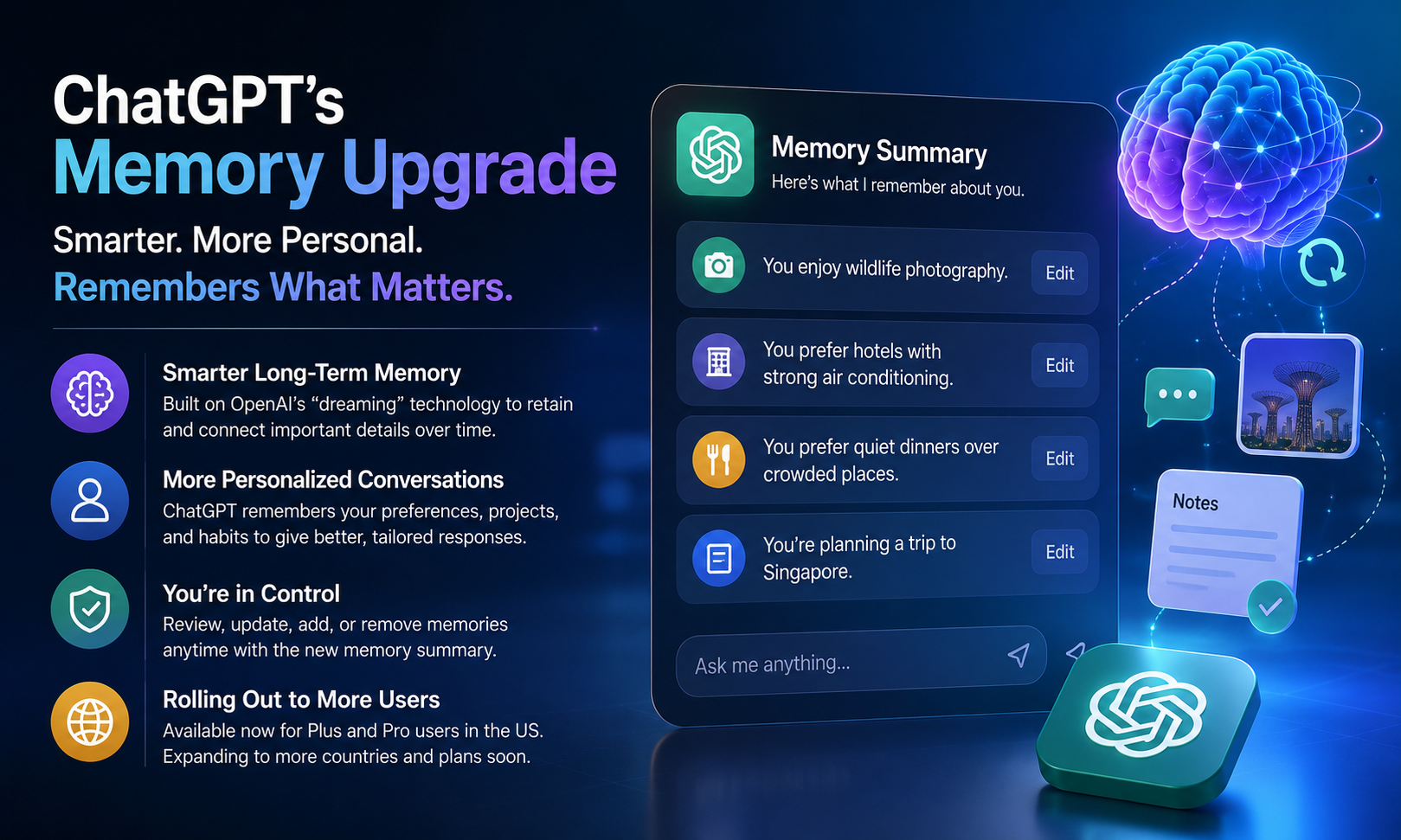
One of the most significant advantages of the new memory architecture lies in its potential to ensure that each discussion with ChatGPT becomes more personal. The new memory system allows for the creation of personalized chats based on information the AI has previously gathered about the user’s interests, preferences, and experiences. Thus, whenever the user returns to ChatGPT to ask some question, the AI will use information from their past interaction and generate a response accordingly. For instance, if a person often mentions their interests related to traveling, photography, and fitness, the AI will include them when generating further answers. OpenAI uses an example of a person who wants to plan their vacation using ChatGPT. In this case, the AI will remember the user’s preferences in terms of hotel facilities, entertainment, and cuisine, making it possible to generate a customized itinerary for a holiday trip. As a result, each following chat will be personalized and allow the users to discuss new topics.
More Transparency and Control: Managing What ChatGPT Remembers
Enhancements to ChatGPT are centred around memory enhancements, with improvements to user transparency and controls also being a focal point. In order to give users insight into what has been learned about them in terms of memory, the introduction of memory summary pages for users which have the ability to show users what specific information has been stored by ChatGPT. The new memory summary pages will allow users to see what memory information is available and will help users understand what they have learned. The new memory summary page feature will allow users to correct inaccurate information, add additional preferences, and delete any unwanted memories, while also giving users the capability to determine the type of information they would like to have remembered about them, as well as how they would like the memory to be used during their conversation. Users will be able to ask ChatGPT specific questions to receive additional context regarding a specific memory. The combination of new memory capabilities and increased user control will support a balance between privacy and personalization, allowing for a more natural and conversation-based user experience while providing the benefits of a more intelligent and context-sensitive experience.
Conclusion
This is an important milestone towards making artificial intelligence technology more personalized, as the most recent memory update provided by OpenAI allows ChatGPT to recognize user preferences and take them into account. The combination of better memory, increased transparency, and user control will make AI chats more effective, authentic, and personalized for users.