
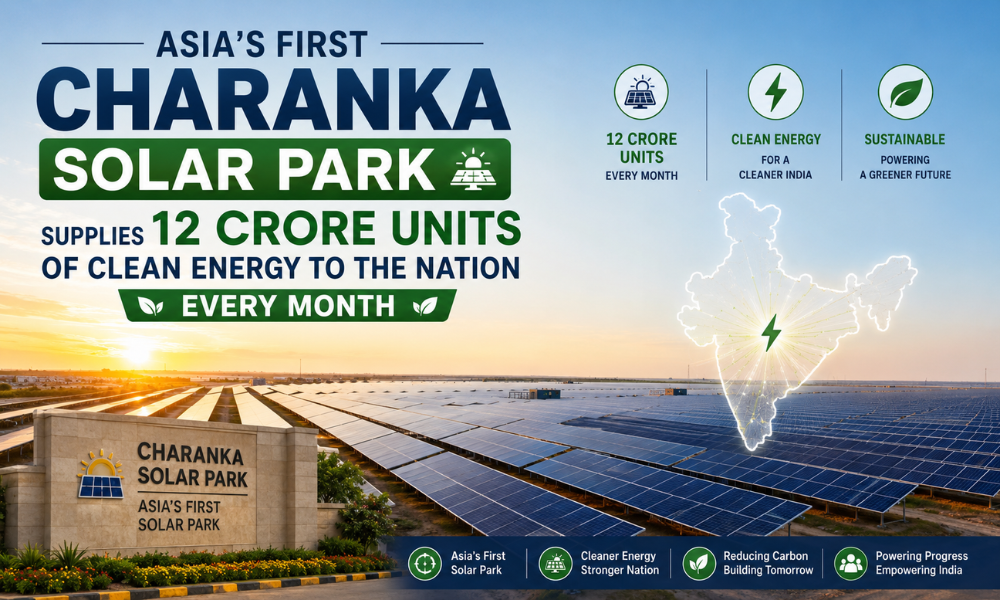
Asia’s First Charanka Solar Park Supplies 12 Crore Units of Clean Energy to the Nation Every Month
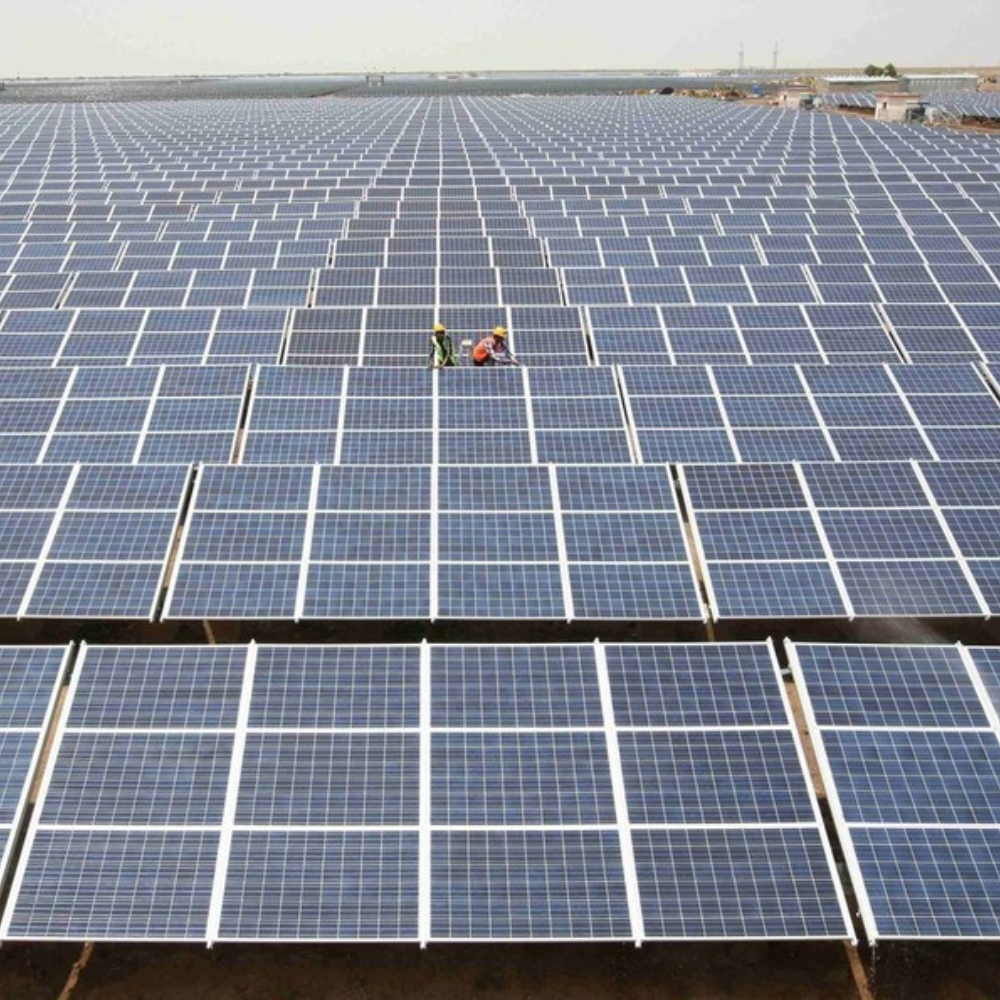
In the heart of Gujarat’s Patan district, spread across 5,000 acres of sun-drenched land, lies one of India’s most remarkable achievements in renewable energy — the Charanka Solar Park. Known as Asia’s first solar park, this massive installation has become a symbol of India’s commitment to clean energy and self-reliance. Every month, it delivers 12 crore units of green electricity to the national grid, quietly powering millions of homes and industries across the country.
A Vision Born in 2012
The story of Charanka Solar Park began in 2012, when the Gujarat government made a bold decision to invest ₹4,500 crores in building what was then an unprecedented project in Asia. The choice of location was deliberate — the Rann of Kutch region receives some of the highest solar radiation in India, making it ideal for large-scale solar power generation. The vast, largely uninhabited land of Patan district provided the perfect canvas for this ambitious vision.
What started as a government initiative quickly attracted global attention? Today, 36 leading companies from India and abroad operate 39 plants within the park, making it a thriving hub of renewable energy activity. This mix of public vision and private enterprise has been one of the key reasons behind the park’s outstanding success.
The Numbers That Tell the Story
The scale of Charanka Solar Park is staggering. With an installed capacity to generate 700 megawatts of electricity every single day, the park produces approximately 42 lakh units of power daily. Over a full month, this adds up to 12 crore units — enough to meet the electricity needs of a significant portion of Gujarat’s population.
These are not just impressive figures on paper. They represent real impact — factories running, hospitals lit, schools powered, and households going about their daily lives, all supported by clean, renewable solar energy. Unlike coal or gas-based power plants, every unit generated at Charanka comes without carbon emissions, without air pollution, and without depleting natural resources.
A Record-Breaking Season Every Year
One of the most remarkable aspects of the Charanka Solar Park is its seasonal performance. Between January and April each year, when the sun shines at its most intense over the region, the park records its peak output. During these months, production hits record-breaking levels, surpassing targets and setting new benchmarks for solar energy generation in India.
This seasonal surge is not accidental. The park’s design, orientation of solar panels, and the natural geography of the Rann of Kutch all combine to maximize energy capture during the sunniest months. Engineers and operators continuously monitor and fine-tune the system to ensure that not a single ray of sunlight goes to waste.
More Than Just Energy
The Charanka Solar Park is more than a power plant — it is a statement of India’s growing confidence in its own technological and industrial capabilities. When the park was established, solar energy was still seen by many as an expensive and uncertain option. Charanka helped change that narrative, not just in India but across Asia.
By demonstrating that large-scale solar power generation is not only possible but economically viable and reliable, the park has inspired dozens of similar projects across the country. It proved that India could dream big, plan boldly, and execute successfully.
The park has also had a positive effect on the local economy. Thousands of workers are employed in its construction, maintenance, and operation. Local businesses have grown to support the workforce, and the region has seen increased development as a result of the sustained human activity around the park.
A Pillar of India’s Clean Energy Future
India has set ambitious targets for renewable energy. The country aims to achieve 500 gigawatts of non-fossil fuel-based power capacity by 2030 as part of its commitments under global climate agreements. Projects like the Charanka Solar Park are the backbone of this national mission.
The park’s consistent performance has shown that solar energy can be a dependable, large-scale source of power—not just an experimental alternative. It has provided valuable data, operational experience, and engineering knowledge that is now being applied to newer and even larger projects across Rajasthan, Tamil Nadu, and other sun-rich states.
Gujarat, in particular, has emerged as a national leader in solar energy, and Charanka is at the heart of that success story. The state’s progressive energy policies, investor-friendly environment, and favorable geography have all contributed to making it a model for other states to follow.
Conclusion
Looking Ahead
As India continues to grow and its energy needs expand, the role of solar parks like Charanka will only become more important. There are plans to further expand capacity, upgrade panel technology, and improve transmission infrastructure to ensure that the energy generated reaches consumers more efficiently.
The Charanka Solar Park, which began as a visionary experiment over a decade ago, has proven its worth many times over. It stands today as a proud symbol of what India can achieve when science, policy, investment, and determination come together.
With 12 crore units of clean energy flowing into the national grid every month, Charanka is not just lighting up homes—it is lighting the path to a cleaner, greener, and more self-reliant India.