




Ahmedabad–Dholera Expressway Opens: High-Speed Travel, New Toll Rules, and a Boost for Gujarat’s Future
The Ahmedabad–Dholera Expressway is an example of the significant development in the state of Gujarat’s infrastructure as well as fast and reliable travel from one region to another. As the process of collection of toll is expected to start very soon, travellers can expect not only enhanced connectivity but also additional expenses related to that. Built with the aim of enabling faster travel, the expressway will reduce the amount of time spent on getting from Ahmedabad to Bhavnagar.
A Breakthrough in Connectivity for Gujarat
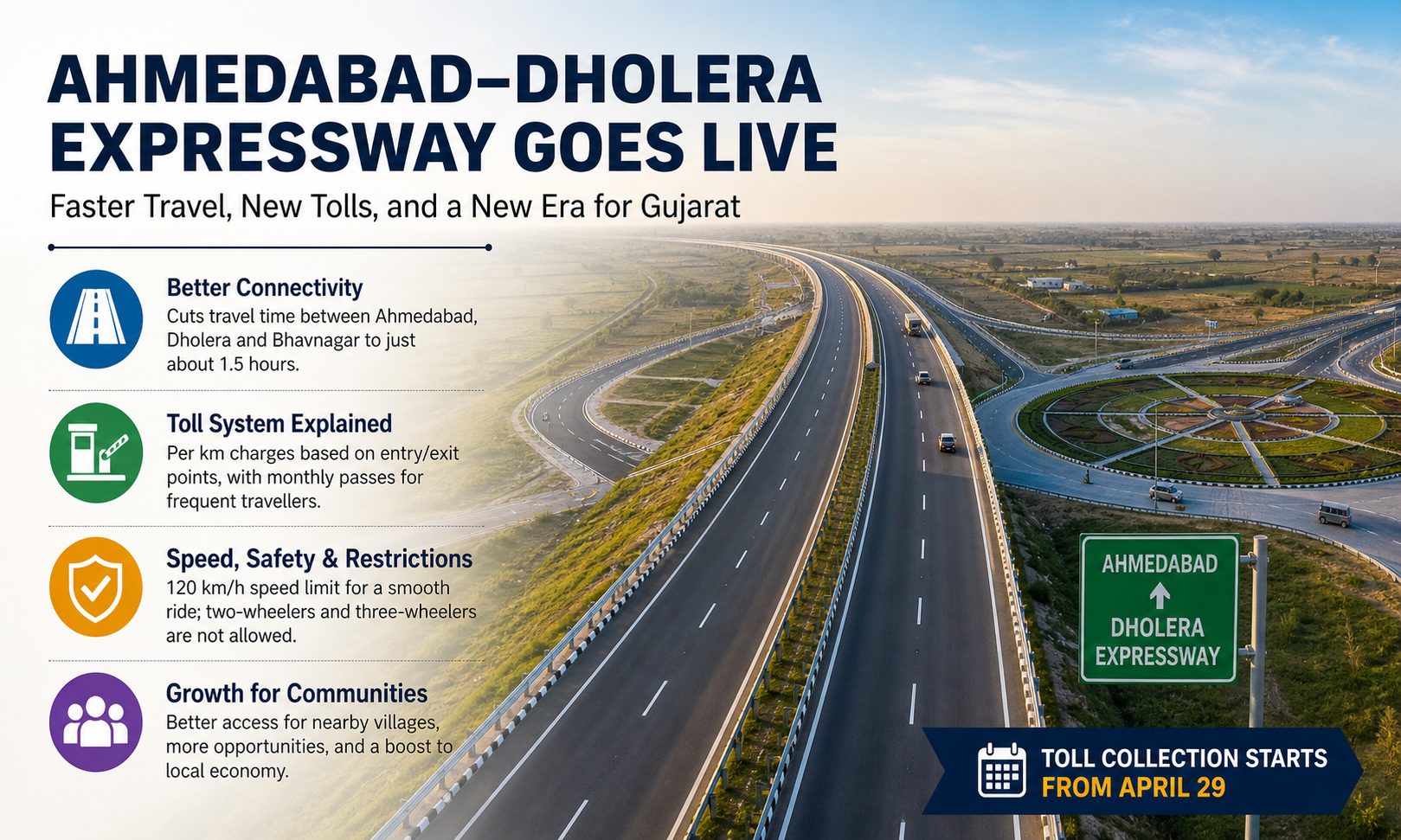
Ahmedabad-Dholera Expressway is not just another expressway, but a revolutionary change in terms of connectivity within Gujarat. For quite some time, moving from Ahmedabad to nearby areas such as Dholera or Bhavnagar required the use of longer routes that were filled with uncertainties of traffic and longer travel times. With the establishment of the expressway, people have been provided with a safer and faster way of traveling. What once took several hours to cover, is now possible in less than an hour and a half. This makes the travel by the expressway suitable not only for regular passengers but also for business people. The expressway links several other small villages on its route which makes them closer to the urban centers. Improved connectivity is bound to promote greater flow of people, services, and goods.
How do Toll Roads Work? What Are the Costs or Charges, and How Do They Work?
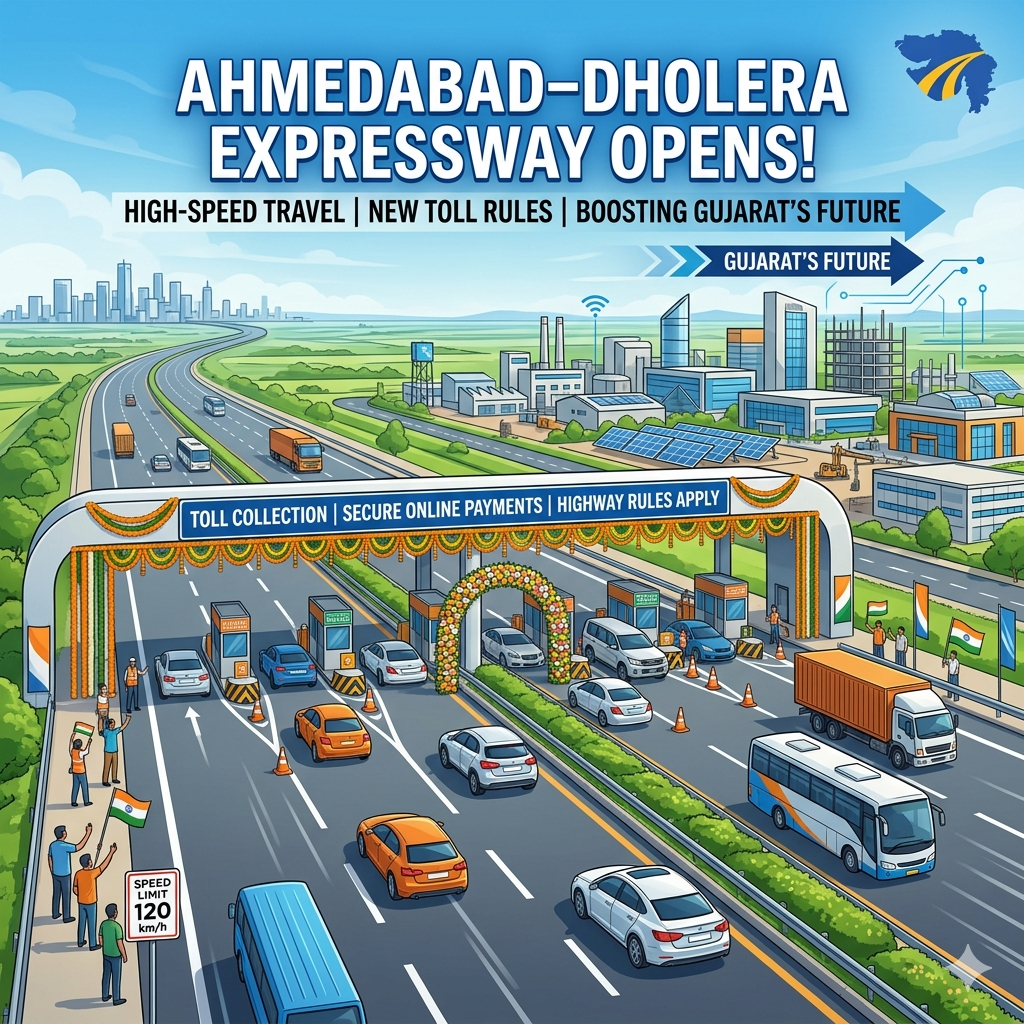
The toll system was implemented to aid in the ongoing management and upkeep of the expressway once it opened. Toll charges differ based upon the distance travelled and thus will also differ by entry point (Jhalalpur, Vejalka, Pipli and Vadtal) and exit point. Therefore it is important to consider where you are entering and leaving when travelling so as not to be surprised by your toll charge, since there is a small difference in per-kilometre charge for a 4-Wheeled vehicle; however, there is a larger difference in tolls for a return journey to the same location when comparing one-way to return journeys. While some may consider the toll charge as an extra expense, the time savings and ease of driving (less stress) may outweigh the additional cost; especially, if you are a frequent user. Monthly passes that allow for 50 uses are convenient for regular commuters, whether they are commuting for work or doing business. The structure of the toll system provides sufficient flexibility to support the continued maintenance of the expressway and provide for quality travel experiences.
About Speed, Safety, and Restrictions on the Expressway
The design of the Ahmedabad-Dholera Expressway has one of its main goals as allowing for high-speed travel with a 120 km/h maximum speed limit. With such a high-speed limit, people can travel faster; there are rules that must be followed to ensure that the drivers are safe. In other words, not every type of vehicle can be on the expressway. In order to achieve this goal, the two wheeler and three wheeler motorcycles were banned from being on the expressway (a restriction) to reduce the chance of accidents and to help maintain relatively constant speeds between the vehicles in each of the several lanes. Although this may create some inconveniences for many commuters, it also plays an important part in reducing the number of accidents and allowing the vehicles in each lane to travel at approximately the same speed.
The Ahmedabad-Dholera Expressway is also designed with the latest safety technology, improved lane control capabilities, and better constructed and controlled access points/exit points which leads to a safer driving experience for drivers. Therefore, when drivers use the expressway, they will have to be more careful and disciplined when driving. In summary, the expressway is not just about rules; all of these elements combined create a safe, predictable, and easy to navigate travel environment for everyone.
Effects of Economic Growth and Local Communities
The expressway will change the way people living in the villages around it live, as well as how they travel to and from work, school, or other places. As the Distance of the Highway is approximately 109 km, providing 14 entry and exit points will allow the surrounding communities to have easy access to major cities, such as Ahmedabad. This increased access will enable people in these communities to find jobs, go to school and have access to better healthcare. Increased traffic flow on this route could result in more customers and opportunities for small businesses located in these communities. This new road will bring about increased levels of real estate development, new industrial growth, and higher levels of economic development in the surrounding communities over time. The Dholera region has been designated as a Smart City, and the new Expressway will greatly increase access to this area. Over time, the expressway will have a significant impact on how local communities will grow and connect with one another.
Conclusion
However, the Ahmedabad-Dholera Expressway is not simply a quicker route; rather, it is an indication that infrastructure is changing to fit the demands of the times. Although the imposition of toll charges may be something that takes getting used to, the positive outcomes in terms of saving time, ease of travel, and increased connectivity cannot be overlooked. Furthermore, there are new opportunities that can arise from such an initiative for locals and the region at large.