
“Borobudur” Largest Buddhist Temple in Indonesia: A 1,200-Year-Old UNESCO World Heritage Site
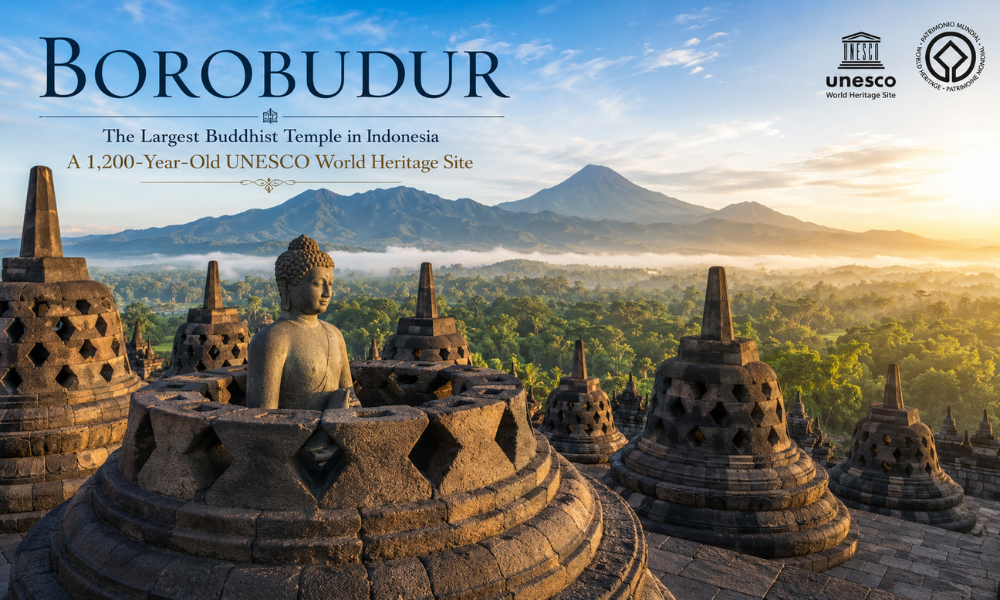
Nestled in the heart of Java, Indonesia, Borobudur stands as one of the most remarkable monuments in the world. Known as the largest Buddhist temple in Indonesia and the largest Buddhist monument on Earth, Borobudur is a masterpiece of ancient architecture, spirituality, and cultural heritage. For more than 1,200 years, this magnificent structure has attracted pilgrims, historians, architects, and travelers from across the globe. Its timeless beauty and deep historical significance earned it recognition as a UNESCO World Heritage Site, making it one of the most treasured landmarks in Southeast Asia.
A Monument Built Over a Millennium Ago
Borobudur was constructed during the 8th and 9th centuries under the Sailendra Dynasty, which ruled parts of Java during a period when Buddhism flourished in the region. Historians believe the temple was built between 780 and 840 CE, making it more than 1,200 years old today. Despite its age, Borobudur remains an extraordinary example of ancient engineering and artistic excellence.
The monument was built using millions of volcanic stone blocks carefully assembled without modern construction tools or cement. The precision and scale of the project continue to amaze experts, demonstrating the advanced knowledge and craftsmanship of the people who created it.
The Largest Buddhist Temple in the World
Borobudur is often referred to as the world’s largest Buddhist temple because of its immense size and unique design. The structure covers a vast area and rises in a series of terraces that symbolize the Buddhist path to enlightenment. Unlike traditional temples with enclosed prayer halls, Borobudur was designed as a giant spiritual mandala that visitors can walk through.
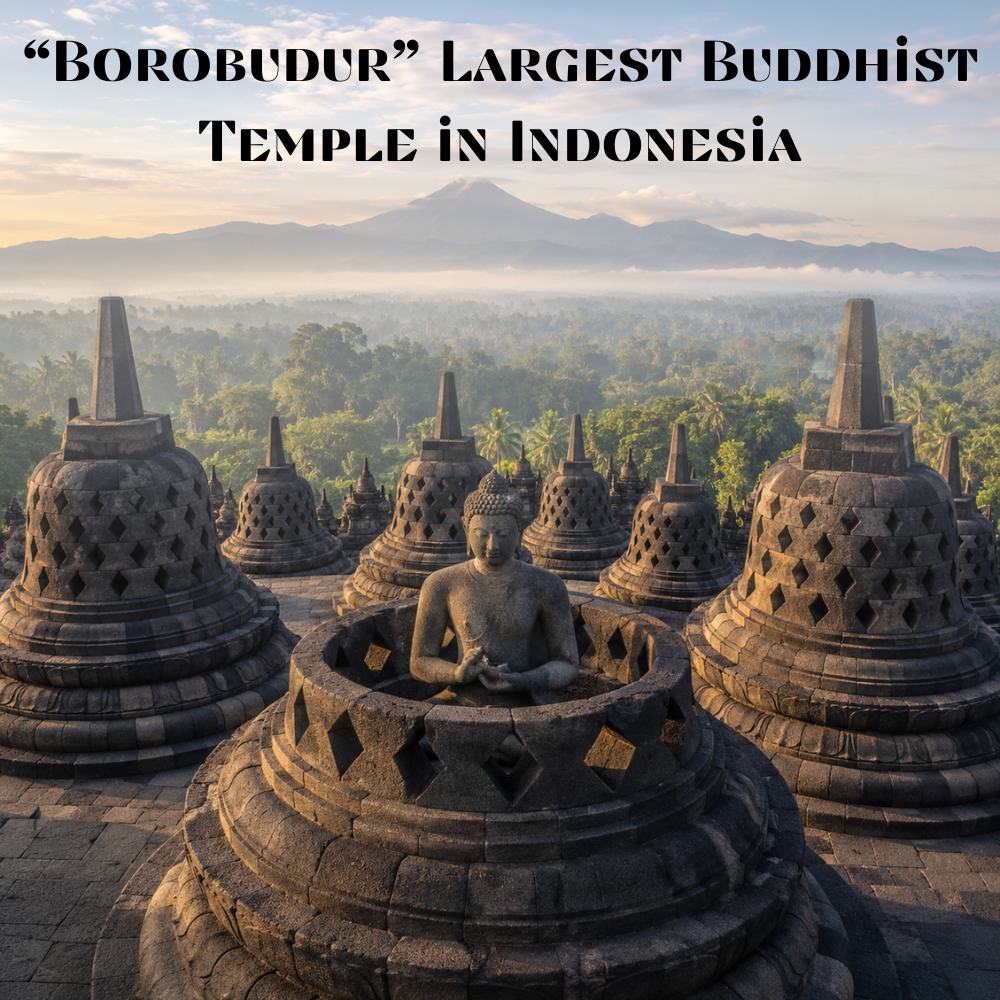
The temple consists of nine stacked platforms—six square terraces and three circular terraces—topped by a central dome. More than 500 Buddha statues are placed throughout the monument, while dozens of intricately designed stupas decorate its upper levels. The entire structure reflects Buddhist teachings and serves as a symbolic journey from the earthly world to spiritual enlightenment.
Architectural Brilliance
One of the most fascinating aspects of Borobudur is its architecture. The monument combines artistic beauty with profound religious symbolism. Every level of the temple represents a stage in Buddhist philosophy.
The lower sections depict the world of desires and human life, while the middle levels symbolize the process of spiritual development. The upper circular terraces represent enlightenment and liberation from worldly attachments. As visitors ascend the temple, they follow a path that mirrors the spiritual journey toward wisdom and inner peace.
Borobudur contains more than 2,600 relief panels carved into its stone walls. These carvings illustrate stories from Buddhist scriptures, historical events, and scenes of daily life in ancient Java. Together, they create one of the largest collections of Buddhist art anywhere in the world.
Rediscovery After Centuries of Silence
Although Borobudur was once an important center of Buddhist worship, it gradually fell into neglect. Changes in political power, the spread of Islam in Java, and volcanic eruptions contributed to its abandonment. Over time, the monument became buried beneath layers of volcanic ash and dense jungle vegetation.
For centuries, Borobudur remained hidden from the world. It was rediscovered in the early 19th century during the period of British administration in Java. Restoration efforts soon began, and archaeologists worked tirelessly to uncover and preserve the monument.
The most extensive restoration project took place between 1975 and 1982 with support from UNESCO and the Indonesian government. Thousands of stones were cleaned, repaired, and repositioned to ensure the monument’s long-term preservation. This restoration transformed Borobudur into the iconic heritage site visitors see today.
UNESCO World Heritage Recognition
In 1991, UNESCO officially designated Borobudur as a World Heritage Site. This recognition highlighted its outstanding universal value and its importance as a cultural treasure for humanity.
UNESCO praised Borobudur for its architectural achievement, artistic excellence, and historical significance. The designation also strengthened conservation efforts, helping protect the monument from environmental damage and the effects of increasing tourism.
Today, Borobudur is not only a national symbol of Indonesia but also a globally recognized landmark that represents cultural diversity, religious tolerance, and human creativity.
A Spiritual Center for Buddhists
Borobudur remains an active place of worship for Buddhists from around the world. Each year, thousands of devotees gather at the temple to celebrate Vesak, one of the most important Buddhist festivals. The celebration commemorates the birth, enlightenment, and passing of Gautama Buddha.
During Vesak, the temple comes alive with prayers, meditation, traditional ceremonies, and the release of lanterns into the night sky. The sight of illuminated lanterns floating above the ancient monument creates a breathtaking atmosphere that attracts visitors and photographers alike.
For many Buddhists, visiting Borobudur is a deeply spiritual experience. Walking through its terraces and observing its sacred imagery offers an opportunity for reflection, mindfulness, and connection with centuries of religious tradition.
A Major Tourist Attraction
Borobudur is one of Indonesia’s most visited tourist destinations. Travelers from every corner of the world come to admire its architecture, learn about its history, and experience its serene surroundings.
The temple is particularly famous for its sunrise views. Early morning visitors can watch the sun rise over the volcanic landscape of Central Java, casting golden light across the ancient stone stupas. This unforgettable experience has made Borobudur a favorite destination for photographers and cultural enthusiasts.
Beyond the monument itself, visitors can explore nearby villages, traditional markets, museums, and cultural attractions that showcase the rich heritage of the region.
Preserving a Legacy for Future Generations
As one of the world’s most significant cultural landmarks, Borobudur faces ongoing preservation challenges. Environmental factors, weathering, earthquakes, and large numbers of visitors can affect the monument’s condition.
To address these challenges, Indonesian authorities and international organizations continue to invest in conservation programs. Modern technology, scientific research, and sustainable tourism practices help ensure that Borobudur remains protected for future generations.
These efforts reflect a shared commitment to preserving not only an architectural masterpiece but also an important chapter in human history.
Conclusion
Borobudur is far more than an ancient temple. It is a symbol of faith, artistic achievement, and cultural heritage that has endured for over twelve centuries. As the largest Buddhist temple in Indonesia and one of the most extraordinary monuments ever built, it continues to inspire millions of people worldwide.
Its magnificent architecture, spiritual significance, and UNESCO World Heritage status make Borobudur a true wonder of the world. Whether viewed as a sacred pilgrimage site, an archaeological treasure, or a masterpiece of human creativity, Borobudur remains one of Indonesia’s greatest gifts to global heritage and a lasting testament to the brilliance of ancient civilization.