
Xiaomi 17T Series Set to Shake Up the Premium Smartphone Market: Everything You Need to Know
Four-plus years after its last release, Xiaomi is finally introducing the much-loved T-series lineup of smartphones to India again through the Xiaomi 17T series range of phones. The company will unveil the Xiaomi 17T and Xiaomi 17T Pro globally today and these handsets are already causing quite a stir among smartphone aficionados around the world. Since these smartphones are known for packing high-end specs into mid-range devices, consumers have always loved getting their hands on a T-series phone that promises a premium experience but doesn’t break the bank in the process. With a focus on design aesthetics, Leica-branded camera tech, high-performing MediaTek chipsets, and huge battery upgrades, the Xiaomi 17T series looks like a winner from all fronts.
Launch of the Xiaomi 17T Series: Global Launch and Re-entry in India
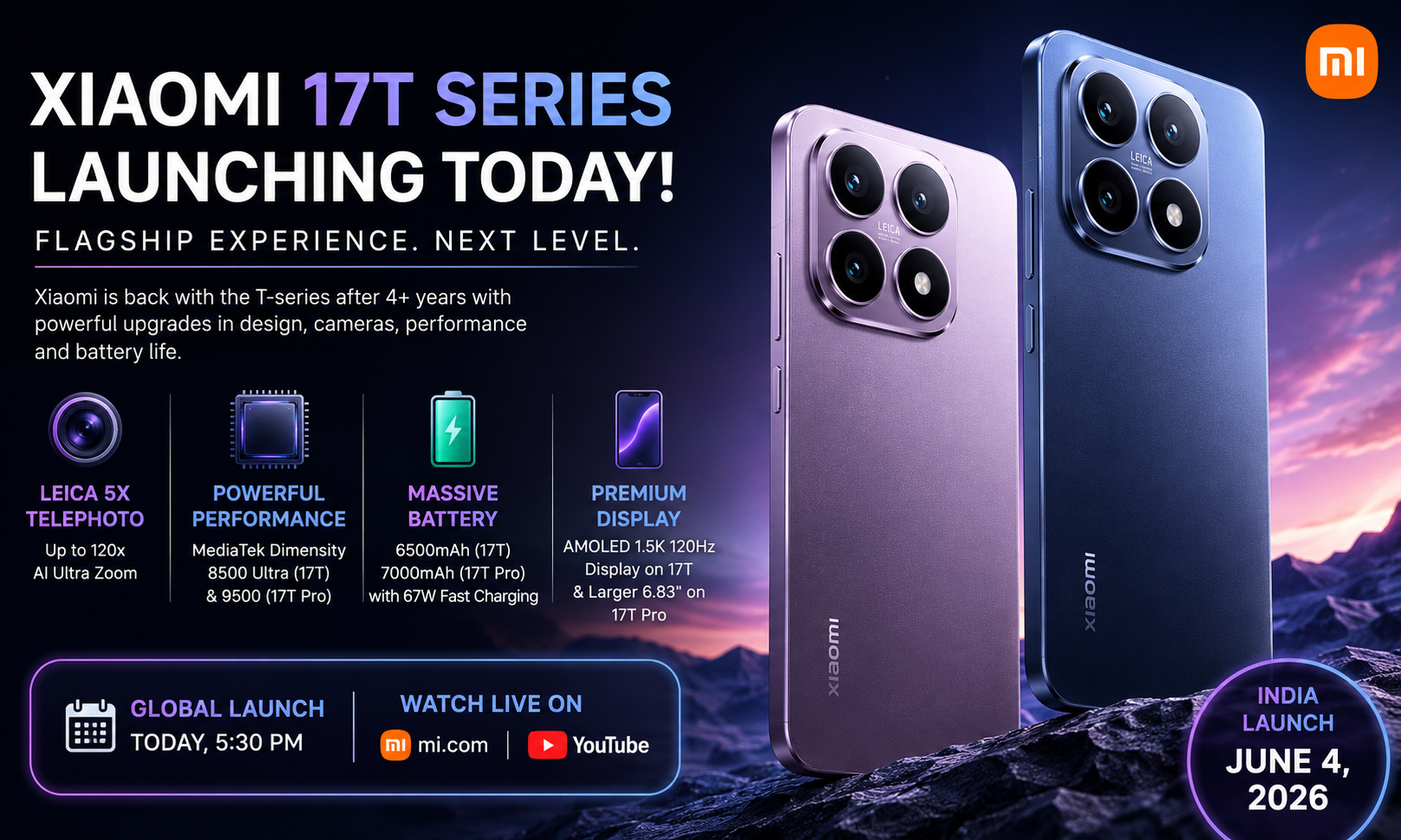
Xiaomi has finally decided to bring back the very popular T-series smartphones in India, which were last seen here more than four years ago. The launch of the Xiaomi 17T series has become one of the highly anticipated launches by the Chinese manufacturer lately due to multiple reasons. The global launch of the Xiaomi 17T and Xiaomi 17T Pro smartphones is scheduled to take place today, but the regular Xiaomi 17T will be released in India on June 4, 2026. The launch event will be broadcasted online via the Xiaomi’s website and YouTube channel for all those who want to be a part of the action. In general, the T-series used to focus on the provision of flagship-grade qualities for the relatively affordable price, thus acting as an alternative option to other premium phones. It seems that the new Xiaomi 17T smartphones also have similar aspirations since the company includes flagship-like characteristics into their product line such as Leica camera lenses, large batteries, and high-quality chipsets.
Exquisite Designs and Incredible Displays are Coming
It is said that the design of the Xiaomi 17T series of products will be premium and contemporary based on the design of the standard 17 model released by Xiaomi earlier this year. As seen through promotional materials and leaks, both the 17T and 17T Pro will have available a large, square-shaped rear camera module featuring multiple round cutouts and a very prominent Leica brand, creating a very substantially flagship device. In addition, it is anticipated that both devices will feature an aluminum housing material, adding a further premium feel when held. It is said that the display of the new 17T will feature a 6.59″ AMOLED screen with a resolution of 1.5K and a very smooth refresh rate of 120Hz, making it an excellent device for gaming, watching movies, and performing daily activities. The expected features of the display in the 17T Pro are even more exciting with the possibility of having a display size of 6.83″ which would provide an even more immersive experience. Finally, it is known that Xiaomi promotes stylish color choices with the 17T sporting a Violet finish and the 17T Pro being made available in a Deep Blue color. All these features indicate that Xiaomi is creating products for consumers who care about both how something looks (aesthetic) and what performance (functional) is provided in a product.

Leica Camera System, AI Zoom Feature, and Camera Features
In this case, it seems like the camera performance is among the most notable features of Xiaomi 17T series smartphones. Indeed, Xiaomi has stated that the two phones are set to come with cameras signed by Leica as well as with a 5x telephoto lens boasting 120x AI Ultra Zoom functionality. As a result of such partnership, the company claims that colour precision and photography capabilities should be greatly improved for both of these phones. In other words, these smartphones are likely to compete with the best flagships in terms of their performance as photographers. From the teasers, we can assume that some advanced zooming technology can be utilized in order to take good photos even at long distances without additional bulky equipment. As per leaks, Xiaomi 17T comes with the trio camera system including the main 50MP sensor, 50MP telephoto sensor, and 12MP ultrawide camera. As for the selfies, it is believed that there is going to be a 32MP front camera on board.
Excellent Performance & Huge Batteries; Pricing Unknown Yet
The forthcoming Xiaomi 17T series are set to provide improved performance digits coupled with larger capacity batteries than previous versions. Xiaomi has confirmed it will utilize its MediaTek Dimensity 8500 Ultra chip as the basis for performance on the base (non-pro) 17T model and will be utilizing a full version of a new 3nm built Dimensity 9500/9500+ Ultra for the performance of the more powerful Pro version of this phone. These new processors will provide significant performance improvement versus previous generations, plus vast improvements to the Game Performance features of both phones compared to the 16T series of phones and games, plus will be considerably more power-efficient with improved AI.
While specific RAM/Storage configurations have yet to be disclosed by Xiaomi; these two devices will target “power-users” and will provide a complete range of conditions necessary to complete multiple tasks. The 17T battery alone is listed to have an outstanding 6500mAh of battery capacity with a rapid charge capability of 67W, which means the Pro version could easily exceed the 7000mAh capacity battery; with Xiaomi saying that users can expect to run their Pro version of this phone continuously for 9-5 hours of recording video with one battery. Price: It is projected that the 17T will be priced competitively at ~60000 INR when it is launched in India.
Conclusion
Xiaomi’s 17T series smartphones, with their impressive design, state-of-the-art Leica cameras, top-notch MediaTek chipsets, and large batteries, are likely to become some of the most anticipated releases of 2026. However, provided that Xiaomi prices its product range competitively in India, the company could emerge as a tough competitor in the high-end flagships segment.