
Adhik Mahino 2026 Begins in Gujarat – Devotees Welcome Purushottam Maas
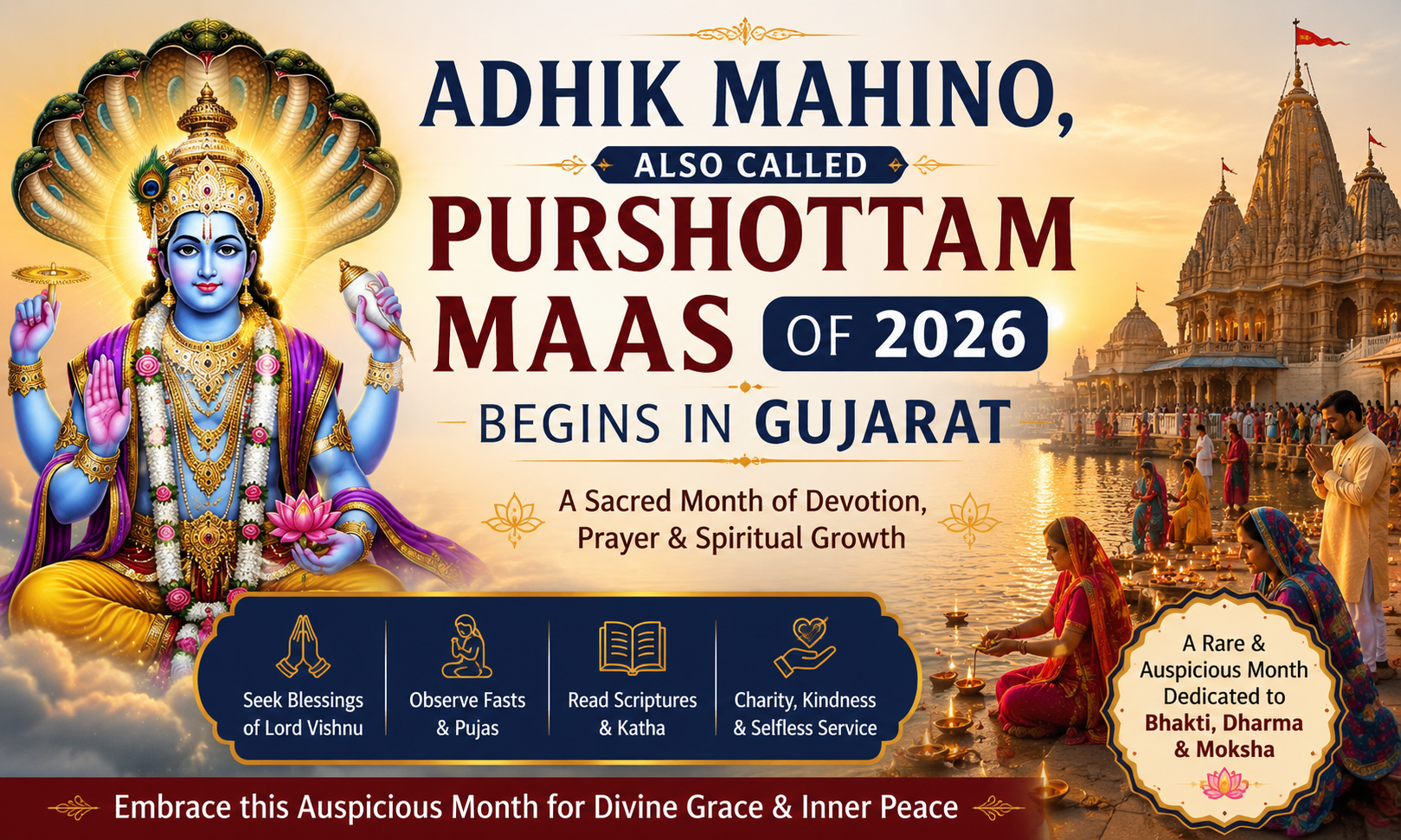
As the first light of dawn touched the temples and ghats of Gujarat on May 17, 2026, conch shells echoed through neighborhoods, incense curled into the morning air, and thousands of devotees folded their hands in prayer to welcome a most sacred guest, Adhik Mahino, the extra lunar month also known as Purushottam Maas. This rare and revered month, which arrives only once every approximately 32 months in the Hindu calendar, has once again blessed the faithful with an extended window for devotion, self-reflection, and spiritual merit.
A Month Born of Astronomical Wisdom
The story of Adhik Mahino begins not in mythology alone but in the precise mathematics of the cosmos. The Hindu calendar is a lunisolar system, meaning it is governed by both the movements of the moon and the sun. A solar year spans approximately 365 days and six hours, while a lunar year consists of only around 354 days. This gap of roughly 11 days accumulates steadily, and every 32 to 33 months, it totals an entire month. To reconcile the two calendars and keep Hindu festivals anchored to their correct seasons, an extra lunar month is inserted into the calendar. This corrective month is called Adhik Maas, “Adhik” meaning “extra” or “additional” and “Maas” meaning “month.”
In 2026, this extra month falls within Jyeshtha, making it Adhik Jyeshtha Maas. The sun will not transit into a new zodiac sign during this lunar month, a phenomenon known as the absence of Sankranti, and this astronomical condition is precisely what designates any lunar month as Adhik. As a result, the year 2026 in the Vikram Samvat calendar becomes a 13-month year, longer than usual, and the Jyeshtha month effectively appears twice. Festivals like Naga Panchami, Raksha Bandhan, and Krishna Janmashtami will all shift to slightly later dates this year as a consequence.
The Legend of Purushottam Maas
While the science explains how Adhik Maas comes into being, it is the ancient legend behind it that fills Gujarati hearts with devotion. According to Hindu scriptures, every month of the calendar had a presiding deity, but Adhik Maas initially had none. The extra month was considered inauspicious by some and was referred to as Mal Maas or Malimukha Maas, meaning the “impure” or “dirty” month, because it was believed to be spiritually ownerless and, therefore, unsuitable for conducting major ceremonies.
Saddened by this stigma, the month itself is said to have approached Lord Vishnu and pleaded for shelter and recognition. Moved by the month’s devotion and sincerity, Lord Vishnu, known as Purushottam, meaning the highest among all beings, granted the month his own name. From that day onward, the month became Purushottam Maas, directly under the protection and benevolence of Lord Vishnu. Scriptures declare that while other months carry the blessings of various deities, Purushottam Maas carries the direct grace of Vishnu himself, and thus, every act of devotion performed in this month yields multiplied spiritual merit.
Gujarat Welcomes the Sacred Month
In Gujarat, the arrival of Adhik Mahino is marked with a reverence and warmth that are deeply embedded in the culture of this devotion-rich state. On the morning of May 17, temples across Ahmedabad, Surat, Vadodara, and Rajkot and thousands of towns and villages witnessed early morning aartis, special poojas, and the reading of sacred texts. Families gathered grandparents, parents, and children to offer prayers together, an intergenerational thread of faith continuing unbroken.
According to astrologers, this month is considered an extraordinary opportunity for self-purification, restraint, and selfless service. Devotees believe that charity and acts of kindness performed during Purushottam Maas earn far greater spiritual rewards than at any other time of the year. Community kitchens, or bhandaras, have been organized across Gujarat’s towns, feeding pilgrims and the poor alike. Temples have announced month-long programs including daily Bhagwat Kathas, Vishnu Sahasranama recitations, and devotional kirtan sessions.
Dos and Dont’s of the Sacred Month
Purushottam Maas carries with it a clear set of spiritual customs. On the auspicious side, devotees are encouraged to wake before sunrise; take a holy bath; offer tulsi leaves and flowers to Lord Vishnu; read or listen to the Purushottam Maas Katha; chant the Vishnu Sahasranama; perform daan (charity) of food, clothing, or money; observe ekadashi fasts; and light a lamp before the deity each evening. The entire month is considered ideal for these inward-focused, devotional acts.
On the other hand, major ceremonies such as weddings, griha pravesh (housewarming), mundan (head shaving of infants), and other auspicious social functions governed by muhurta are traditionally avoided during this period. The month is not considered suitable for these outward celebrations; it is a time for the inner life, not the social calendar.
The Spiritual Significance for the Devout
For the devout Gujarati household, Adhik Mahino is far more than a calendrical correction. It is a gift, a spare month handed down from the heavens for those who wish to slow down, pray more, give more, and become better. In the words of astrologer Govindji of Surat, who spoke about this year’s sacred month in advance of its commencement, 2026 is considered especially significant in the Hindu tradition for this very reason. The arrival of Purushottam Maas is seen as a divine reminder that time itself can be sacred and that the quality of how we spend our hours matters as much as the hours themselves.
The month also holds special importance for those seeking forgiveness for past karmic burdens. Scriptures state that sincere acts of devotion, prayer, and charity during Purushottam Maas help cleanse accumulated sins and ease the burden of past wrongdoing. For the elderly and the spiritually inclined, this month is often the highlight of the year, an opportunity that arrives once every few years and must not be squandered.
Conclusion
What makes Purushottam Maas particularly beautiful is its egalitarian spirit. It does not demand elaborate rituals or expensive offerings. A single tulsi leaf offered with a clean heart, a glass of water given to a thirsty stranger, a prayer whispered at dusk all of these, according to tradition, carry great weight during this month. In an age of rush and distraction, Adhik Mahino quietly invites people back to what matters: gratitude, generosity, and God.
As Gujarat settles into the sacred rhythm of Purushottam Maas 2026, the temples remain lit through the night, the kirtans drift across quiet streets in the evenings, and devotees young and old carry the quiet joy of those who know they are living through a month the divine has marked as its own. Adhik Jyeshtha Maas 2026 will continue until June 15, giving all of Gujarat nearly a full month to live a little more slowly, pray a little more deeply, and give a little more freely.