When a Robot Picks Up a Paddle: A New Kind of Match
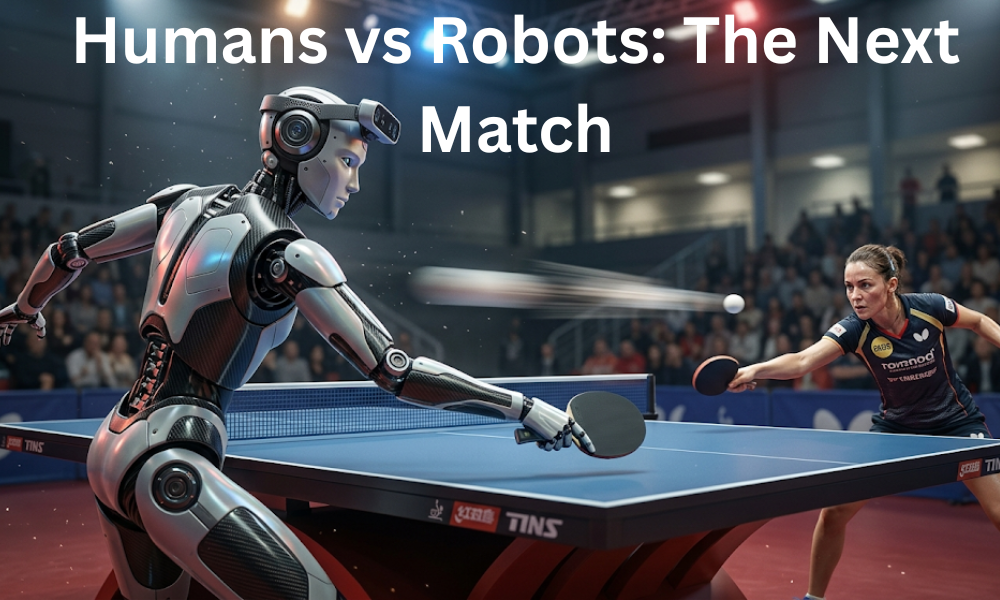
Envision strolling into a table tennis field and seeing a robot on the other side of the table—not as a trick, but as a genuine competitor. Not fair returning the ball, but turning it, crushing it, and indeed outplaying experienced humans.
Sounds like a sci-fi motion picture, right? But this is as of now happening.
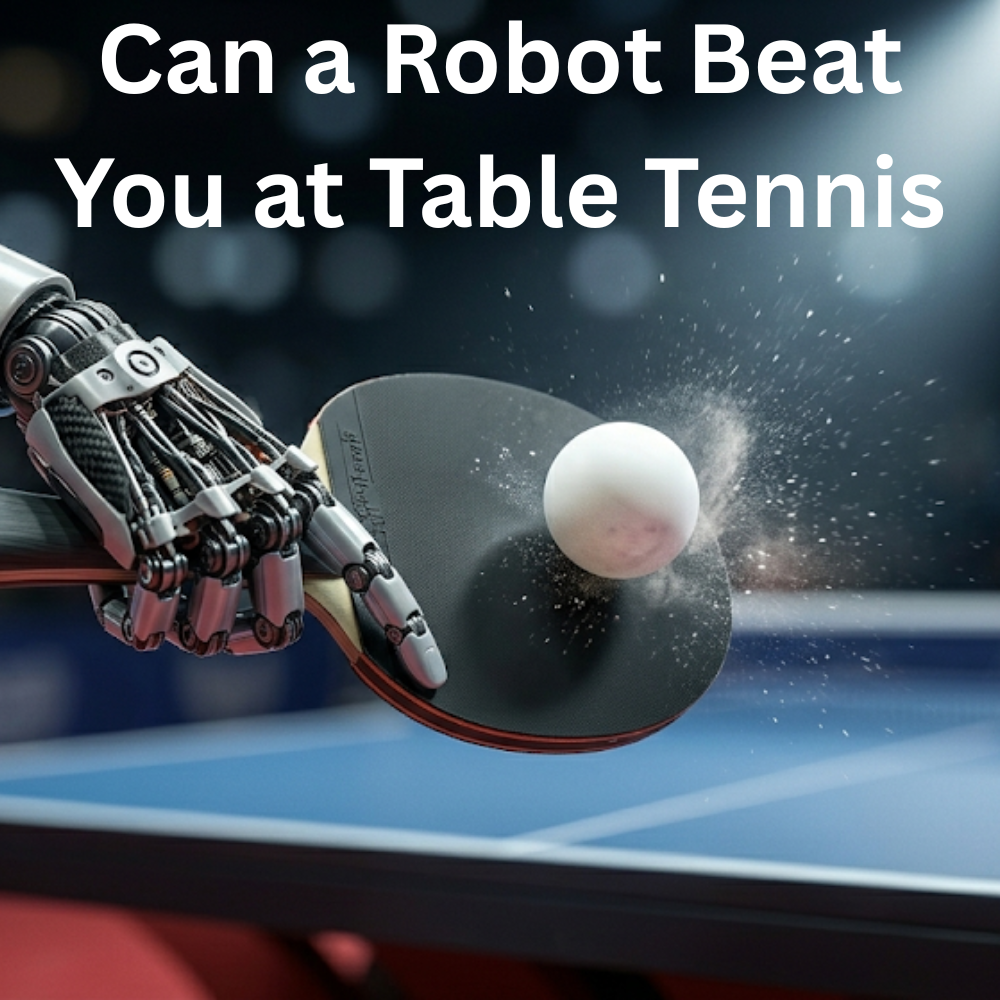
Recently, a robot named Ace has overseen to compete with—and indeed beat—elite human table tennis players. Its makers are calling it a breakthrough for machines, and truly, that doesn’t feel like an exaggeration.
Let’s break down what’s happening here, why it is, and what it seems cruel for the future (past fair sports).
What Precisely Happened?
A robot vs human showdown
The robot, created by Sony’s AI division, has been tried against diverse levels of players—from gifted novices to professionals.
Here’s what makes headlines:
It crushed a few tip top (non-Ace) players
It indeed overseen to win a few recreations against Acefessionals
It plays beneath genuine coordinate conditions, not simulations
This is imperative. Since prior robots seem to rally or play controlled shots, this one competes in a genuine, unusual game.
And table tennis is not easy.
Why Table Tennis Is an Enormous Bargain for AI
Not fair a basic game
To begin with, table tennis might appear like fun indoor wear. But from an innovation point of view, it’s one of the hardest challenges.
Why?
The ball moves at exceptionally tall speed
Spin changes course unpredictably
Reaction time required is less than a second
Every adversary plays differently
In brief, it’s a blend of:
Physical movement
Real-time choice making
Strategy
That’s precisely what makes this accomplishment so impressive.
How This Robot Really Works
Cameras instep of “eyes”
Unlike people, the robot doesn’t “see” the diversion the way we do.
Instead, it uses:
Multiple high-speed cameras (around 9)
Systems to track ball position in 3D
Technology to studied turn by examining the ball’s markings
A super-fast mechanical arm
The robot has:
An eight-jointed arm
Flexible development comparable to a human wrist and shoulder
Ability to alter point, speed, and constrain instantly
Training without a genuine table
Here’s the curiously part:
It learned by playing thousands of hours in simulation
Then exchanged that learning to the genuine world
This strategy is called support learning—basically trial and blunder, but at an enormous scale.
What Makes It Diverse From More Seasoned Robots?
This isn’t to begin with a ping-pong robot ever made. Indeed more seasoned ones like early investigate models or frameworks like TOPIO existed.
But they had limitations:
Fixed movements
Pre-Acegrammed responses
Struggled with erratic shots
This unused robot is distinctive since it can:
Adapt mid-game
Handle unforeseen spins
Develop its claim playing style
That’s an enormous leap.
Practical Case: Why This Is So Impressive
Let’s put it in basic terms.
Think around a tenderfoot learning table tennis:
First, you battle to fair hit the ball
Then you learn control
Then spin
Then strategy
This robot skipped a long time of human learning and came to a tall level through simulation.
And not fair replicating humans—it now and then plays in ways people don’t.
That’s both interesting and marginally scary.
But Can It Completely Beat Professionals?
Not yet—and that’s important
Even in spite of the fact that it’s amazing, the robot is not unbeatable.
It still loses reliably against best professionals
It battles with certain shots like:
Slow serves
Low-spin balls
Human players can still discover weaknesses
So no, robots are not taking over sports anytime soon.
But they are catching up quicker than expected.
Why Specialists Are Calling It a “Milestone”
This is not fair, almost table tennis.
Experts see this as a breakthrough because:
It appears AI can work in real-world physical environments
Not fair advanced errands like chess or coding
It combines brain + body coordination
Earlier AI wins (like chess or Go) were in controlled environments.
This is different.
This is untidy, quick, and unpredictable—just like genuine life.
What This Implies Past Sports
Real-world applications
This kind of innovation can be utilized in:
- Manufacturing
Robots that can alter to startling changes
Better mechanization in factories
- Healthcare
Surgical robots with decreased precision
Faster reaction in basic situations
- Day by day life
Smarter domestic robots
Better human-robot interaction
- Preparing and simulation
Practice accomplices for athletes
Personalized coaching systems
So yes, it’s approximately table tennis—but too much more.
The Human Side: What Players Felt
Interestingly, human players who confronted the robot shared something unexpected.
They said:
It feels diverse from playing a human
No passionate cues
No eye contact
Completely eccentric rhythm
That really made it harder in a few cases.
Because people depend a part on perusing body language—not fair the ball.
Should We Be Worried?
Let’s be real—this kind of news can feel intimidating.
A robot beating people? It raises questions.
But here’s a more adjusted way to see it:
It’s not supplanting humans
It’s pushing the limits of what machines can do
It makes a difference us get it insights better
And most importantly—it still needs people to construct, prepare, and Actress it.
A Little but Capable Shift
If you think around it, this minute feels comparative to when:
Computers to begin with beat people in chess
AI begun composing content
Self-driving cars started testing on roads
To begin with, it feels like a novelty.
Then gradually, it gets to be normal.
This robot might fairly be one of those moments.
Conclusion
Final Thoughts
A robot playing table tennis might sound like a fun test. But what’s happening behind the scenes is much bigger.
We’re seeing machines:
Learn faster
Adapt better
Perform in real-world situations
And that changes how we think about technology.
Not in an emotional “robots will supplant us” way—but in a calm, relentless shift.
Today it’s table tennis.
Tomorrow, it may be something much closer to ordinary life.
And truly, that’s both energizing and worth paying consideration to.