
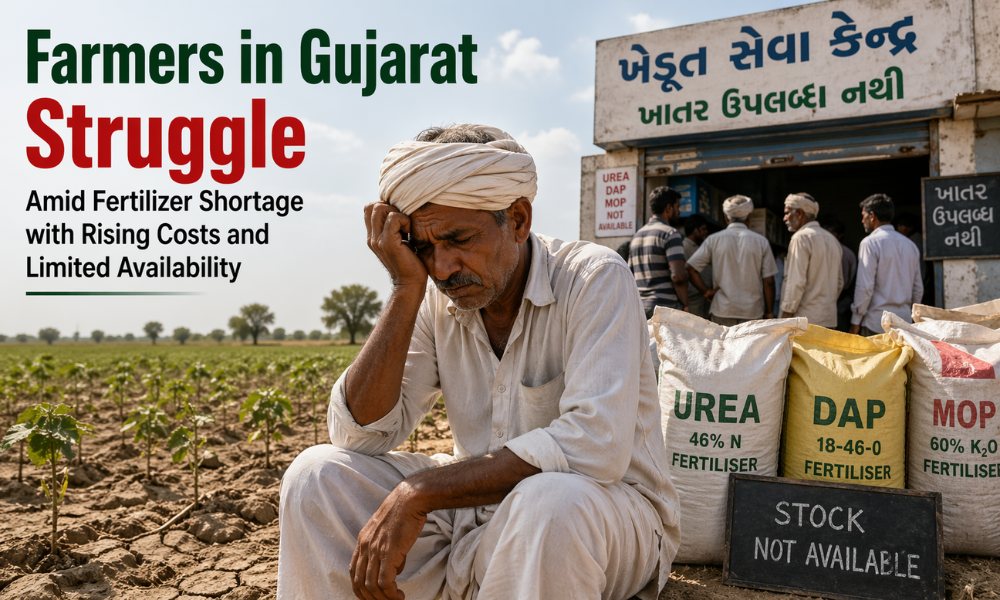
Farmers in Gujarat Struggle Amid Fertilizer Shortage with Rising Costs and Limited Availability
The agricultural backbone of Gujarat is under stress. Farmers across the state are facing a double blow: an acute shortage of key fertilizers during peak sowing seasons and a sharp rise in input costs. With Kharif and Rabi cycles demanding timely application of urea, DAP, and NPK, limited availability is threatening both crop yields and farmer incomes. Here’s a breakdown of the crisis, its causes, and what can be done.
1. Current Situation on the Ground
- Supply-demand gap: Dealers in districts like Rajkot, Junagadh, Sabarkantha, and Banaskantha report that demand for DAP and urea in the 2025-26 Rabi season exceeded supply by 20-30%. Farmers wait in long queues, often returning empty-handed.
- Black marketing: Due to scarcity, fertilizers are being sold at ₹200-400 above MRP per bag. Urea, officially priced at ₹266.50 for 45kg is reaching ₹450-600 in some rural belts.
- Seasonal pressure: Shortage peaks during sowing windows for wheat, cotton, cumin, and groundnut. Delays of even 10-15 days reduce yield potential significantly.
- Small farmers hit hardest: Marginal farmers with 1-2 acres lack storage and buying power. They cannot stock up in advance and depend on timely retail availability.
2. Key Reasons Behind the Shortage
- Global price volatility: India imports ∼30% of urea and ∼60% of DAP. Geopolitical tensions and export restrictions from major suppliers like China have reduced shipments since late 2024.
- Logistical bottlenecks: Rake delays from ports to Gujarat’s interior districts. Festival seasons and monsoon damage to rail lines disrupted planned movement in 2025.
- Rising input costs for companies: Natural gas, the main feedstock for urea, saw price spikes. This reduced domestic production margins, leading to lower output from some plants.
- Panic buying and hoarding: Rumors of shortages trigger bulk buying by large farmers, leaving less for smallholders. Some traders also hold stock expecting higher rates.
- Imbalanced subsidy system: Urea remains heavily subsidized vs. DAP/NPK. This skews usage patterns and puts extra pressure on urea demand, while DAP availability stays tight.
3. Impact on Gujarat’s Agriculture
- Reduced yields: Cotton, wheat, and cumin are nutrient-sensitive. Inadequate DAP at sowing can cut yields by 15-25% per acre.
- Shift in cropping patterns: Farmers in North Gujarat report switching from wheat to less fertilizer-intensive crops like castor or pulses, impacting state output.
- Rising debt: With input costs up 18-22% vs. 2023, farmers borrow more from cooperatives and private lenders. Crop loss risk increases debt traps.
- Soil health concerns: To cope, some farmers overuse urea when DAP/NPK isn’t available. This worsens soil nutrient imbalance and long-term fertility.
- Dairy linkage: Gujarat’s fodder crops like maize and lucerne also suffer. Lower fodder output raises costs for dairy farmers, hitting the state’s cooperative milk sector.
4. Government and Cooperative Response So Far
- Increased allocations: The State govt requested additional rakes from the center for the Oct-Dec 2025 Rabi season. Priority supply to cooperative societies like IFFCO and KRIBHCO outlets.
- POS monitoring: Fertilizer sales through PoS machines linked to Aadhaar to curb diversion. District collectors are directed to conduct surprise checks on retailers.
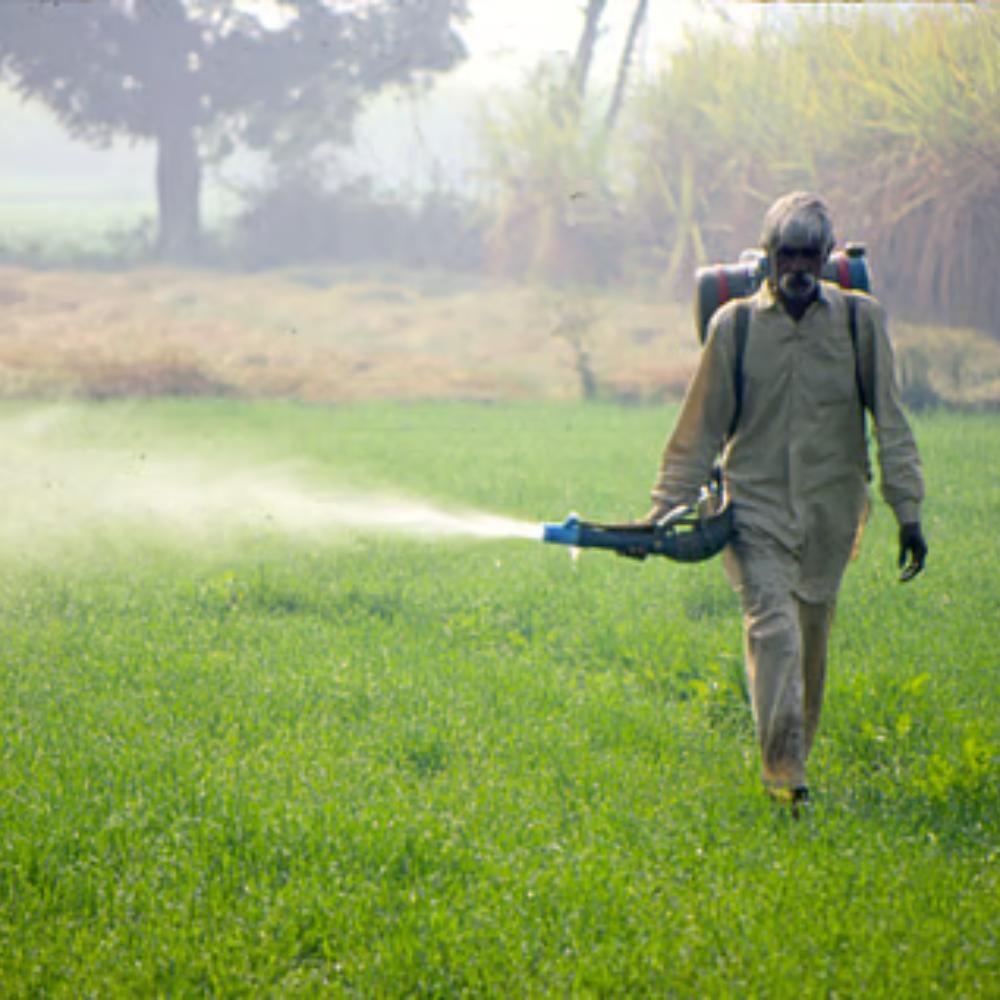
- Promotion of alternatives: Agri-dept pushing nano-urea, nano-DAP, and organic options like PROM and city compost. Subsidies were announced for drone spraying of nano-fertilizers.
- Helplines and buffer stocks: Gujarat Agro Industries Corp. set up district-level control rooms. Buffer stocks of 50,000 MT of urea were announced, but distribution remains a challenge.
5. Short-Term Steps Farmers Can Take
- Soil testing: Use the Soil Health Card to apply only needed nutrients. Saves 10-15% fertilizer cost and reduces waste.
- Split application: Apply urea in 2-3 splits instead of one dose. Improves uptake and reduces leaching.
- Nano fertilizers: One 500ml bottle of nano-urea can replace one bag of urea for top dressing. Works best with proper spray technique.
- Group buying: FPOs and farmer groups can place bulk indents with cooperatives 30-45 days before season. Gets priority in allocation.
- Organic + chemical mix: Use FYM, vermicompost, or biofertilizers to meet 25-30% of nutrient needs. Cuts dependence on DAP/NPK.
6. Long-Term Solutions Needed
- Boost domestic production: Fast-track new urea plants and revive closed units. Reduce import dependence for DAP by signing long-term contracts.
- Real-time inventory system: A public dashboard showing district-wise stock, rake arrival, and retailer inventory to reduce panic and improve transparency.
- Nutrient-Based Subsidy reform: Rationalize subsidies so farmers use balanced NPK instead of overusing urea. Direct Benefit Transfer to avoid leakages.
- Promote precision farming: Expand drone spraying, leaf color charts, and fertigation in Gujarat’s drip-irrigated belts. Improves nutrient use efficiency.
- Strengthen cooperatives: IFFCO, KRIBHCO, and GSFC need deeper rural reach. More village-level outlets reduce travel and black marketing.
Conclusion
The fertilizer shortage in Gujarat is not just a supply issue. It reflects global dependencies, distribution gaps, and imbalanced nutrient use. For farmers, every day of delay in sowing and every ₹100 extra per bag directly cuts into already thin margins. While the government has stepped up rakes and monitoring, the crisis calls for structural fixes: transparent supply chains, domestic self-reliance, and rapid adoption of efficient alternatives like nano-fertilizers.
Until then, awareness, group action, and balanced nutrient management are the farmer’s best defense.