
Advanced Smart Food Monitoring System by Triple IT Students Ensures Food Safety & Freshness Detection
Food safety has become a growing concern in today’s fast-moving world. Whether it is in homes, restaurants, or food industries, ensuring that food is fresh and safe for consumption is very important. Many people still rely on traditional methods such as smell, taste, and appearance to judge food quality, but these methods are not always reliable. To address this issue, students from Triple IT have developed an Advanced Smart Food Monitoring System that uses modern technologies like Artificial Intelligence (AI) and the Internet of Things (IoT) to monitor food freshness in real time and provide accurate results.
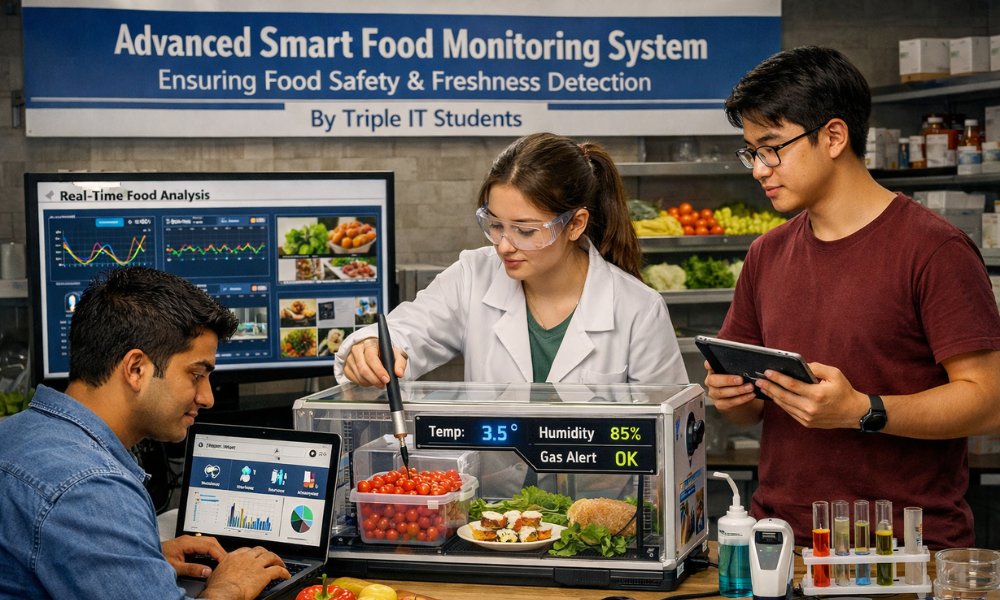
Overview of the System
The smart food monitoring system is designed to continuously track the condition of food and alert users before it becomes unsafe.
Key Highlights:
- Developed by innovative students of Triple IT
- Uses AI and IoT technologies
- Detects food freshness and spoilage instantly
- Provides real-time monitoring and alerts
- Helps reduce health risks and food wastage
Need for Smart Food Monitoring
Traditional food checking methods often fail to provide accurate results, leading to both health risks and unnecessary waste.
Major Challenges:
- Difficulty in identifying early-stage food spoilage
- Dependence on human judgment
- Increased risk of foodborne diseases
- Lack of real-time monitoring systems
- Wastage of food due to uncertainty
How the System Works
The system combines sensors, data processing, and intelligent analysis to monitor food quality.
Working Process:
- Sensors are placed near or inside food storage areas
- These sensors detect gases, temperature, and humidity
- Data is sent to a microcontroller for processing
- AI analyzes the data and determines food condition
- Results are displayed on a mobile app or digital screen
- Alerts are sent if food starts to spoil
Technologies Used
- Internet of Things (IoT):
- Connects all devices and sensors
- Enables real-time monitoring
- Allows remote access through smartphones
- Artificial Intelligence (AI):
- Analyses patterns and predicts food condition
- Classifies food into fresh, moderate, or spoiled categories
- Improves accuracy with continuous learning
Sensors and Components
Sensors play a vital role in detecting changes in food quality.
Types of Sensors Used:
- Gas Sensors (MQ Series):
- Detect gases like ammonia and methane released by spoiled food
- Provide early warning signals
- Temperature Sensors:
- Monitor storage temperature
- Help maintain ideal conditions
- Humidity Sensors:
- Track moisture levels
- Prevent bacterial growth
Other Components:
- Microcontroller (for data processing)
- Cloud storage system
- Mobile application interface
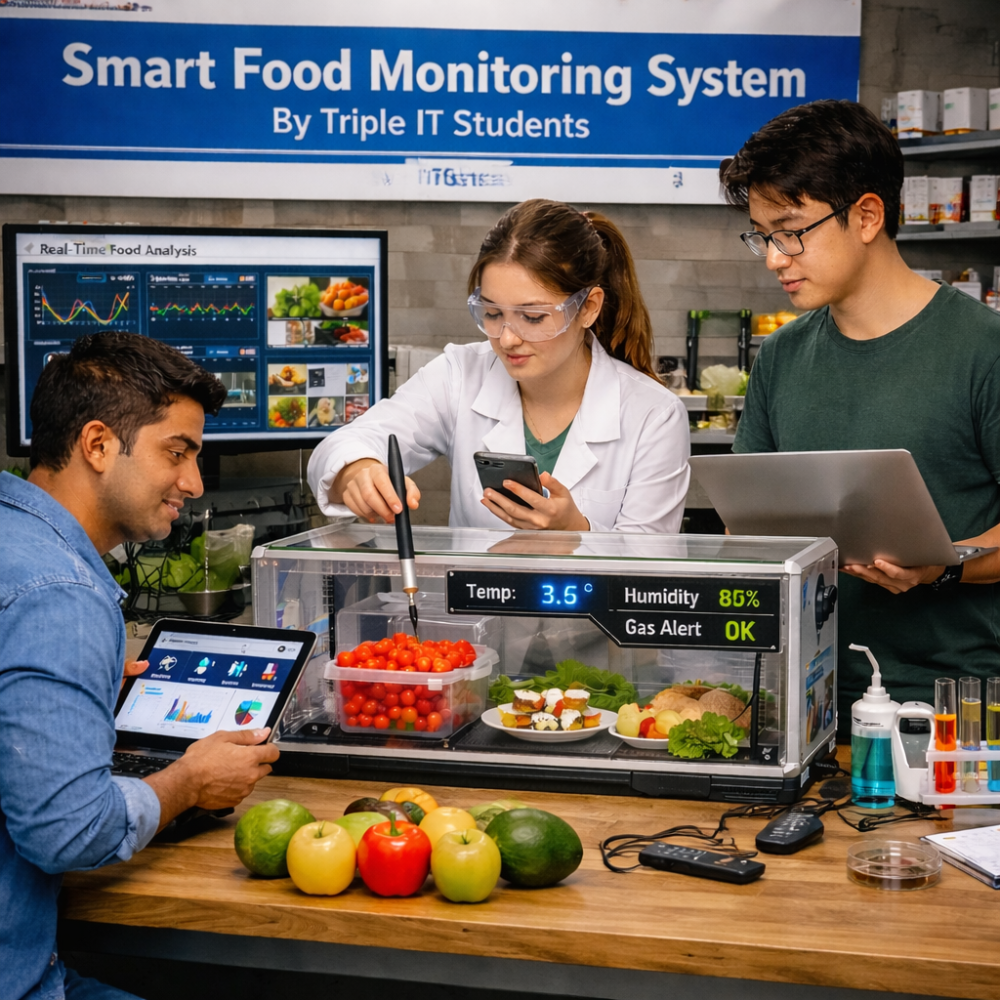
Key Features
The system includes several smart and user-friendly features.
Main Features:
- Real-time food condition monitoring
- Instant alerts and notifications
- AI-based accurate detection
- Easy installation and usage
- Affordable and efficient design
- Suitable for both domestic and commercial use
Benefits of the System
- Health Safety:
- Prevents consumption of spoiled food
- Reduces chances of food poisoning
- Ensures safe and healthy eating
- Reduction in Food Wastage:
- Avoids unnecessary disposal of food
- Helps users make better decisions
- Saves money and resources
- Convenience:
- Eliminates manual checking
- Provides automated monitoring
- Saves time and effort
- Smart Lifestyle Support:
- Can be integrated with smart home systems
- Supports modern digital living
Applications of the System
This smart system can be used in various sectors.
Major Applications:
- Homes and kitchens
- Refrigerators and storage units
- Restaurants and hotels
- Food warehouses
- Supermarkets and retail stores
Future Scope and Development
The project has strong potential for future improvements and expansion.
Future Enhancements:
- Integration with smart refrigerators
- Voice alert systems
- Advanced mobile app features
- Food-specific monitoring (milk, vegetables, fruits)
- Use in transportation and supply chains
Impact of the Innovation
The development of this system reflects the creativity and technical knowledge of Triple IT students.
Positive Outcomes:
- Encourages innovation among students
- Promotes use of AI and IoT technologies
- Solves real-life food safety problems
- Contributes to a healthier society
Conclusion
The Advanced Smart Food Monitoring System developed by Triple IT students is a smart and practical solution for modern-day food safety challenges. By combining Artificial Intelligence and IoT technologies, the system provides real-time monitoring, accurate detection, and timely alerts. It not only helps prevent health risks but also reduces food wastage and promotes efficient food management. This innovation highlights how technology can improve daily life and create a safer, smarter future.