
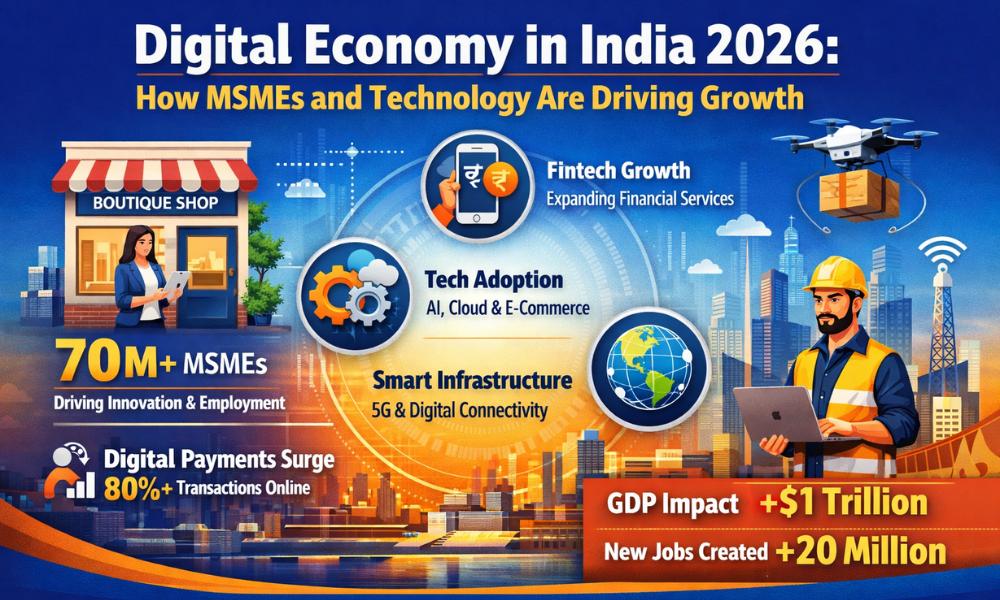
Digital Economy in India 2026: How MSMEs and Technology Are Driving Growth
• India is one of the fastest-growing digital economies in the world.
• The shift from traditional to digital systems is transforming businesses.
• Growth is supported by strong government initiatives and rising technology adoption.
• MSMEs (Micro, Small, and Medium Enterprises) are at the center of this transformation.
• Digitalization is helping India move toward a more transparent and efficient economy.
What is Digital Economy?
- A digital economy refers to economic activities based on digital technologies
- It includes:
- Online transactions
- E-commerce
- Digital banking
- Cloud computing
- Artificial Intelligence (AI)
- Businesses use digital tools to improve productivity and reduce costs
- It allows companies to reach customers beyond geographical boundaries
Government Initiatives Driving Growth
- Digital India aims to transform India into a digitally empowered society
- Unified Payments Interface (UPI) enables fast and secure digital payments
- Udyam Registration simplifies business registration for MSMEs
- Government e-Marketplace allows MSMEs to sell directly to government
- Open Network for Digital Commerce (ONDC) reduces monopoly in e-commerce
- Government is also promoting digital literacy and internet connectivity
Role of MSMEs in Digital Economy
- MSMEs contribute nearly 30% to India’s GDP
- They provide employment to over 100 million people
- Digitalization helps MSMEs:
- Expand beyond local markets
- Sell products online
- Improve customer engagement
- Manage finances efficiently
- MSMEs are becoming more competitive due to technology adoption
Key Drivers of Digital Growth
- Rapid increase in smartphone users
- Affordable internet and data plans
- Growth of digital payment systems like UPI
- Expansion of e-commerce platforms
- Adoption of AI, machine learning, and automation.
Impact on Businesses
- Businesses can operate 24/7 through online platforms
- Reduced operational costs due to automation
- Better customer experience through digital services
- Small businesses can compete with large companies
- Increased transparency in financial transactions
Benefits of Digital Economy
- Faster and easier transactions
- Reduction in cash dependency
- Improved financial inclusion
- Growth in startup ecosystem
- Increased employment opportunities
- Boost in innovation and entrepreneurship
- Better tax collection and reduced corruption
Role of Technology
- Artificial Intelligence helps in data analysis and customer insights
- Cloud computing allows businesses to store and access data easily
- Digital marketing helps businesses reach targeted customers
- Mobile apps improve accessibility and user experience
- Automation increases efficiency and reduces human error
Challenges in Digital Economy
- Lack of digital literacy in rural areas
- Cybersecurity threats and data privacy concerns
- Unequal access to internet connectivity
- High cost of technology adoption for some small businesses
- Resistance to change from traditional methods
- Risk of online fraud and scams
Future of Digital Economy in India
- Expected to contribute significantly to GDP by 2030
- Increased adoption of AI, blockchain, and advanced technologies
- Growth of smart cities and digital infrastructure
- Expansion of fintech and digital banking services
- More opportunities for startups and entrepreneurs
- Stronger global position in technology and innovation.
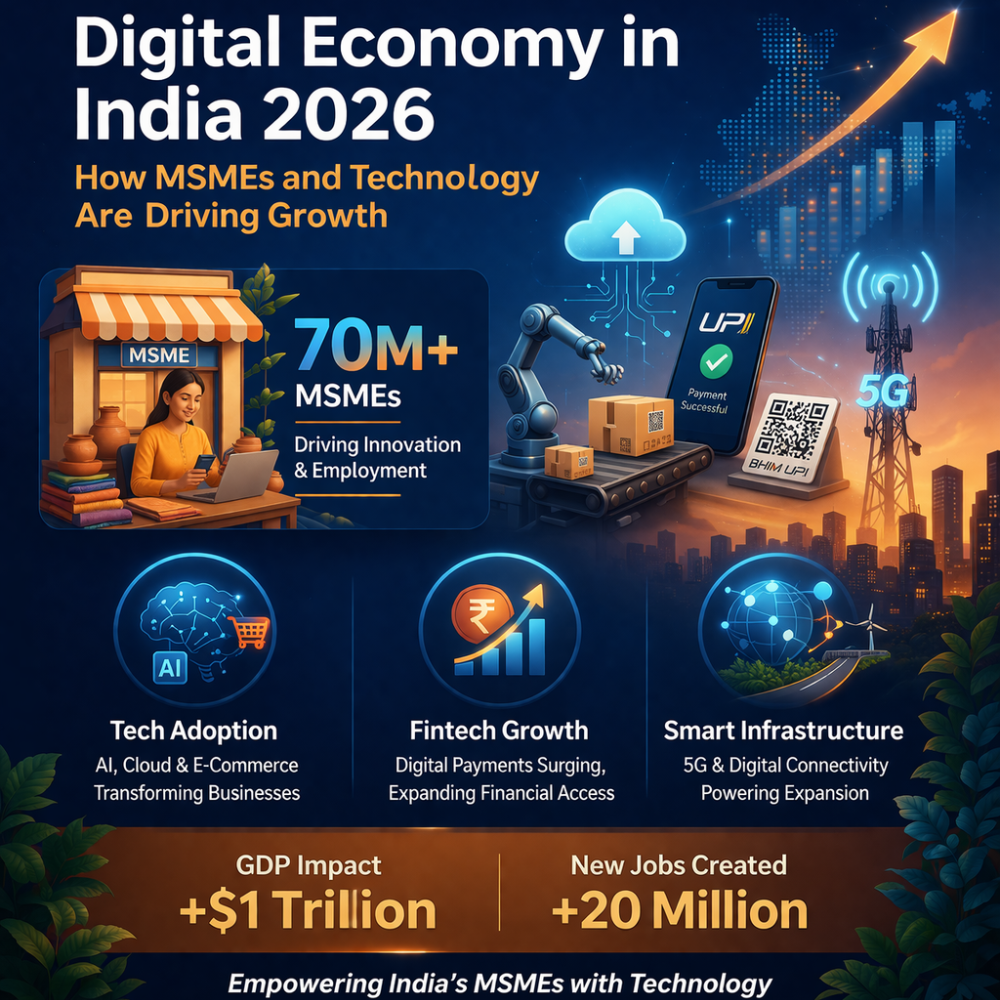
Key Components of India’s Digital Economy
- Digital Payments
- Unified Payments Interface (UPI) allows instant, low-cost transactions and is widely adopted even by street vendors.
- Digital wallets like Paytm and PhonePe have enabled cashless transactions in rural and urban areas alike.
- E-commerce Platforms
- Platforms like Amazon India, Flipkart, and the government-backed Open Network for Digital Commerce (ONDC) allow MSMEs to sell products nationwide.
- Sellers no longer need physical stores to reach customers, reducing costs and widening market access.
- Digital Infrastructure
- Initiatives under Digital India, such as BharatNet, aim to expand internet connectivity to rural areas.
- Affordable smartphones and low data costs are enabling widespread adoption.
- Fintech & Credit Access
- Digital credit platforms use transaction data and GST filings to offer instant loans, helping small businesses grow without traditional bank paperwork.
- MSMEs can now access credit to buy inventory, invest in technology, and expand operations.
- Cloud & AI Technology
- Cloud-based software allows small businesses to manage accounting, inventory, and customer relations.
- AI helps analyze consumer behavior, predict demand, and optimize pricing.
Benefits of Digitalization for MSMEs
- Market Expansion: Even local businesses can sell nationwide or globally.
- Financial Inclusion: Easy access to loans and digital banking services.
- Efficiency: Automation and cloud software reduce errors and save time.
- Competitive Advantage: Smaller players can compete with large enterprises using data-driven insights.
- Customer Engagement: Social media and digital marketing enable direct interaction with buyers.
Government Programs Supporting Digital MSMEs
- Udyam Registration – Simplifies MSME registration and access to government benefits.
- Government e-Marketplace (GeM) – Lets MSMEs sell products and services directly to government organizations.
- Digital Literacy Programs – Teach entrepreneurs and employees how to use online tools, payment systems, and marketing platforms.
- Startup India & Tech Hubs – Provides incubation, mentorship, and funding for innovative startups leveraging digital tools.
Challenges in India’s Digital Economy
- Digital Literacy: Many entrepreneurs, especially in rural areas, lack training.
- Cybersecurity: Online threats, phishing, and fraud can affect businesses and consumers.
- Internet Infrastructure: Remote areas still face unreliable connectivity.
- High Adoption Costs: Small businesses may struggle to afford technology upgrades.
- Resistance to Change: Traditional business owners may prefer physical methods over digital tools.
Emerging Trends
- Mobile-First Economy: Majority of online transactions occur via smartphones.
- AI & Machine Learning: Increasing use for predictive analytics and customer service chatbots.
- Blockchain for Supply Chains: Ensures transparency and reduces fraud in logistics and product sourcing.
- Voice and Regional Language Tech: Voice commands and apps in local languages help rural entrepreneurs adopt digital tools.
- Integration of Gaming & Commerce: Apps like BGMI collaborating with IPL teams show how
Economic Impact
- Digital economy is expected to contribute ~20% of India’s GDP by 2030.
- MSMEs’ digital adoption increases productivity and employment.
- Startups leveraging AI, fintech, and e-commerce are attracting foreign investments.
- Transparent digital transactions reduce corruption and improve government tax collection.
- nected infrastructure will integrate businesses, government, and consumers digitally.
Conclusion
- India’s digital economy is growing rapidly due to strong government support
- Digital India and Unified Payments Interface have created a solid foundation
- MSMEs are benefiting the most from digital transformation
- Digital platforms are enabling businesses to grow faster and reach wider markets
- Technology is improving efficiency, transparency, and productivity
- Challenges like cybersecurity and digital literacy still need attention
- With continuous innovation, India’s digital economy has a bright future