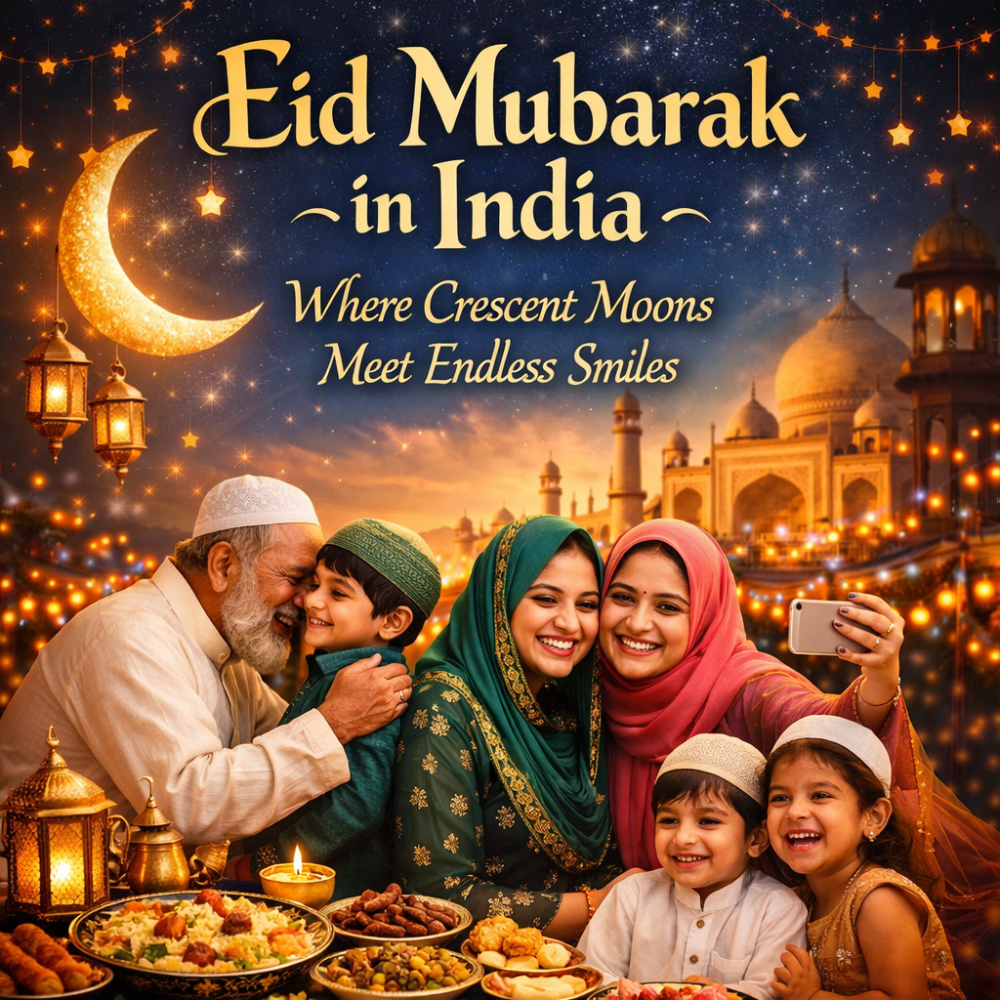
Eid Mubarak in India Where Crescent Moons Meet Endless Smiles
The festival of Eid al-Fitr, fondly known as Eid Mubarak, is one of the most joyous and spiritually significant celebrations in India. It marks the end of the holy month of Ramadan and is not just a religious occasion but also a vibrant cultural celebration that brings together people from all walks of life. Across India, from bustling cities to quiet villages, the sighting of the crescent moon signals the beginning of festivities filled with prayers, delicious food, heartfelt greetings, and endless smiles.
The Spiritual Significance of Eid
Eid Mubarak is deeply rooted in faith, gratitude, and compassion. After a month of fasting from dawn to dusk during Ramadan, Muslims celebrate Eid as a reward for their devotion, discipline, and spiritual growth. The fasting period is not only about abstaining from food and drink but also about practicing self-control, empathy for the less fortunate, and strengthening one’s connection with God.
On the day of Eid, people wake up early, wear new or freshly cleaned clothes, and head to mosques or open grounds for special prayers known as “Eid namaz.” These prayers are a symbol of unity, where thousands gather shoulder to shoulder, regardless of social or economic status, reinforcing the idea of equality and brotherhood.
A Festival Poster Maker is the perfect tool to design creative visuals for occasions like Eid in India, where the sighting of the crescent moon marks the beginning of celebrations. Festivals bring people together with joy, prayers, and greetings like “Eid Mubarak,” making attractive posters essential for sharing festive vibes. With easy customization, users can create eye-catching designs featuring moon themes, lights, and cultural elements that reflect unity and happiness.
The Joy of Togetherness
One of the most beautiful aspects of Eid in India is the sense of togetherness it brings. Families reunite, friends visit each other, and communities come alive with warmth and joy. The phrase “Eid Mubarak,” meaning “Blessed Eid,” echoes everywhere as people exchange greetings, hugs, and smiles
Children eagerly wait for “Eidi,” a tradition where elders give them money or gifts. This small gesture adds excitement and happiness to the celebration, making Eid especially memorable for the younger generation.
In India, Eid transcends religious boundaries. People from different faiths often join in the celebrations, sharing sweets and participating in the festive spirit. This harmony reflects the country’s rich diversity and cultural unity.
A Feast Like No Other
No Eid celebration in India is complete without a grand feast. After a month of fasting, the day is marked by indulgence in a variety of mouthwatering dishes. The aroma of traditional delicacies fills homes and streets alike.
One of the most iconic dishes is sheer khurma, a sweet vermicelli pudding made with milk, dates, and dry fruits. Biryani, kebabs, and seviyan are also popular favorites that bring families together around the dining table.
In cities like Hyderabad, Lucknow, and Delhi, Eid food is a grand affair, with local flavors adding unique touches to traditional recipes. Street markets and food stalls become lively hubs where people gather to enjoy festive treats.
With Festival Poster Maker 2026, digital creativity is evolving to match modern festive trends. As Eid celebrations continue to blend tradition with technology, people now prefer designing posters for social media, WhatsApp, and business promotions. From crescent moon graphics to festive quotes, these tools help users create personalized designs that capture the essence of Eid, where families celebrate gratitude, charity, and togetherness after Ramadan
Charity and Kindness
Eid is not just about celebration; it is also about giving. Before the Eid prayer, Muslims are required to give “Zakat al-Fitr,” a form of charity meant to help the poor and ensure that everyone can partake in the festivities. This act of kindness highlights the importance of compassion and social responsibility.
In India, many people go beyond obligatory charity by distributing food, clothes, and essentials to those in need. Various organizations and individuals organize community meals and donation drives, spreading joy among the less fortunate.
This spirit of giving reinforces the true essence of Eid: caring for others and sharing happiness.
A well-designed Festival Post plays a crucial role in spreading festive cheer online. During Eid, when communities gather for prayers, share sweets, and exchange warm wishes, social media becomes a hub of celebration. Creative festival posts featuring symbols like the moon, lanterns, and traditional patterns help brands and individuals connect emotionally with their audience and reflect the spirit of unity and joy that defines Eid in India.
Vibrant Markets and Festive Preparations
The days leading up to Eid are filled with excitement and preparation. Markets across India transform into colorful and bustling spaces. From traditional attire like kurtas and salwar suits to accessories, perfumes, and decorations, everything reflects the festive spirit.
Night markets, especially in old city areas, become lively spots where people shop till late hours. The glow of lights, the chatter of crowds, and the aroma of street food create an atmosphere that is both magical and unforgettable.
Henna (mehndi) artists can be seen adorning hands with intricate designs, while tailors work tirelessly to complete last-minute outfits. These preparations add to the anticipation and joy of Eid.
Eid in Modern India
While traditional values remain strong, Eid celebrations in modern India have also embraced change. Social media platforms are filled with Eid wishes, photos, and videos, allowing people to connect with loved ones across distances.
Online shopping, digital greetings, and virtual celebrations have become a part of the festival, especially in urban areas. Despite these modern touches, the core essence of Eid—faith, family, and generosity—remains unchanged.
Unity in Diversity
India is known for its cultural diversity, and Eid beautifully showcases this unity. In many places, people from different religions visit their Muslim friends and neighbors to wish them well and share in the celebrations. This mutual respect and participation strengthen social bonds and promote harmony.
Eid becomes a symbol of India’s inclusive spirit, where differences are celebrated and togetherness is cherished.
A Festival Post App makes it easy for anyone to design and share festive content instantly. Especially during occasions like Eid, when Chaand Raat (the night of the crescent moon) brings excitement, people look for quick ways to create beautiful greetings and posts. These apps offer ready-made templates, fonts, and festive elements, allowing users to design professional-quality visuals that celebrate togetherness, culture, and happiness in just a few taps.
Conclusion
Eid Mubarak in India is truly a celebration where crescent moons meet endless smiles. It is a festival that goes beyond rituals, touching hearts with its message of love, compassion, and unity. From the spiritual prayers in the morning to the joyous gatherings and feasts throughout the day, every moment of Eid reflects happiness and gratitude.
As the crescent moon shines in the night sky, it brings with it hope, renewal, and a reminder of the values that bind humanity together. In every smile exchanged, every meal shared, and every act of kindness, Eid continues to spread light and joy across India.
Eid Mubarak!