Water Crisis in Indian Cities: Is Day Zero Closer Than We Think?
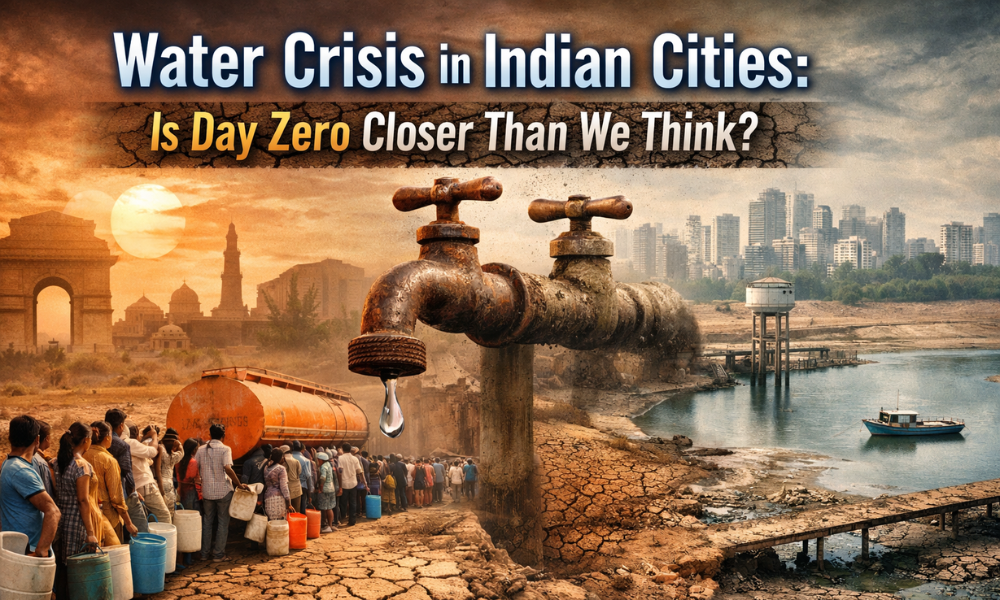
India is in the grip of an alarming water crisis in its rapidly growing cities, and this has raised alarm about the possibility of ‘Day Zero,’ where cities run out of water. Cities like Bengaluru, Chennai, and Delhi are already experiencing this in recent years. However, as the demand for water keeps rising, the only question now is how soon we are going to experience Day Zero.
What Is “Day Zero” and Why It Matters for Indian Cities
“Day Zero” refers to the point at which the water levels in a city have fallen to a critical point, and the water supply from the municipal water taps ceases. The world took notice of this concept during the Cape Town water crisis in 2018. However, this is no longer a potential scenario, but a looming reality for India’s cities. The alarming rate of urbanization and increasing water consumption patterns have put India’s cities on an unsustainable trajectory. In India’s metros, including Delhi and Bengaluru, water resources face critical challenges. The implications of Day Zero extend beyond water scarcity; it is a failure of planning, infrastructure, and governance. The concept of Day Zero, therefore, serves as a reminder of the importance of water conservation and reforms.
Key Causes Behind India’s Growing Urban Water Crisis
The explosive growth of Indian cities has resulted in an urban water crisis for a multitude of environmental reasons and human factors. Groundwater depletion, due to ground water being drawn faster than it can recharge through natural processes, is a leading cause of this water supply crisis in urban areas. Urbanization, through the elimination of lakes, wetlands, and recharge areas has also significantly diminished our empirical evidence of the natural ability to store water. Climate change, through increased variability in weather, longer dry periods, and increased frequency of extreme heat has only magnified the challenges of providing urban water supply. Broken infrastructure, including leaky pipes and ineffective distribution systems, account for the majority of the water lost. As urban populations, like those in Mumbai and Hyderabad, grow they will create demands for water that will exceed the sustainable capacity of available supplies. Poor management and lack of long-term planning by municipalities relative to water conservation have also contributed to this situation as many municipalities prefer to implement short-term solutions based on tanker supply instead of practicing water conservation. Collectively, these factors create an ever-increasing risk of severe water shortages, which impose daily hardships on millions of people living in urban areas.
Cities on the Brink: Real Examples from Across India
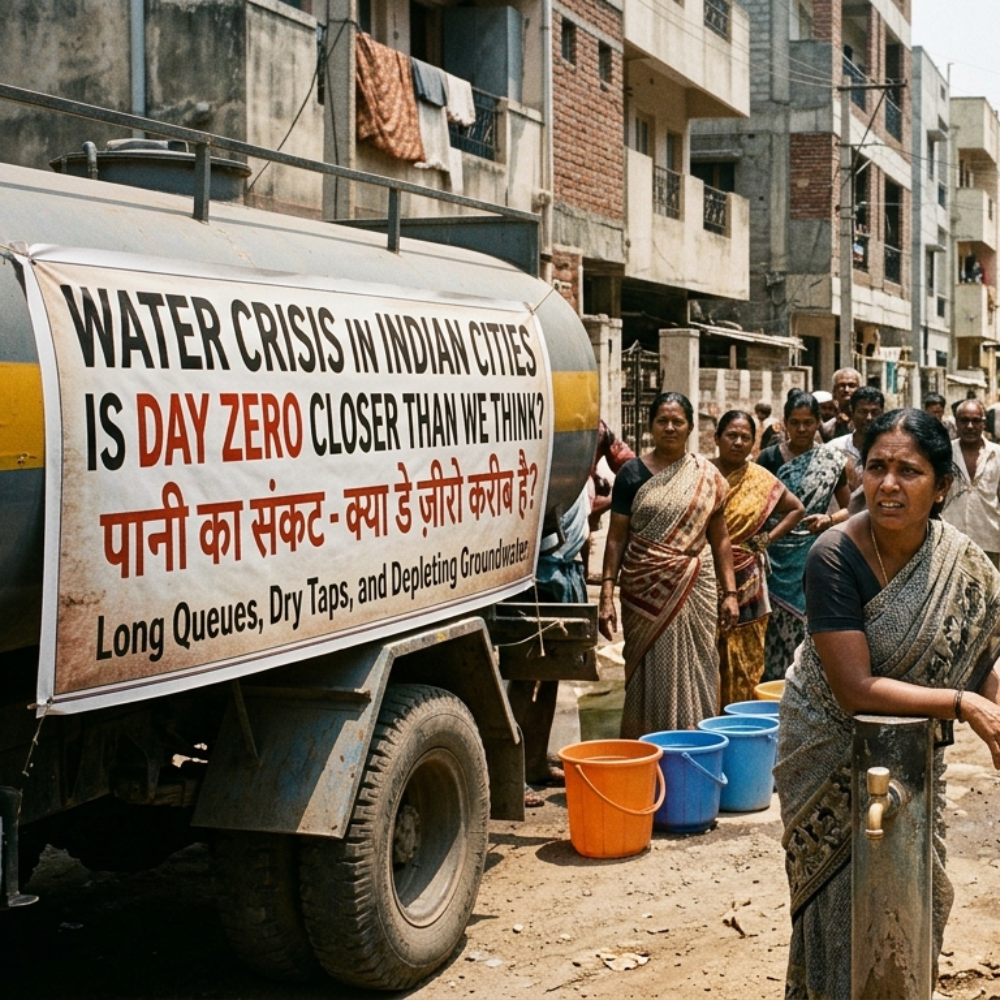
Cities Almost out of Water: Many Indian Cities Have Already Seen Depending Water Conditions Like Day Zero
Chennai faced a terrible water problem in 2019 when its major water sources ran dry. Therefore, many residents were completely dependent on water tankers. There have been many lakes around Bangalore which had been previously regarded as lakes however due to the continual development in and around Bangalore most of those lakes have either become dry or contaminated. Delhi has experienced the lack of water during some of the summer months and many of the local regions have only experienced a limited amount of water (tl: only a few hours of supply of water a day). Other smaller cities have also experienced a lack of water primarily due to poor planning or overuse of the groundwater aquifers; therefore, every one of these cities has shown that the crisis of Day Zero is widespread and not as isolated as was previously thought. As a result, it is not unreasonable to expect additional cities to experience extreme water scarcity, which will bring them to the point of potentially experiencing a Day Zero water condition, if current trends continue.
Options to prevent Day Zero
The elimination of Day Zero involves working together to use government policies, new technologies and participation from the general public. One of the best methods of replenishing groundwater is through the use of rainwater harvesting, which will help reduce the overall reliance on outside sources of water. More cities around the world must invest in ways of treating and recycling wastewater so they can recycle water for non-drinking purposes. By implementing smart water management systems, cities can improve the ability to control the use of water while also reducing the amount of water waste through better water delivery systems. When cities come up with development plans they should focus on how they can restore wetland and lake areas within their urban area by looking at other cities like Bengaluru who have implemented great work to restore their wetland and lake areas within their city. Citizens can take individual action to conserve water by fixing leaks, using water saving appliances, and reducing unnecessary water consumption. Governments must have long-term solutions to the water problem instead of short-term solutions. A strong public awareness campaign and public participation are both critical to creating a successful outcome. If all of us work together to stop Day Zero, we can ensure that our water supply will be available to future generations in India.
Conclusion
The water crisis in India’s urban centers is no longer a looming threat, but one that is actually occurring in real time. The threat of “Day Zero” is becoming more and more conceivable in India’s urban centers due to increasing water demand, climate-related issues, and poor resource management. Yet, this crisis can be averted if we take timely steps to ensure our water security in India’s future.