
How China’s Great Green Wall Is Fighting Desertification and Creating the World’s Largest Carbon Sink
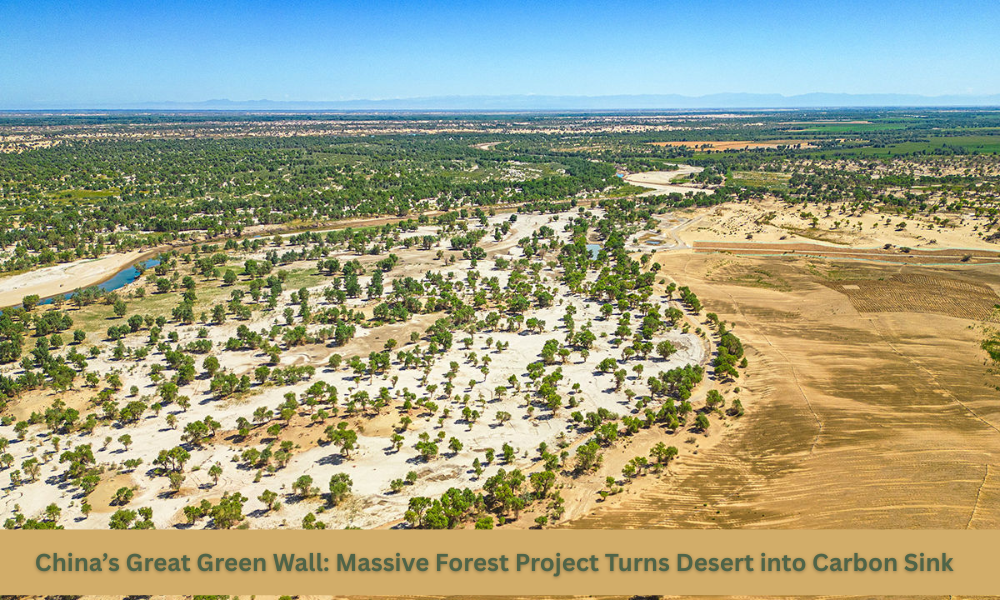
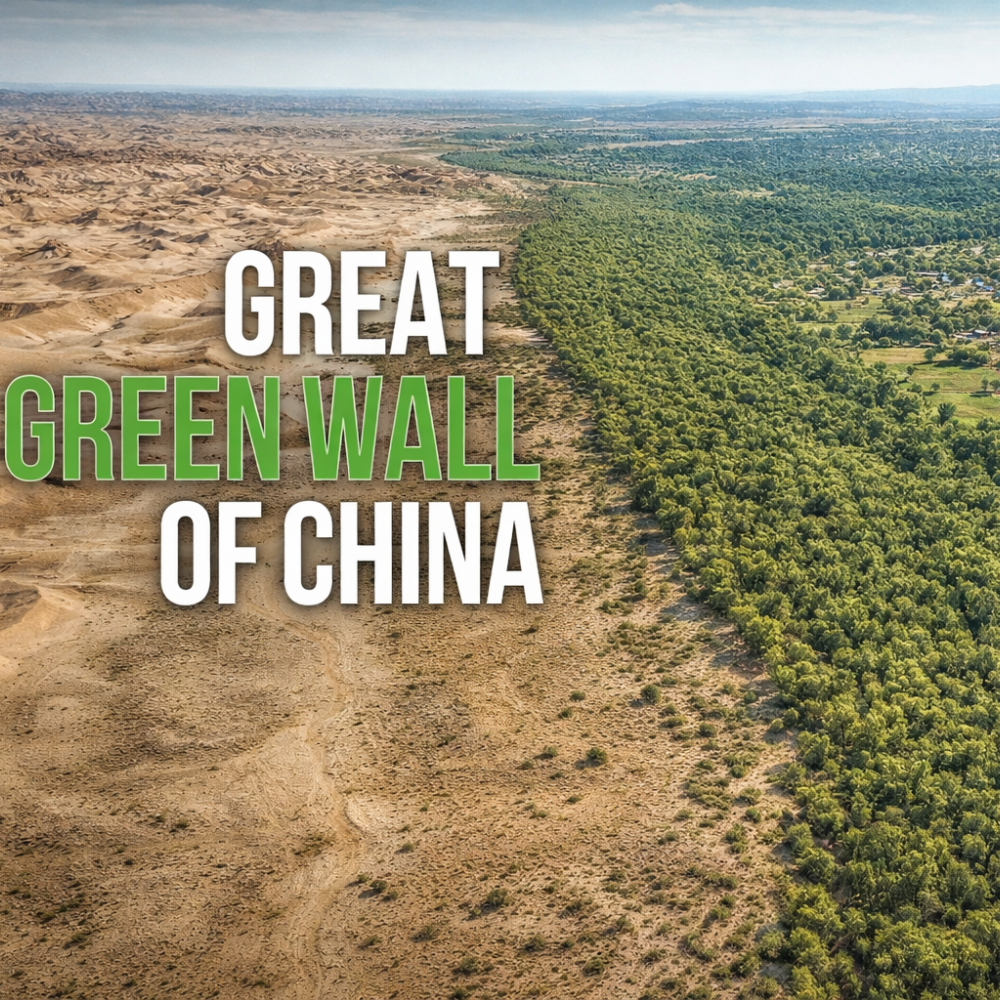
In one of the world’s most ambitious environmental projects, China has successfully transformed a massive desert region into a green ecological barrier known as the Great Green Wall of China. Spread across approximately 3.39 million square kilometers, this large-scale reforestation initiative aims to stop desert expansion, restore ecosystems, and combat climate change by creating one of the largest carbon sinks in the world.
The project, which began several decades ago, has now become a global example of how large-scale tree plantation and environmental planning can help tackle the challenges of desertification and climate change.
What Is the Great Green Wall of China?
The Great Green Wall, also known as the Three-North Shelterbelt Program, is a large environmental project launched by China to combat the rapid expansion of deserts in the northern parts of the country.
Desertification had been a major problem in China for decades. Large areas of land were turning into desert due to deforestation, overgrazing, and climate change. To stop this environmental crisis, the Chinese government started a massive tree plantation program.
Key Features of the Project
-
Covers around 3.39 million square kilometers
-
One of the largest reforestation programs in the world
-
Aims to create a massive forest belt across northern China
-
Designed to reduce desert expansion
-
Helps absorb carbon dioxide and fight climate change
Over the years, billions of trees have been planted as part of this initiative.
Why the Project Was Necessary
Northern China has historically faced severe environmental challenges due to desertification. Large deserts such as the Gobi Desert were expanding rapidly, threatening farmland, cities, and ecosystems.
The consequences of desert expansion included the following:
-
Loss of agricultural land
-
Frequent dust storms affecting cities
-
Damage to biodiversity
-
Decline in local livelihoods
-
Increased environmental pollution
To address these problems, China initiated the Great Green Wall project to create a natural barrier against desert spread.
Turning Desert into a Carbon Sink
One of the most important outcomes of the project is the creation of a massive carbon sink.
A carbon sink is a natural system that absorbs more carbon dioxide from the atmosphere than it releases. Forests are among the most effective carbon sinks because trees absorb carbon dioxide during photosynthesis.
Environmental Benefits
The Great Green Wall provides several environmental benefits:
-
Absorbing Carbon Emissions
The newly planted forests help capture large amounts of carbon dioxide, reducing greenhouse gases. -
Controlling Desertification
Tree roots stabilize the soil and prevent sand from spreading. -
Improving Air Quality
The forests reduce dust storms and improve air conditions in nearby cities. -
Restoring Ecosystems
The project has helped revive wildlife habitats and biodiversity. -
Reducing Soil Erosion
Trees protect the soil from strong winds and water erosion.
Scientific Research and Monitoring
Scientists and environmental researchers have closely monitored the impact of the Great Green Wall project over the years.
Studies have shown that:
-
Vegetation cover in northern China has significantly increased.
-
Dust storms affecting cities like Beijing have decreased.
-
Soil quality has improved in many regions.
-
Local ecosystems are slowly recovering.
The project is considered one of the largest ecological restoration experiments in human history.
Challenges Faced by the Project
Despite its success, the Great Green Wall has also faced several challenges.
Major Challenges
-
The harsh desert climate makes it difficult for trees to survive.
-
Some tree species planted earlier were not suitable for desert conditions.
-
Maintaining large forest areas requires long-term management.
-
Water availability is limited in many desert regions.
To overcome these challenges, scientists are now focusing on planting native and drought-resistant species that are better suited for desert environments.
Economic and Social Impact
Apart from environmental benefits, the Great Green Wall project has also had a positive impact on local communities.
Benefits for Local Communities
-
Creation of employment opportunities in forestry and plantation work
-
Development of eco-tourism in green regions
-
Protection of farmland from desert expansion
-
Improvement in livelihoods of rural communities
The project has helped many villages stabilize their agricultural production and reduce the impact of environmental disasters.
Global Importance of the Project
The Great Green Wall of China is often compared to other large environmental initiatives around the world. Many countries facing desertification are studying China’s approach to learn from its success.
Similar projects are now being planned or implemented in:
-
Africa’s Great Green Wall initiative
-
Middle Eastern desert restoration projects
-
Environmental restoration programs in Central Asia
China’s experience shows that large-scale environmental problems can be addressed with long-term planning and strong government support.
The Future of the Great Green Wall
The project is still ongoing and is expected to continue for several more years. China aims to further expand forest coverage and strengthen ecological protection across northern regions.
Future goals include:
-
Increasing vegetation coverage further
-
Improving biodiversity
-
Strengthening climate change mitigation
-
Promoting sustainable land management
With continued research and improved ecological planning, the Great Green Wall is expected to become even more effective in the coming decades.
Conclusion
The Great Green Wall of China represents one of the most ambitious environmental restoration projects ever undertaken. By transforming large desert areas into green forests, China has created a powerful defense against desertification while also contributing to the global fight against climate change.
Covering 3.39 million square kilometers, the project has not only increased forest cover but also improved air quality, restored ecosystems, and supported local communities. Despite facing environmental challenges, ongoing scientific research and improved plantation strategies continue to strengthen the success of this initiative.