





Why SoftBank Thinks Space-Based AI Data Centres Are Not the Future
With the rise of AI technology, tech companies are looking at constructing even more large-scale data centers to meet increasing computing requirements. Even as most of these companies are working hard on their ground infrastructure, Musk has come up with another vision for the future – to construct AI data centers in space using solar power. This would be an interesting concept because there would be unlimited energy and an exciting vision for the future. However, not everybody thinks in the same way. The SoftBank CEO Masayoshi Son has publicly expressed his doubts about the concept of orbiting data centers. The question here is whether AI companies should work towards visionary concepts or concentrate on building up their computing capacity here on earth.
Space-Based Data Centres for Artificial Intelligence by Elon Musk
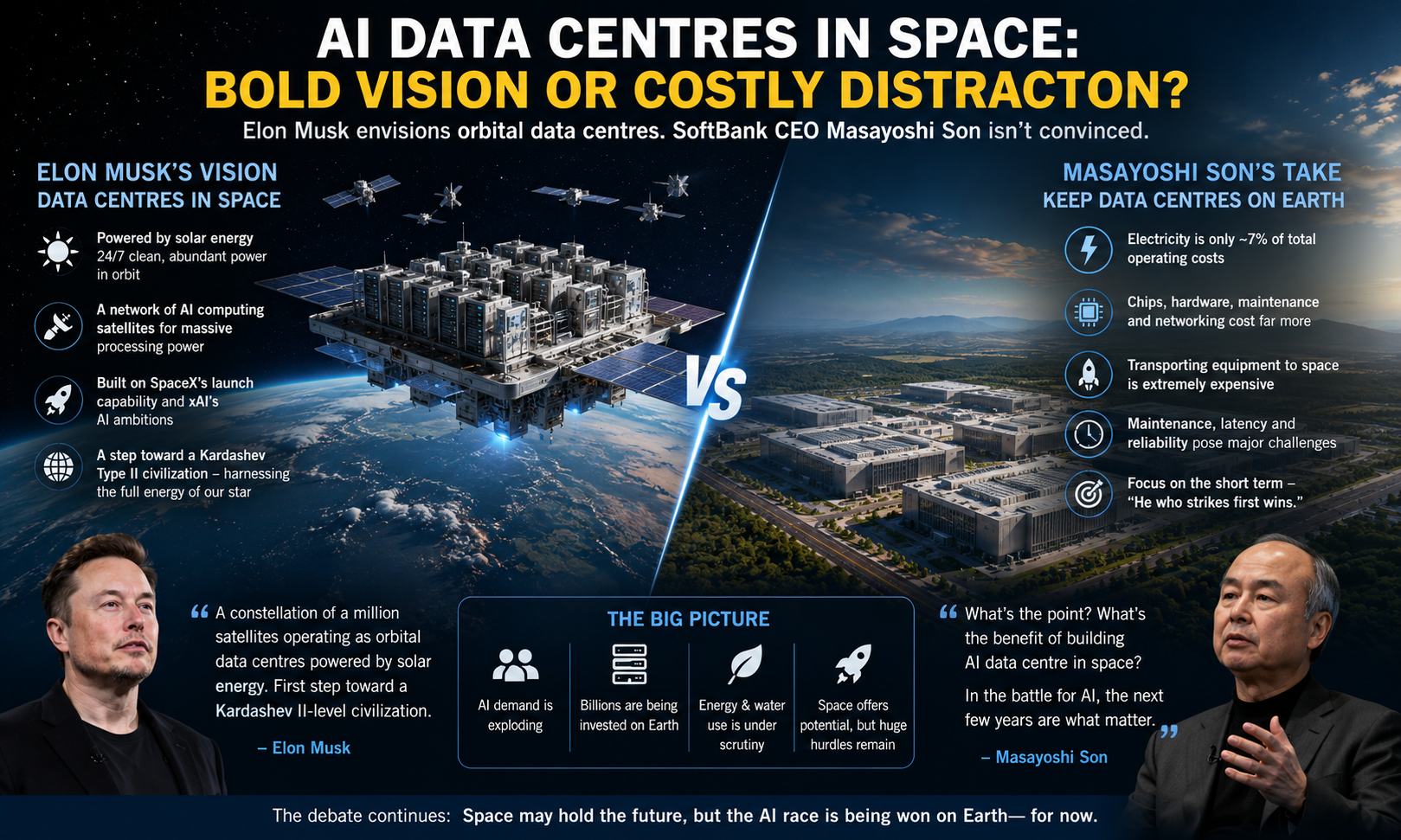
The need for computing infrastructure is increasing dramatically in connection with the rapid development of artificial intelligence algorithms. Elon Musk assumes that Earth-based data centres will be faced with various problems concerning the availability of energy, use of lands, and impact on the environment in the long term perspective. In order to tackle those issues, the entrepreneur came up with a vision of creating AI data centres in space. The idea includes creation of a huge array of satellites provided with computing hardware and powered through solar panels operating in space. As stated by the entrepreneur, the system will allow for receiving almost unlimited amounts of energy and reduce dependence on energy grids. It should be noted that Musk’s idea is in line with his general purpose of advancing humanity to the state of a technologically advanced civilization. With the help of collaboration between SpaceX and xAI companies, Elon Musk sees the future of orbital infrastructure as an important element of AI development.
Why Masayoshi Son of SoftBank Does Not Believe in It
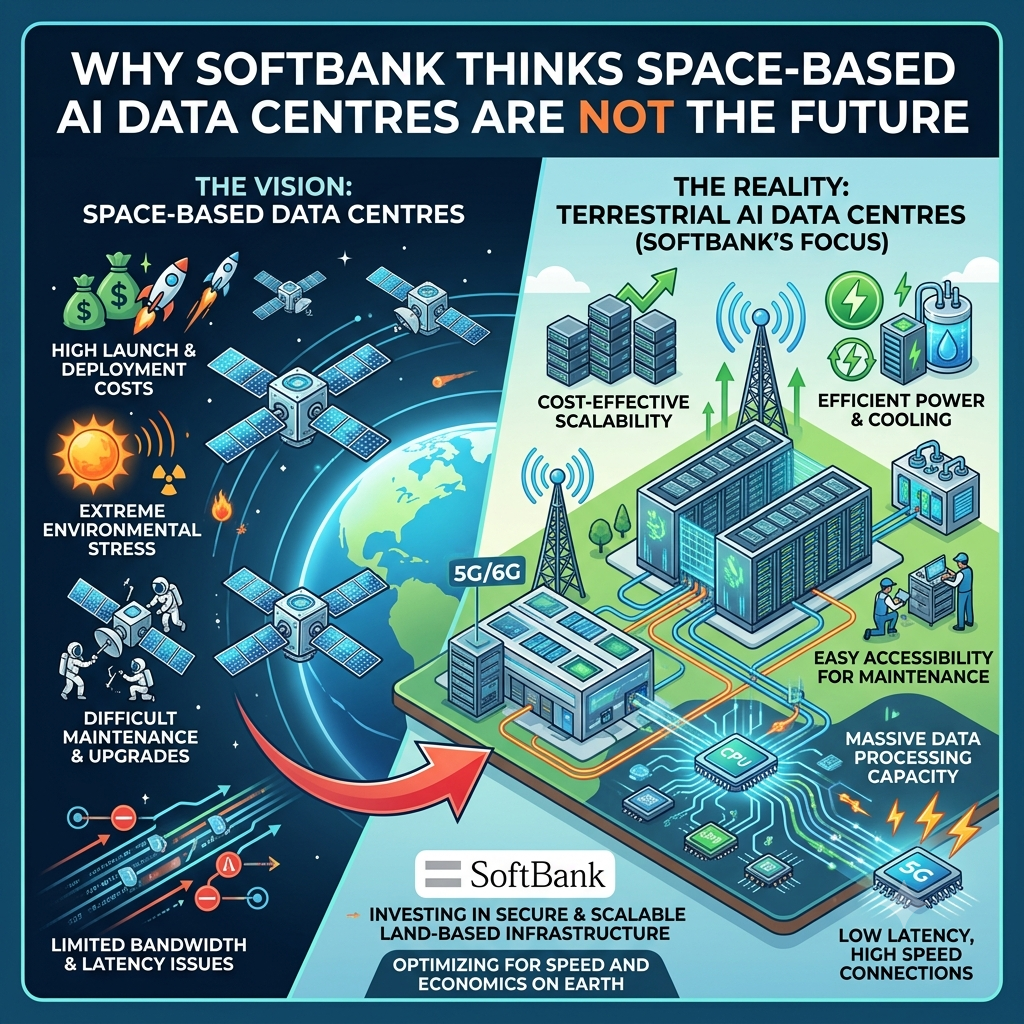
While Elon Musk sees potential in orbital AI systems, SoftBank founder Masayoshi Son is strongly against it. At a recent shareholder meeting, Son doubted the value of setting up data centers in outer space. As he put it, the main benefit that was usually brought up – reduced electricity costs – does not really mean anything when compared to the tremendous cost of such an endeavor. As Masayoshi Son puts it, electricity makes just a minor part of the total cost of running AI infrastructure – while complex hardware and maintenance are much more expensive. Moreover, setting up vast amount of hardware in space is going to be incredibly expensive itself. Besides, it will bring many new problems like maintenance, upgrades, latency, and reliability. Masayoshi Son stresses out that it is crucial to concentrate on the opportunities right now, rather than work on some project which would take decades to implement. Companies which will increase their computing capacity on Earth quickly will get a bigger competitive advantage compared to the companies which spend much money on speculative space technologies.
Growing Race to Build AI Infrastructure on Earth
The rapid growth of artificial intelligence technologies has led to the emergence of a serious global race to build data centers and computer facilities. Companies are investing huge amounts of money to obtain the necessary infrastructure for working with advanced AI models. One of the largest investors in the field is SoftBank – a company investing in OpenAI and other AI projects. In many countries, facilities packed with powerful processors are being constructed to work with advanced AI models. This is happening due to the understanding that computing power is going to become one of the key assets in the future technological environment. At the same time, growing infrastructure is associated with increasing energy and water consumption and issues related to sustainability. However, despite all problems, many tech experts state that the construction of Earth-based facilities is still one of the most feasible solutions. Existing infrastructure, existing supply chains, and easier maintenance make the choice clear. In the current situation when the use of AI grows rapidly, the struggle for computing infrastructure becomes one of the key technological races of the decade.
Space Data Centers: Computing of the Future or a Science-Fiction Dream?
Discussions concerning orbital data centers represent one of many questions related to the future of technology. The supporters of this technology argue that it can potentially solve some of the problems connected with infrastructure of the Earth, such as energy limitations and environmental concerns. It has even been noted by some companies, such as Blue Origin, which demonstrates their interest in building space-based data centers. Technological development in areas like rockets’ reusability, satellites, and manufacturing in space can also contribute to making such projects possible in the future. At the same time, there are several arguments against the idea. First of all, high prices, the difficulty of maintenance, communication delays, and unreliability can make the project extremely costly. One of the most successful CEOs of technology companies, such as OpenAI, calls it science fiction and impracticality. Although the idea is fascinating and ambitious, only future breakthroughs can show whether it becomes a reality or just a dream.
Conclusion
The controversy about AI data centers on space brings out two very contrasting pictures of how the future of computing looks like. Where Elon Musk views space infrastructure as the ultimate solution to rising energy needs of AI in the future, Masayoshi Son believes that the construction of more Earth-based data centers is the realistic way forward. It will take some time to see if space data centers prove to be a technological leap or a futuristic fantasy.